
When researching and buying your first electric car, you’ll start to hear some new terms. Two of those may be regenerative braking and one-pedal driving, which are also some of my favorite features of an EV. Let’s learn more about them.
What Is Regenerative Braking?
Regenerative braking occurs when a car uses the electric motor(s) to slow you down, rather than the physical brakes. Traditional gas-powered vehicles use only the hydraulic brakes which turns kinetic energy into heat by applying force with brake pads to the rotors. With this, all of that energy is just wasted.
With regenerative braking, the electric motor creates a magnetic field using a part called the “stator,” which changes the kinetic energy back into current that can be stored in the battery pack. Think of it like applying torque in reverse on the motor. It’s the opposite of the process needed to propel the vehicle forward or backward.
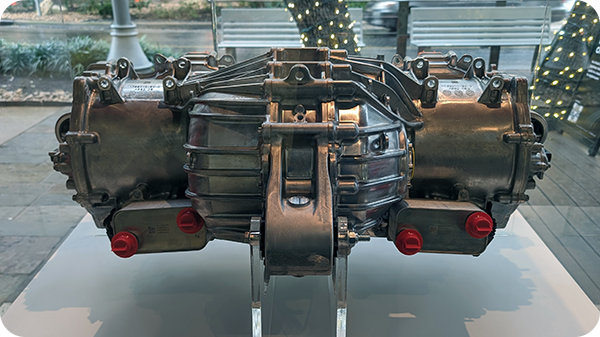
Despite its name, regenerative braking uses the force of an electric motor to work, like the one above from a Model S Plaid, not the physical brakes.
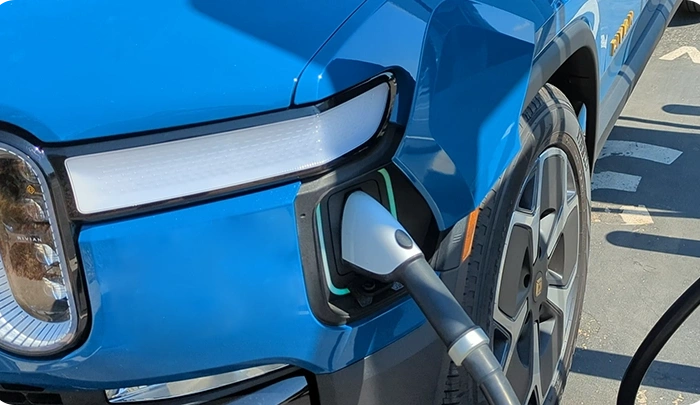
Inside the car, you’ll feel a bit of a “pull-back” sensation that provides a very small amount of g-force. It can take some new EV owners a few weeks to get used to it. While some electric car models provide an option to turn it off, others, like Tesla and Rivian, only allow you to change the strength. Regardless, I would recommend at least giving it a shot for a few weeks before judging it. Many EV owners come to consider it one of their favorite features over time.
What Is One-Pedal Driving?
One-pedal driving allows you to operate your electric car using just the accelerator pedal, thanks to a combination of regenerative braking and an auto-hold mode. While auto-hold mode is common in many new vehicles, including those with internal combustion engines (ICE), only EVs with strong regenerative braking can offer a true one-pedal experience (Volkswagen products being a notable exception).
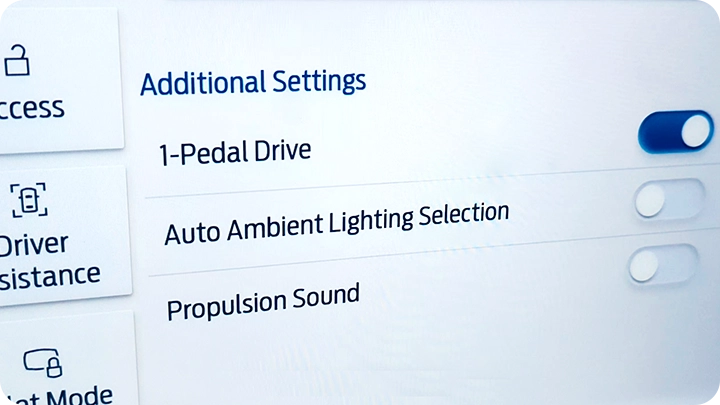
It works like this: assuming the correct settings are turned on, which will vary by EV, you simply take your foot off of the accelerator pedal and the car will slow down and activate the physical brake to ensure that you don’t roll. This is in contrast with ICE vehicles, where you have to use the brake pedal and come to a complete stop to activate auto-hold mode. One-pedal driving is not possible in traditional ICE cars powered by gas or diesel fuel, as they lack an electric motor.

Some EVs, like the Polestar 2, allow you to turn off one-pedal driving.
One-pedal driving is one of the top features I use to sell EVs to other drivers. It makes driving in stop-and-go traffic so much more comfortable. In fact, it makes driving a car far less fatiguing in general, because you can go months without ever having to push the brake pedal. Once you get used to the stopping distance and deceleration force, it’s a benefit that I am confident will have you asking, “why did we ever drive any other way?”
Turning on One-Pedal Driving & Regenerative Braking
Settings for one-pedal driving and regenerative braking activation will vary from EV to EV. As mentioned, some won’t let you deactivate either function. But, here are a few settings to look out for:
- B-Mode: this stands for “braking mode” and is the option to turn on regenerative braking for electric cars like the Volkswagen ID.4.
- Regen “Standard”: If available, this usually turns down the regenerative braking force used by the electric motors, meaning your car will slow down more gradually.
- Regen “High”: This is usually the strongest regenerative braking setting and will use more force to slow your vehicle more rapidly, albeit not abruptly.
- Creep Mode: Creep mode simulates the rolling behavior if you take your foot off of the brake pedal. In a sense, your electric car will drive a lot more like an ICE vehicle. This has to be disabled for one-pedal driving to work.
These settings can either be found in your electric car’s software, gear shifter, or with a special stalk or button.
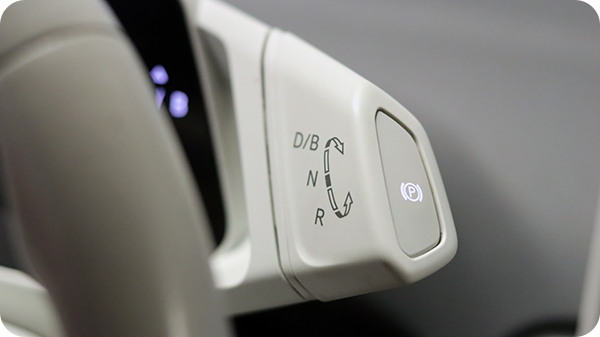
Turning on regenerative braking in some EVs is done through the gear shifter, like the Volkswagen ID.4.
Benefits of These Features
There are many reasons you’ll want to get used to these two new ways of driving.
- Longer-lasting brakes: If you use your physical brakes less, you’ll save significantly on brake pads over time.
- Reduced air pollution: Brake dust, an overlooked but significant pollutant, is minimized.
- Enhanced driving experience: While it takes some adjustment, one-pedal driving eventually adds enjoyment to driving.
- Increased range: One-pedal driving boosts your EV’s range.
- Smoother stops: The system results in fewer abrupt stops, providing smoother transitions between driving and stopping.
- Energy efficiency: Unlike traditional brakes that waste kinetic energy, regenerative braking captures and reuses it.
Give Yourself Time to Adjust
Seriously, one-pedal driving is a far more comfortable and logical way to operate a car. While it does take some time to get used to, the shift in thinking happens quickly. You’ll be surprised how fast you warm up to it.
In fact, whenever I drive a non-EV it can be downright bizarre to have the car continue in motion just because I took my foot off of the brake. It doesn’t feel right anymore.
Regen Braking & One-Pedal Driving FAQ
You might have some additional questions about these features. Here are some common ones I hear a lot:
Do All EVs Have One-Pedal Driving?
No, but most do. Volkswagen Group brands like Porsche and Volkswagen are the notable exceptions in the United States.
Can Regenerative Braking Be Turned Off Completely?
Again, this varies by model. A VW ID.4 lets you turn off regenerative braking entirely, while no Tesla model allows you to do so.
Is It Really Possible to Operate an EV Without Using the Brakes?
Absolutely. With regenerative braking and one-pedal driving both active, it’s quite common to never need to press the physical brake pedal at all.
Sources