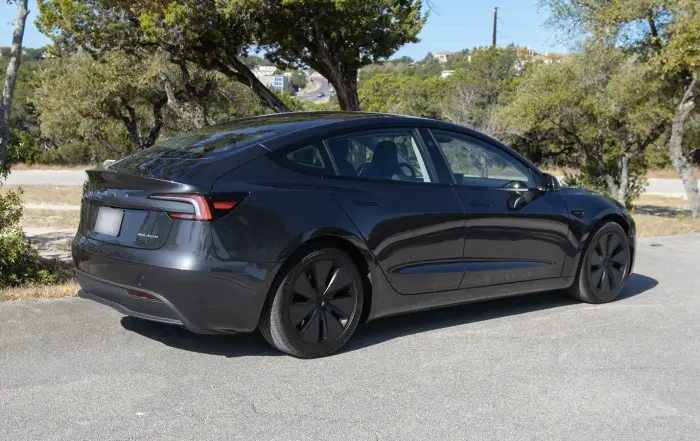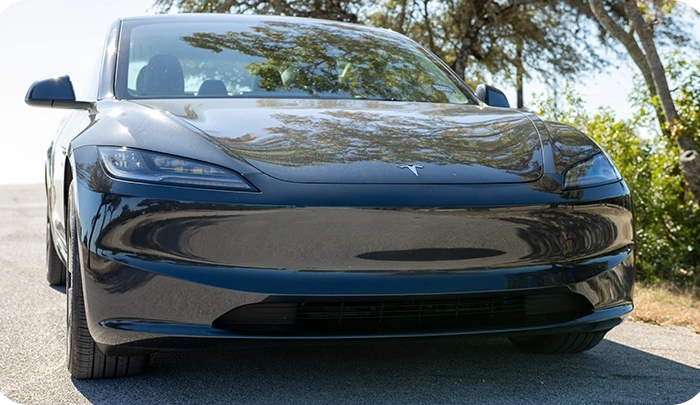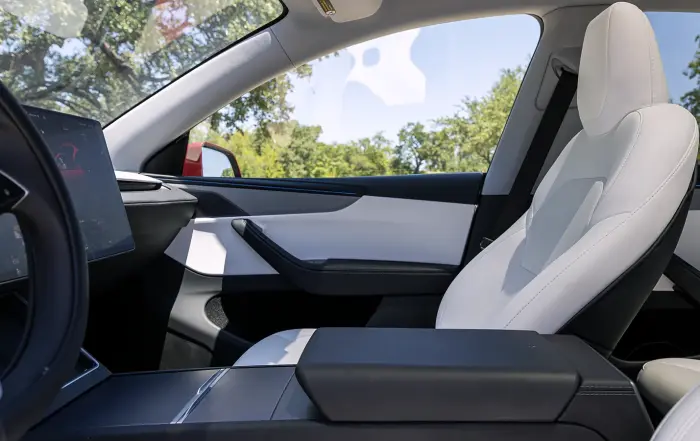

Tesla is the biggest name in the automotive industry right now. It’s also a polarizing brand for a variety of reasons. As a three-time owner, I want to break down the pros and cons of Tesla EVs using my real-world experience to help you better understand whether one may be right for you.
Pros of Owning a Tesla
There is a reason Tesla is the bestselling electric car brand in America and has one of the highest customer satisfaction rates in the industry. Below are just some of the top features that will make you love owning one.

My first-ever EV, a 2020 Tesla Model 3 Long Range.
Over the Air (OTA) Software Updates
Remember those days when you would buy a vehicle and whatever software and infotainment features it came with is what you had for the entirety of your ownership? Well, Tesla changed this when they introduced over the air (OTA, for short) software updates with the launch of the Model S.

The Model S was a market-changing EV when it first launched.
It’s a simple concept. You connect your car to a Wi-Fi network and periodically Tesla will release new features and bug fixes without you ever having to visit a service center. Not only that, but some of the things Tesla has been able to update, like improving braking performance and efficiency, are impressive to say the least.
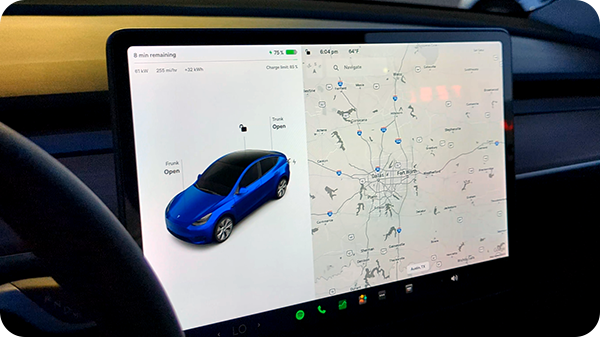
Tesla’s software changes and gets better over time. Even if your vehicle is several years old.
Tesla has made OTA updates an industry standard that many other brands are trying to quickly replicate, with some having less success than others. Regardless, thanks to Tesla’s leadership, car owners are getting more value from their vehicles as time goes on.
The Tesla Smile
You might have heard the phrase “the Tesla smile.” It describes the never-ending grin that you’ll undoubtedly get when pushing on the accelerator pedal of any Tesla. Even if you aren’t a car person, having extra power to pass on the highway or a low center of gravity for better handling would benefit everyone.
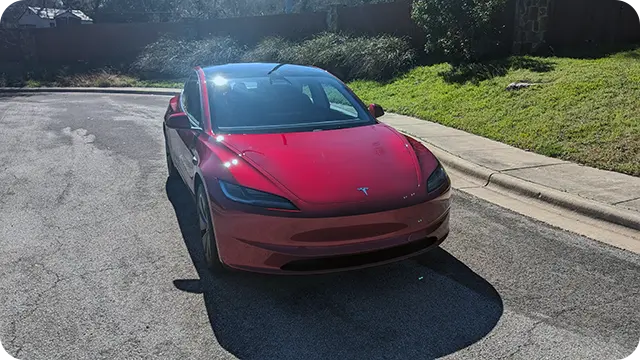
You owe it to yourself to take a Model 3 out for a test drive.
And no, not just the priciest, sportiest versions, but even in the least expensive models, like the rear-wheel-drive Model 3 that goes from 0-60 mph in 5.8 seconds. Compare that to a top-trim 2024 Toyota Corolla XSE’s 7.8 seconds to 60 mph and you see the point.
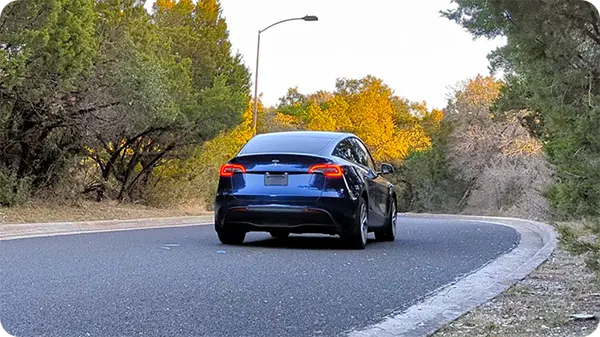
Gas-powered crossovers can be very sluggish. The all-electric Model Y has no such issue.
It’s not all about straight line speed either. Unlike the vast majority of internal combustion engine (ICE) vehicles that have transmissions, most EVs don’t. This means no more jerking from shifts, no more delayed power, leaving you with much better responsiveness.
One of my absolute favorite features is one-pedal driving. Instead of using physical brakes to slow down, a combination of the electric motors and an auto-hold feature can do it for you and bring you to a complete stop.

Electric motors can spin backwards, which slows your EV down and returns energy to the battery pack.
Not only is this a far more comfortable way to drive, but it’ll save you some money on brake replacements as well.
World-Class Computer Hardware
For years, car infotainment systems have been mostly the same and, let’s be honest, they did not age gracefully. Often slow, unintuitive, and clunky, vehicle software was mostly an afterthought in the past. Outside of no-to-slow innovation over many years, advanced driver-assistance systems (ADAS) software has remained relatively stagnant as well.

Tesla’s custom-made Full Self-Driving computer chip that released in late 2019.
Tesla has significantly altered the trajectory of both. Every model comes with a version of two leading hardware chips. One custom-made chip is used for Tesla’s famous Full Self-Driving (FSD) software and another, made by AMD, handles the infotainment system and other vehicle software duties.
Without getting into the technical nitty gritty, what you really need to know is that Tesla’s in-car software is fast. Really fast. It’s akin to using an iPad while most other vehicles are still using a Kindle. While the FSD software isn’t perfect and likely has a ways to go, it can still do things today that no other vehicle sold to the public can.
Advanced Software
With market-leading hardware comes the ability for Tesla to implement world-class software. There is a plethora of features that make a Tesla not just one of the best EVs to own, but one of the best cars, period.
What other vehicle can you watch Netflix or Hulu in natively? How about an integrated dashcam and security system? Then you have Dog Mode, which keeps the cabin temperature comfortable for your furry friend, and an internet browser so you can look at houses on Zillow with your spouse while you are out hunting for them.

Tesla’s in-car operating system is industry-leading.
Simply put, Tesla’s software experience is unmatched in the industry right now.
Mobile App Functionality
Much like in-car software, vehicle mobile apps were rudimentary at best and completely unusable at worst (many still are).
Tesla’s mobile app, on the other hand, allows you full control over your vehicle. You can do everything from heating your cabin on a cold day or cooling it down on a hot one, getting a live view from the cameras, activating a variety of features, and more.
Lots of companies have come along to mimic many of these features, but there’s still a notable gap.
Supercharger Network Access
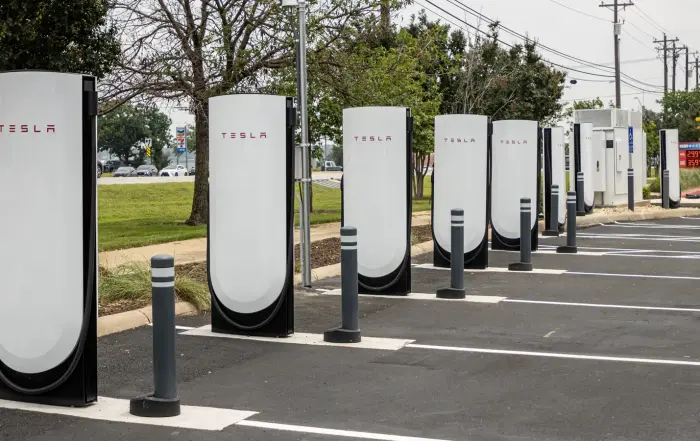
Without a doubt, Tesla has the best and by far the most reliable DC fast charging network in the industry. The Supercharger network has become ubiquitous across many countries including the US, with thousands of new stations across hundreds of locations being installed each year.
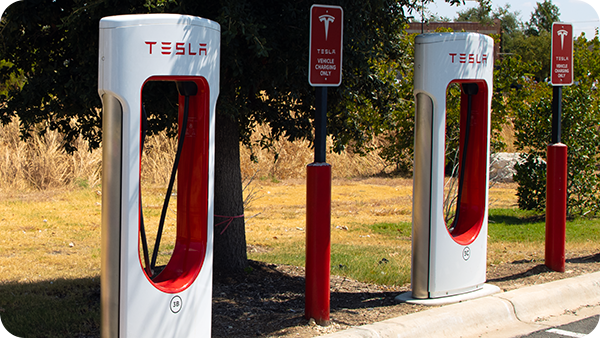
No one else can match Tesla’s Supercharger network.
However, with recent partnerships in place allowing most other EVs in the US to gain access to Superchargers, this advantage has all but disappeared.
Related Reading: Tesla Not Supercharging: Causes, Solutions & Tips
Avoiding Dealerships
My first new-car-buying experience was at a dealership in Portland. They knew I came from hours away for a specific car, let me test drive it and then told me that all the details we had discussed including price and loan terms were no longer valid.
I left and drove three hours back home without a new car that day. A complete waste of time. Experiences like these don’t happen with Tesla. There’s no haggling, no high-pressure tactics. The price you see online is what you, and everyone else, pays.
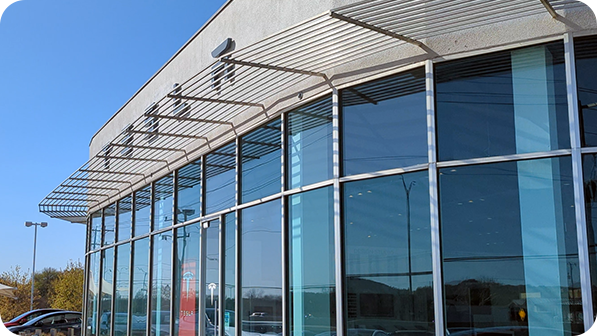
Tesla’s service centers are low-pressure environments for sales.
Instead of leaving the lot with your brand-new car feeling like you got hosed, you can leave excited knowing that you got the same deal everyone else did and you don’t have to worry about how you might have been taken advantage of. That’s the way car buying should be.
Reliability
I am aware that industry studies conducted by companies like Consumer Reports put Tesla’s reliability somewhere in the middle of the pack. But what those types of analyses often do is conflate reliability and build quality.

Model Ys produced at the Tesla GigaTexas factory waiting for delivery.
Though Tesla’s build quality can leave a lot to be desired (more on that later), across my Tesla ownership experience, one thing has become clear: they are some of the most reliable vehicles on the road, EV or not. Tesla has been fine tuning its components, from the electric motors to the high-voltage battery, for years now and it’s safe to say they have it dialed in.
Are there real-world ownership experiences of batteries, control arms, and onboard chargers failing? Absolutely, but this is one aspect of Tesla ownership I think is negatively oversold in the media.
Related Reading: Tesla Maintenance Costs & Warranty Information
Cons of Owning a Tesla
While there are many great aspects of owning a Tesla, some of which will change how you view and what you expect from your car, there are still some shortcomings.
Inconsistent Build Quality
Build quality has been a bit of a thorn in Tesla’s side from the beginning. Improvements have been made over time, but some issues, like the Model X’s notorious falcon-wing doors, are still a problem.
Some issues I’ve had with my Tesla EVs include interior trim pieces breaking, pre-existing damage from the factory, and rattles.

I had issues with the b-pillar trim breaking on my Model 3.
I cover build quality in my 2025 Tesla Model 3 Review:

Sometimes these issues can be addressed by the service center and sometimes they can’t or won’t address it. Tesla seems to be simplifying parts and construction with their newer vehicles, like the refreshed Model 3, so let’s hope build quality continues to improve over time.
Constant Unannounced Changes
Tesla believes in continuous improvement and product updates, typically with no notice provided to customers. This contrasts with traditional car makers who wait until a new model year to implement a redesign, which I believe is a fairer way to go about it.
Sometimes these changes benefit the customer, such as updated seat designs and higher quality trim materials. On the flipside, you could pay the same price and pick your vehicle up on the same day as someone else and get a vehicle with old components.
For example, Model S customers in 2022 were being delivered vehicles with both the old and new taillight designs at the same time for several weeks.
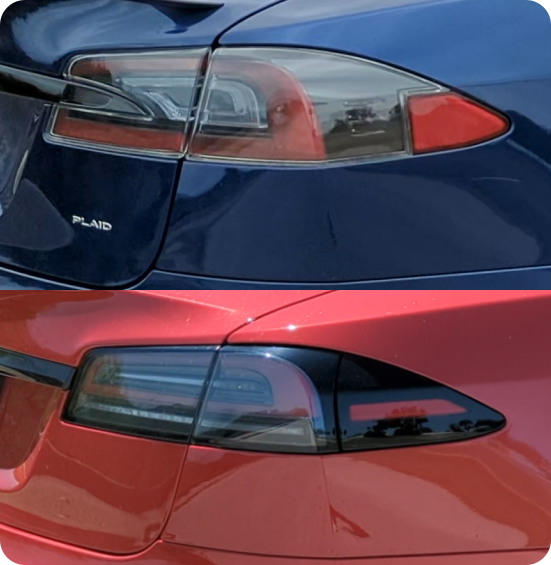
The original Model S taillights can be seen on the Plaid (blue) model vs the 2022 update (red).
This practice benefits the company, as they can get rid of old stock without losing out on the cost they paid for these parts, but as the end buyer, you can be left knowing you are missing out on features just because of the luck of the draw.
Real-World Range
Tesla’s reputation for its range claims isn’t the best. In fact, the EPA essentially forced Tesla to update their estimates in 2024. From my personal experience, I would tell new owners to expect 80% of the advertised range in “good” conditions.
Related Reading: Phantom Drain: Why Tesla, EVs Lose Charge + Tips
This would mean a 2024 Tesla Model Y Long Range owner should get around 260 miles on a full battery. At highway speeds, I’d say take off another 10-15% for a real world 215-230 miles of range.

Tesla’s software includes an energy usage graph that helps owners understand how their efficiency compares to the rated average.
Of course, this isn’t all on Tesla, as the EPA needs to update their testing to account for the unique circumstances electric cars face, especially in cold weather. A positive for Tesla is that all of their models come with a heat pump, which improves efficiency and range while heating the cabin.
Radical Interior Design Choices
I enjoy Tesla minimalism and like the lack of buttons and clutter. But not all the boundaries Tesla has pushed are a good thing. For example, the yoke.

My 2022 Tesla’s yoke with no stalks.
When I first got my Model S, I thought that I would enjoy the yoke. It looked cool, allowed you to see more of the driver’s display, and it felt futuristic. That’s until I tried backing in or parallel parking with it and it kept slipping out of my grip. That’s when I realized it was more of a safety hazard than anything else.
More recently, Tesla has been removing all stalks from their vehicles. You now shift and activate the wipers using the touchscreen, which also feels like another potential safety issue and one that I don’t particularly enjoy.

Tesla’s touchscreen-based drive shifter isn’t an improvement to the driving experience.
Whether it was an issue with where I placed my finger or the screen’s touch sensitivity, there have been far too many times when I tried shifting from reverse to drive (or vice versa) only to have it not register.
Long story short, this means there were situations where the vehicle wasn’t traveling in the direction I expected. You can imagine the bad outcomes from this. Shifting my other Tesla models into drive or reverse using the physical stalk was never a problem.
Related Reading: Tesla White vs Black Interior: An Owner’s Review
Questionable Material Durability
I’m not sure what it is about the interior materials Tesla uses, but it really feels like they just don’t hold up as well as other vehicles.
The seats seem to wrinkle more easily, hair products and sunscreen cause premature deterioration, and you get a sense that this material isn’t made for a hundred thousand miles of daily use. Signs of wear or damage can start showing up within just a few months.
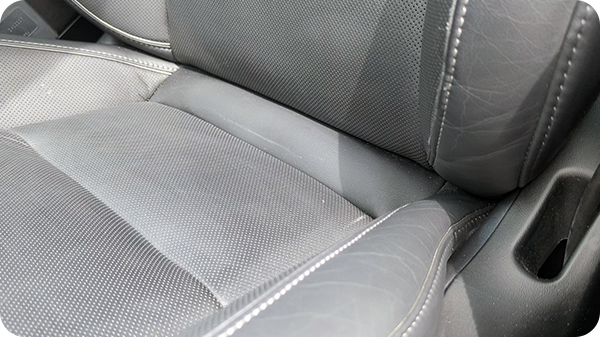
This driver’s seat of a 6-month-old Model S is showing signs of heavy wear already.
On the flipside, my VW ID.4 has 80,000 miles on it, including coming into contact with copious amounts of sunscreen and there isn’t a blemish to be found. There must be an explanation here.
Related Reading: How to Clean Tesla White Seats + Tips
Basic Autopilot Issues
I’m not here to question whether Tesla is one of the world’s leaders in helping to develop autonomous driving software, but I am here to say that, as of today, the basic Autopilot software that you get with your new car has some pretty annoying issues. Not the least of which is phantom braking.
Phantom braking occurs when your car inadvertently detects an object ahead of you that isn’t there and proceeds to slow the car down, often at a rapid pace. This issue can be extremely dangerous on the highway, as if you don’t resume acceleration immediately, it could cause someone to rear-end you.
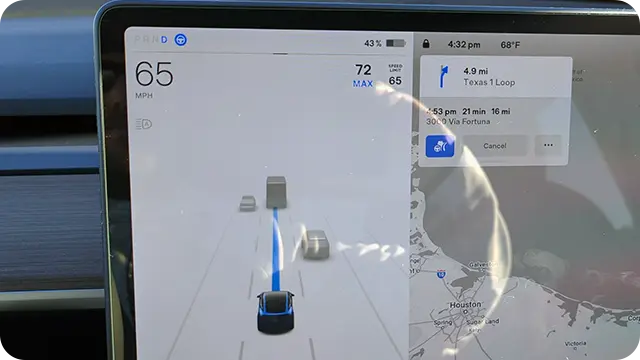
While Tesla’s latest FSD is groundbreaking, basic Autopilot seems to have been forgotten about.
My 2023 Model Y would provide constant false alarms from the automatic emergency braking system, warning me that I am closing in on an object that, again, isn’t there.
For all the amazing things that Tesla’s FSD can do, it feels like basic Autopilot struggles with issues many other cars, far less technologically advanced, don’t.
Lack of Common Features
While Tesla’s software can do more than most, and the standard processing hardware delivered is some of the absolute best, there are other features similarly priced EVs offer that Tesla doesn’t.
For example, you can find ventilated seats and a 360-degree camera on the Ford Mustang Mach-E, but not the Tesla Model Y.

Ford Mustang Mach-E’s 360-degree camera.
You won’t find a rear cross traffic alert or blind spot monitoring system on most models, either. Although Tesla has partially made up for this by adding a camera feed when the turn signals are active, I’d like to see the sensors and indicators as well.
Starting in 2022, Tesla removed ultrasonic sensors from new vehicles. These sensors, which are primarily used to determine how far the vehicle is away from objects while driving at slow speeds, were very helpful for simple things like parking.
In their place, Tesla Vision was implemented, which instead uses cameras to try and estimate distances. As expected, this change has not proven to be an upgrade so far. To make matters worse, if there’s inclement weather, the system may not work at all.

Tesla Vision’s proximity calculations not working due to rain.
Tesla has promised to continue to build on the feature to make it more accurate. In the 2024 Tesla Model 3 I drove, that’s certainly the case, but I don’t know if the latest updates are up to par with the basic sensors almost all new vehicles have.
Features That Don’t Really Work
Some features on Tesla models just don’t work as well as they do in other vehicles. This can be due to software bugs or stem from the fact Tesla spared the expense on some commonly used sensors.
One notorious example is the automatic wipers. Tesla, again, uses software and its camera system (Tesla Vision) to determine when it’s raining and how hard, while everyone else in the industry uses a physical sensor that measures moisture on the windshield.
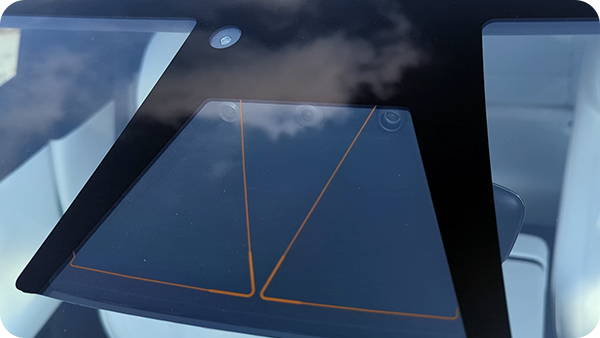
Tesla relies heavily on its camera system, which doesn’t work as well as physical sensors in my experience.
The result? You could be in a downpour and your Tesla won’t activate the wipers automatically, or it could be a nice and sunny day and the wipers will come on. A similar issue exists with the auto-high beams. Both issues are completely unnecessary, as the solutions for them were created years ago.
Should You Buy a Tesla?
Only you can answer that question, but from my perspective, Tesla still has a lot to offer that other car makers just can’t give you. Market-leading software combined with some of the best hardware and electric drivetrains you can buy makes for a compelling product.
You’re also more likely to deal with some build quality issues and you may even get a bit of a Frankenstein’d car depending on the development cycle. But if Tesla’s top-ranked customer satisfaction scores mean anything, it’s likely you’re going to be happy with your purchase.
Related Reading: First Time EV Owners: 5 Things To Consider
Sources
Related Articles