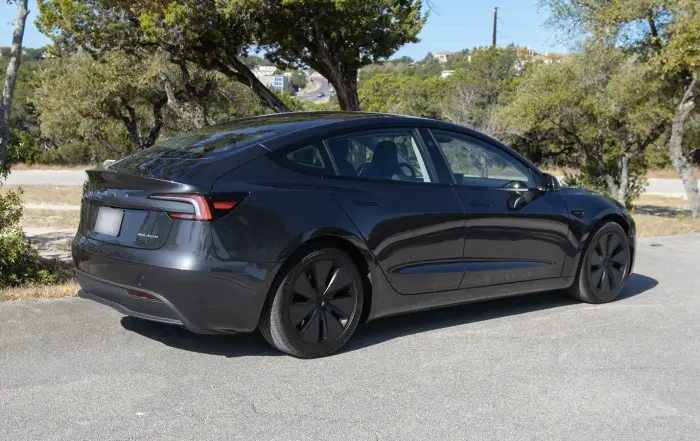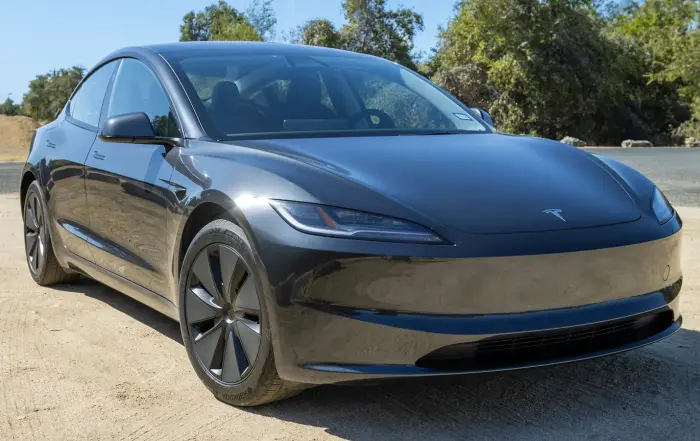


Tesla has had a reputation for less than stellar build quality over the years (and all of mine had their quirks too). Of course, we can attribute much of this to Tesla being a newer automaker. But some of their cars, like the Model 3, have been on the market for 8 years now.
I recently spent time with a new Model 3 and wanted to find out, are the latest builds improving or getting worse? Here’s what I discovered.
Exterior Build Quality
Looking at the exterior, there are a few areas where all Tesla models have historically struggled like:
- Misaligned hoods
- Misaligned trunks
- Large door and trim gaps
I’ll tackle each of these, and some others, before sharing my overall thoughts.
Front Hood Alignment
Front hood alignment issues typically resulted in a larger gap on one side or the other. Unfortunately, while not as egregious as I’ve seen previously, it’s still a concern on this Model 3. Additionally, the hood does not sit flush. Portions of it noticeably stick up in certain areas.

Not only are the gaps uneven, but the hood sticks up as well.
The hood is also extremely thin to reduce weight. But you must close it carefully, or you could possibly damage it over time.
Trunk Alignment
The refreshed Model 3 received a brand new taillight design; now, the entire assembly is attached to the trunk itself. Unlike the outgoing cars, this one didn’t leak even after I sprayed water all over it. Condensation didn’t build up, either. However, I did see that the seal gaps weren’t uniform on both sides.


The driver side taillight gap is a bit larger than the passenger side.
But, I’m happy to report that the trunk was properly aligned with the body.

Cargo Area Issues
Upon opening the trunk lid, there were two notable items that stuck out to me. First, the gaps where the quarter panel sheet metal attaches to the body clearly differ on the left side versus the right.


Next, there was a big gap on the left side of the rubber sealing, whereas it was seated properly elsewhere.

It’s odd how all of the gap issues are on the left side of the car.
On the flip side, the trunk lid now includes a soft carpet lining to help with noise, vibration, and harshness (known as NVH).
Door and Trim Gaps
This is one area where Tesla improved the most on the outside, in my opinion. Walking around the car, the black trim sat flush all the way around. The door panels themselves were uniform and I didn’t see notable areas where the metal didn’t align properly.

Tesla has really improved on the door panels and trim alignment.
The door handles used to vary greatly in flushness, with some sticking out in places or set too far into the panel. That’s not the case here, though.
Other Body Panels
Continuing with the positives, I was quite impressed that nearly every other major exterior panel fit properly. The pillar trim, front fender, headlight housings, etc., all sat flush.
Exterior Overall Thoughts
Tesla addressed many complaints and problems that many owners and I have had over the years. Panels are much better aligned, and so are the doors. At this point, only the front hood gaps remain, along with a few other fitment issues more likely a result of rushed production than any inherent design flaw.
Interior Build Quality
Older Model 3 interiors (including my own) also experienced quite a few consistent problems, including:
- Poorly connected trim pieces breaking off
- Misaligned dashboard components
- Improperly set door seals
- Rattling glass when closing the door
- Poor material durability
Spoiler alert though, this is where Tesla has made the most progress.
Interior Body Trim Pieces
One glaring design flaw with the old Model 3 (and Model Y, for that matter) was that interior body trim would often rattle, come loose, or even break. In fact, my 2020 Model 3 went to a service center twice to fix this issue on the driver’s side B-pillar.

The B-pillar trim used to have flimsy connectors and would easily break off if you accidentally hit it.
First and foremost, Tesla clearly redesigned the interior trim components and their connectors. The pieces themselves are thicker in some areas and no longer have any give when you attempt to move them side to side.

The trim itself is wider and better connected to the frame of the car now.
I pressed against the trim throughout the car, from the side pillars to the headliner, and felt confident this interior won’t suffer from the same problems my old Model 3 did.
Dashboard: Sometimes Simple Is Better
The old dashboard, with its cheap-looking white plastic or wood veneer accent piece and accompanying silver trim, is gone. This is a great thing because I never sat inside a Model 3 or Model Y where Tesla properly aligned them.

Seriously, the dashboard trim in every Model 3 or Y I sat in was aligned like this.
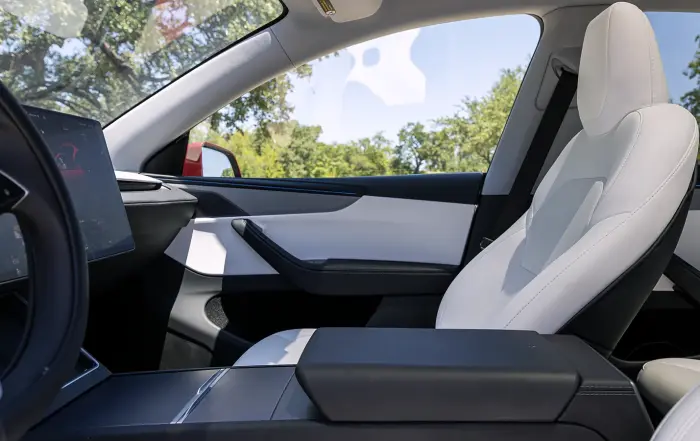
In its place is a much simpler design, with only a few major components, including an accent component wrapped in a gray textile material that extends across the dash.

While some may miss the wood trim, the trade-off is well worth it, in my opinion.
Needless to say, this simplifies manufacturing and removes many potential build challenges.
Door Panels and Trim
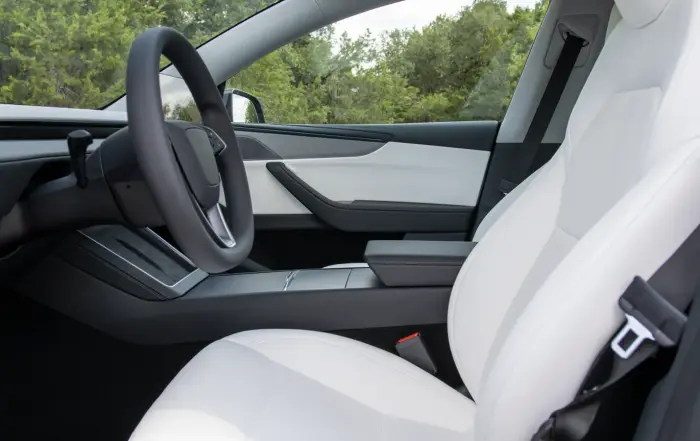
The door panels also received a significant makeover, featuring new materials, extended soft-touch surfaces from top to bottom, and ambient lighting strips that I’ll get to in a bit.

Starting with the body trim seals, all three Teslas I owned (a 2020 Model 3, 2022 Model S, and 2023 Model Y) had “bubbles” that needed to be corrected, which happens when they aren’t placed and glued properly.

My Model S had an improperly placed door seal, which seemed to be common.
In this car, all of the seals were attached correctly. The door panel seals are also thicker than before; anecdotally, they seemed to help keep the cabin cooler and cut out some road noise when driving. This and internal panel changes finally give the Model 3 that quality “thunk” sound when you close the door.

The Model 3 (and Model Y) sound like a BMW when you shut the door now.
One final noteworthy addition to the door panels is the new carpet-lined door pockets, which eliminate rattling when you put things in there.
Glass Changes
All of the glass found in the Model 3, from the roof on down, now features what Tesla calls “Tesla Acoustic Glass.” Additionally, all four doors now have dual-paned windows.

Dual-paned windows like the Model 3’s help reduce cabin noise.
Does it make a difference? You’ll find the answer in the “cabin noise” section below.
Ambient Lighting
I’m a big fan of ambient lighting and find that it’s been a great addition to the newer Tesla models. As far as build quality goes, though, whenever you try to line up the lighting strips from the dashboard with the door, you’ll always find a little incongruence.

The cabin is even more futuristic looking now.
A more important area of concern is that many owners have mentioned their lighting strips are cracking. Though this particular car didn’t have that defect, hopefully Tesla makes some changes and addresses it.
Vinyl Durability, Still a Question?
One concern I’ve always had with Tesla is material durability. That’s because within the year I owned my original Model 3, the vinyl had already started to develop spots where it was breaking down, something I didn’t experience with any of my previous cars or even after 5 years with my Volkswagen ID.4.
While there is no way for me to accurately gauge how the material will hold up long-term, ripples in the vinyl seats, as well as some fraying in the stitching, do cause some red flags to pop up.

The ripples found on these brand new seats could be from not stretching the material correctly or possibly early signs of wear.
I’d recommend doing more research if you’re concerned about it. Some owners will claim they have never had a problem, while there are many stories and pictures to the contrary. What I will say is that you should be very careful about allowing chemicals like sunscreen or hairspray to come into contact with the seats or steering wheel. They’ll quickly eat away at the vinyl.
Interior Takeaways
Overall, the new interior feels far more upscale; Tesla paid a lot of attention to detail and nearly all of the outgoing model’s issues have been corrected. My biggest worry is long-term durability of the vinyl surfaces, but that’s TBD.
Cabin Noise, Including Rattles
One easy way to tell if a vehicle is built well is whether you hear a lot of cabin noise or various rattles when you drive. Tesla knew both were a concern and truly went to town addressing these problems. I know this because both wind and tire noise have been drastically reduced. I registered 67.5 dB at around 70 mph, which is luxury-car quiet.
The only minor rattle I noted was on very rough roads, where the center console (mostly hard plastics rubbing against each other) would make a slight squeak if the covers were retracted.

For some reason, the center console will let out some light squeaks on rough roads if it’s open.
Is the Reputation Earned or Not?
When you summarize all these improvements and remaining issues, it’s very clear Tesla has dramatically increased its EVs’ build quality. Yes, manufacturing variances will still arise, along with some lingering quirks, but I have no doubt Tesla is much closer to shedding the build quality stigma of the past.
Related Articles