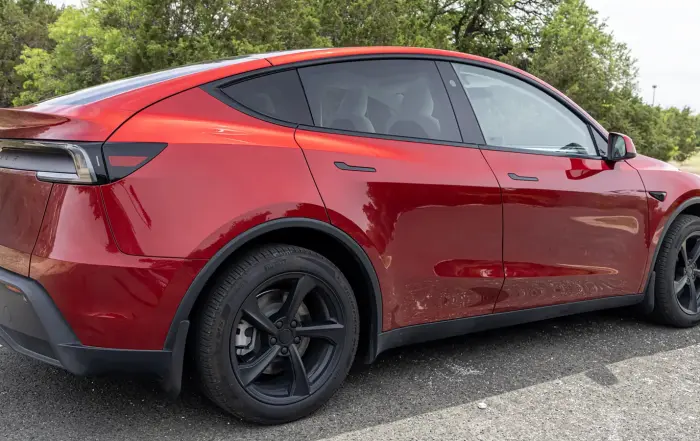
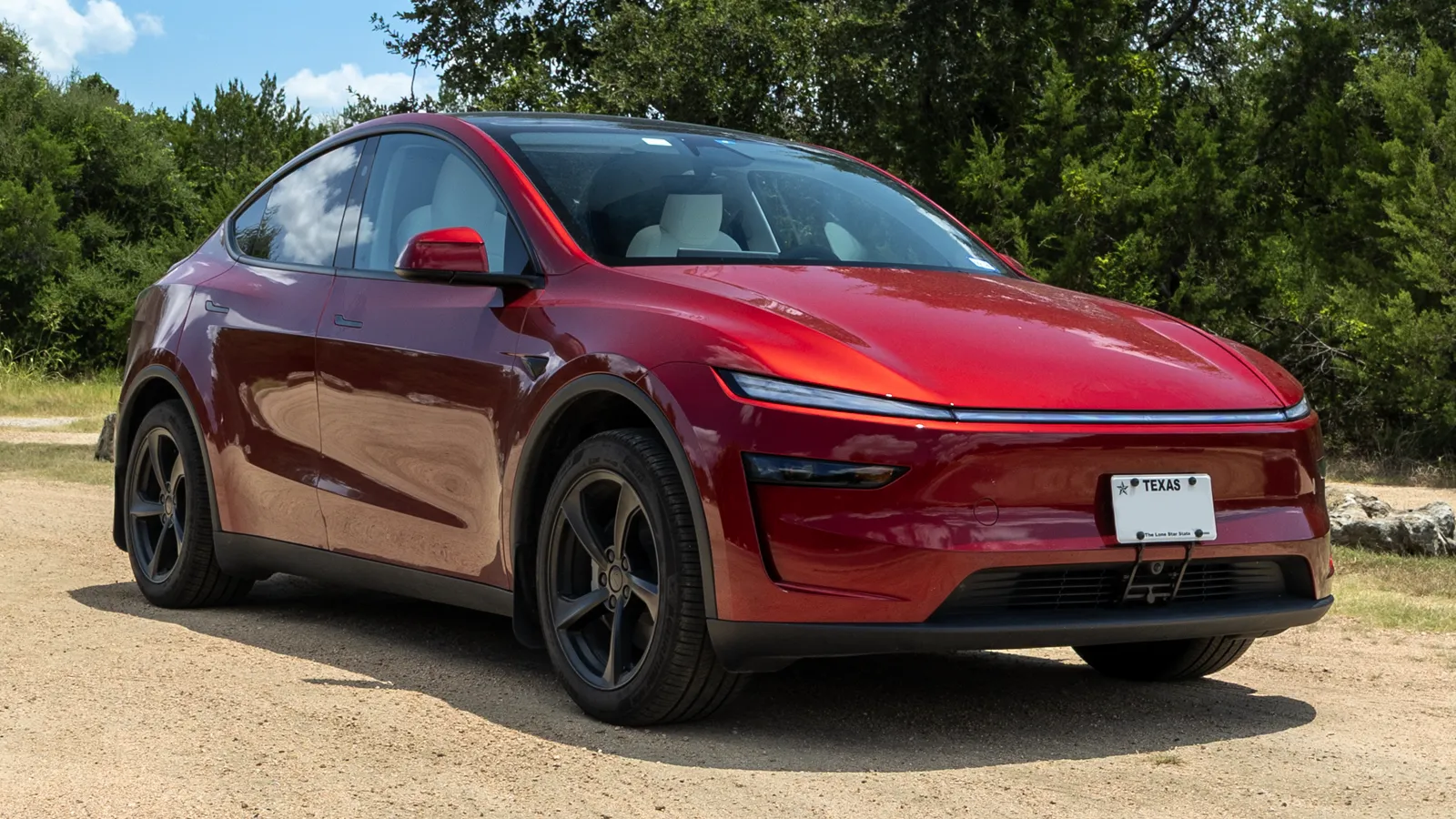

I’ve owned my Premium RWD Tesla Model Y Juniper for 1 year and 15,000 miles (24,000 km). Here’s what it’s been like as a daily driver and the one thing I would go back and change if I could.
Battery Degradation
All EVs lose usable battery capacity over time. This means they offer less range on a full charge. The Model Y has a service menu item that provides an estimate of remaining battery capacity. I wanted to see how accurate it was as well as find out what my Model Y has left after the first year, which sees the largest drop as the pack stabilizes.
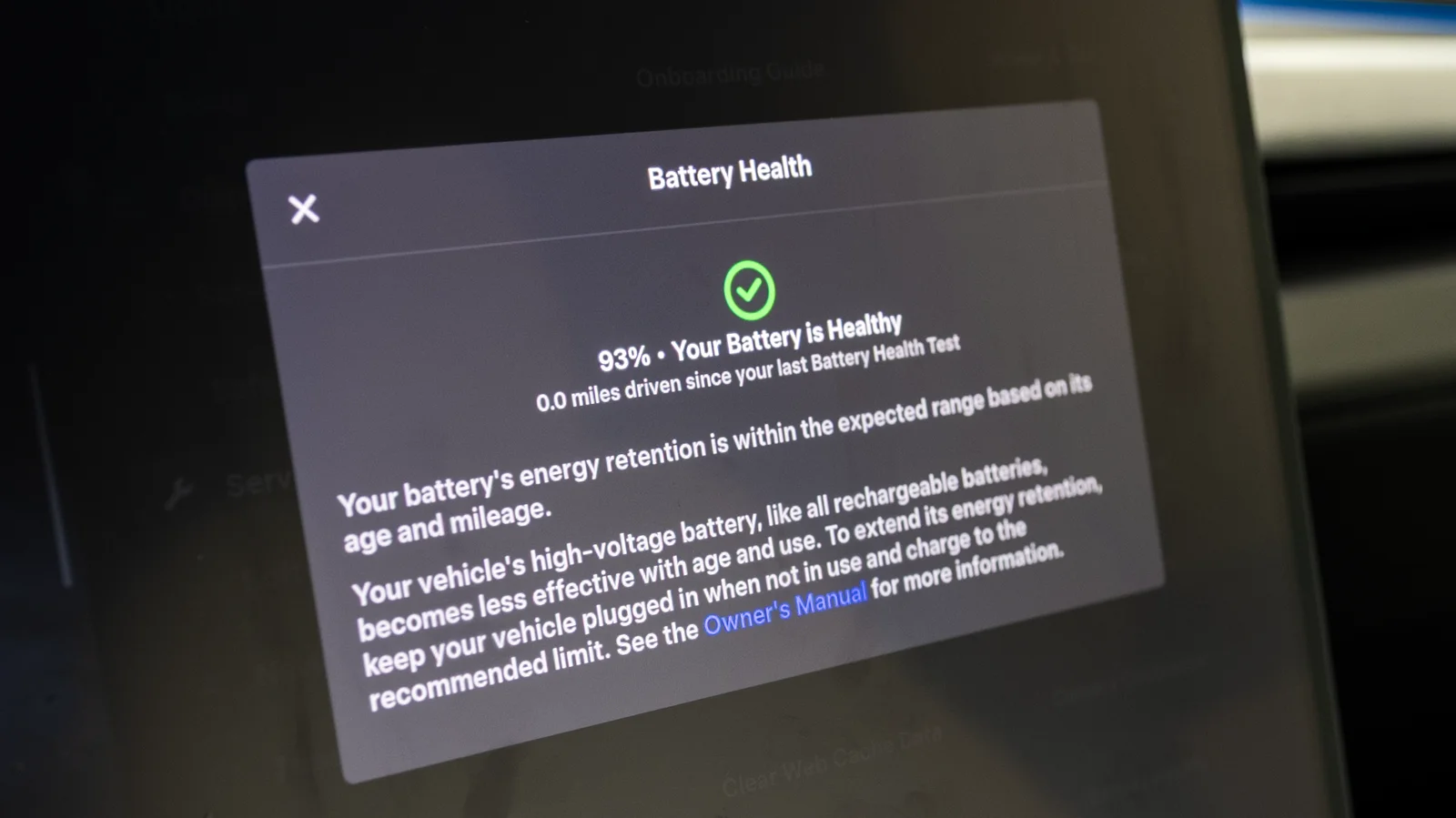
I ran the built-in test, which requires a Level 2 (240V) outlet. It took 18+ hours on a NEMA 14-30. When it was finished, it showed 93% capacity remaining. This was the same as the service menu estimate provided prior to the test.
Real-World Range & Efficiency
The EPA rates the Premium RWD Model Y Juniper on the base 19″ wheels at 357 miles (575 km). This equates to an efficiency of 223 Wh/mi (139 Wh/km). Across 15,000 miles (24,000 km) of mixed driving, including several thousand miles’ worth of road trips, I’ve consistently seen efficiency closer to 250 Wh/mi (155 Wh/km).
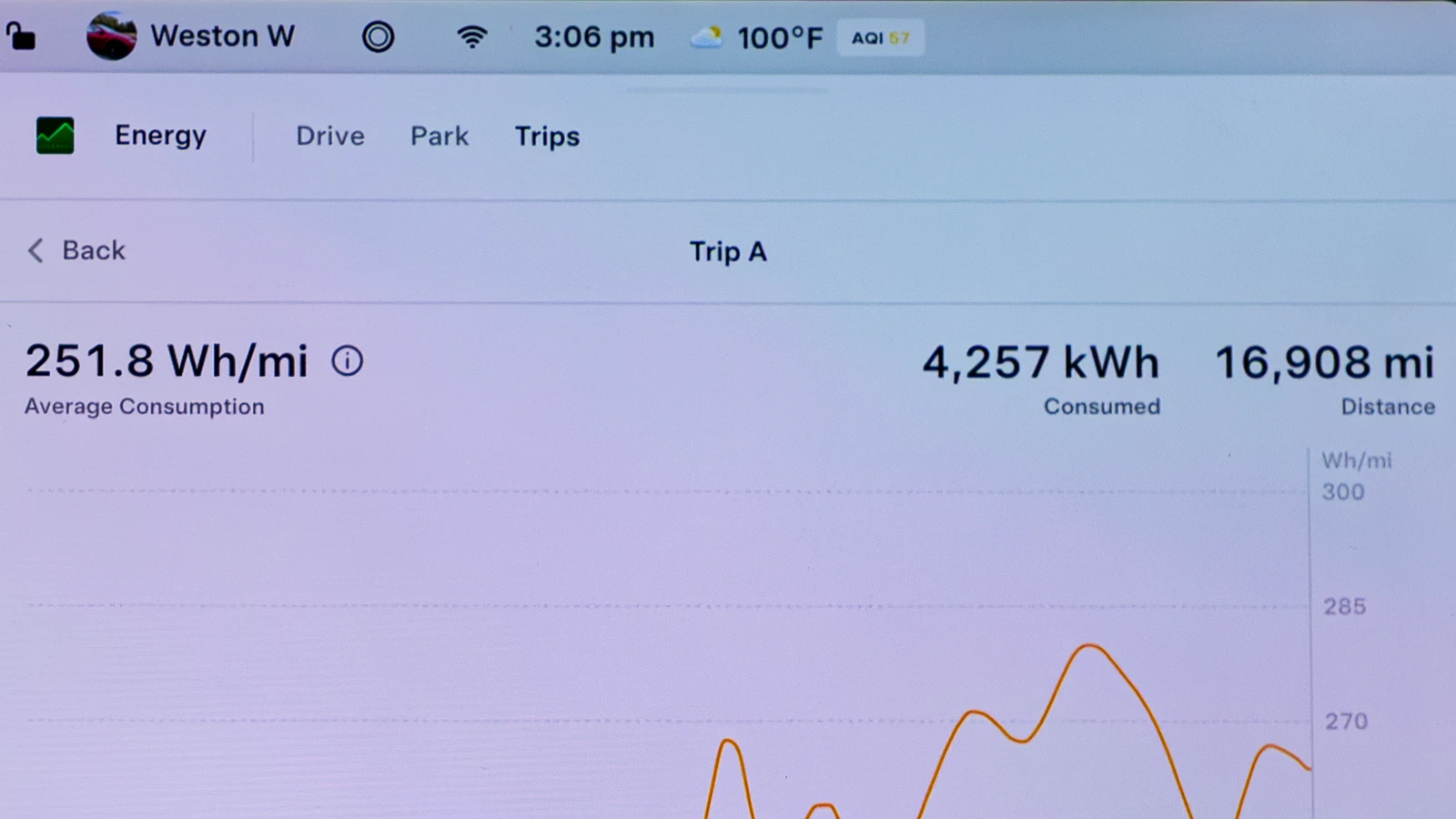
My Model Y’s average lifetime efficiency is around 250 Wh/mi vs the 223 Wh/mi advertised.
That would put real-world range closer to 318 miles (510 km). If we include the 7% capacity loss, the actual amount of range on a full charge is 296 miles (475 km). Keep in mind it’s hot most of the year where I live (Texas) and winters are pretty mild.
Overall, I’ve been very happy with range performance and haven’t experienced any range anxiety in this car.
A Focus on Drag Reduction
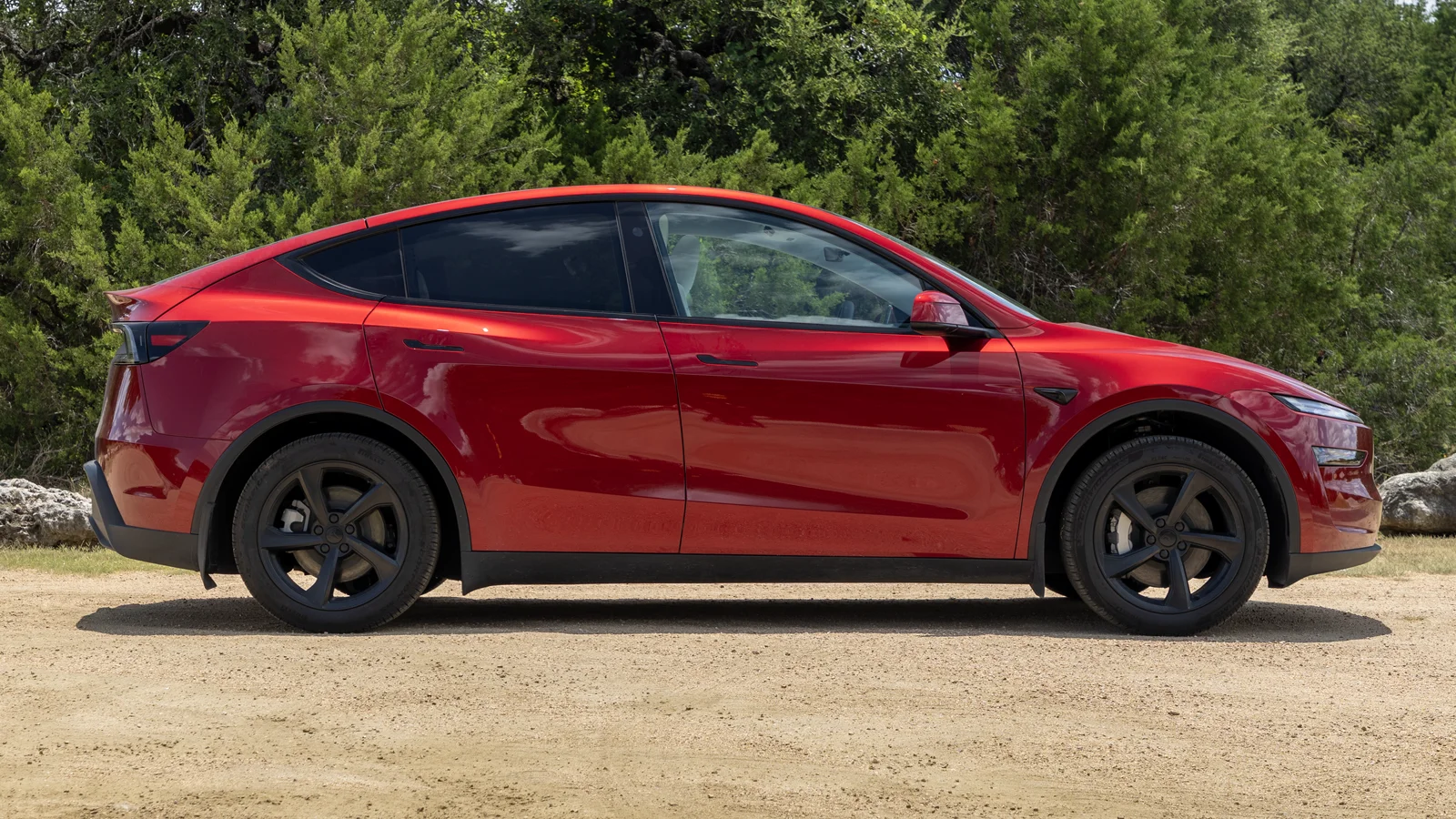
Tesla put a lot of work into reducing the Model Y’s wind resistance. You can find evidence of this everywhere, from the curves on the body panels and side mirrors to the aggressively sharp rear spoiler.

The question, though, is whether it made a difference in real-world range. The legacy Long Range RWD Model Y was EPA-rated at 320 miles (515 km). The new Juniper RWD offers 357 miles (575 km). So it seems the answer is yes.
Phantom Drain
Some of my older Teslas used to struggle a little bit when it comes to phantom drain, or the amount of energy the battery pack will lose when the car isn’t plugged in. This can happen for any number of reasons, including the battery management system controlling temperatures of the cells, Sentry Mode running, etc.
Thankfully, it seems Tesla has addressed this and it’s a complete non-issue at this point. In fact, my Model Y Juniper typically loses less than 1% of charge per day sitting in my hot garage. That’s so long as Sentry Mode and Cabin Overheat Protection are turned off.
A Sunshade Is a Must
If you live somewhere hot, I’d strongly recommend getting a sunshade for the glass roof. It still lets in a lot of heat, despite being heavily tinted. I performed a heat-soak test by cooling the cabin down to 72°F (22°C) and then letting it sit in the direct sun in the middle of a 102°F (39°C) day.
- Without a sunshade, the cabin hit 100°F (38°C) in 31 minutes
- With the sunshade I use installed, it took 39 minutes for the cabin to reach 100°F (38°C). That’s 26% longer.*
- *For the second test, I cooled the cabin back down to 72°F (22°C) in the garage first.
For daily driving, this means your A/C can perform better because it’s fighting less heat and real-world range will also improve. If you’re curious, I use Hansshow’s retractable sunshade (code “EVHELPHUB” gets you 20% off). I like being able to keep it installed year-round while getting some light in the summer mornings.

The retractable sunshade I use in my Model Y (made by Hansshow).
Ownership Costs
Tesla advertises their vehicles as having a lower cost of ownership. But when you consider maintenance, insurance, charging costs, and depreciation, is that actually true?
Maintenance Expenses
Starting with maintenance costs, the list is quite short. I’ve paid $60 (€53) for new wiper blades and $65 (€57) for a tire rotation (though technically I’m due for another one soon). That’s only $125 (€110) for the first year. As a side note, EVs tend to wear down tires more quickly due to their torque and weight.

The OEM Pirelli Scorpion tires are only going to last me about 2 years at the current pace.
My factory Pirelli Scorpion tires are currently measuring around 7/32 inch (5.6 mm) vs 10/32 inch (7.9 mm) when they were new. That means I’ll likely be replacing them around the 30,000 to 35,000 mile (48,000 to 56,000 km) mark, which isn’t a great lifespan and will increase costs long-term. To avoid this next time, I’ll switch over to a more robust tire with longer tread life when they are due.
Insurance Costs
You hear a lot about how expensive Tesla EVs are to insure. While insurance premiums are heavily dependent on the person and location, here’s a quick apples-to-apples comparison between what GEICO charges me for the Model Y and what they would charge me for other crossovers:
- Tesla Model Y Monthly Premium – $250 (€220)
- Mazda CX-5 Monthly Premium – $190 (€167)
- BMW X2 Monthly Premium – $235 (€207)
Based on my real-world data, a similarly priced vehicle like the BMW X2 costs nearly as much to cover. Therefore, I don’t believe there’s a Tesla-specific penalty.
Charging Costs
As with insurance, charging costs will vary dramatically depending on where you live and how you charge. Home charging is almost always the least expensive way to fuel up your EV and it’s what I’ve used most of the time. Here’s how the math works out so far after 15,000 miles (24,000 km).
Home charging (Level 1 using the included cable)*
- 11,400 miles (18,300 km)
- 4,050 kWh used
- $0.12/kWh (€0.11/kWh)
- Total Cost – $500 (€440)
*Level 1 charging on a 120V outlet is roughly 75% efficient.
Public Fast Charging (Tesla Superchargers)**
- 3,600 miles (5,800 km)
- 985 kWh
- $0.37/kWh (€0.33/kWh)
- Total Cost – $360 (€315)
**All numbers except mileage come from the Tesla app.
Total Charging Costs After 15,000 miles (24,000 km): $850 (€750)
Compare that to a gas crossover that gets 30 MPG (7.8 L/100 km). With gas averaging around $4.00/gallon (€0.93 per liter) in my area, I would have paid roughly $2,000 (€1,760) instead. That means the Model Y has saved me nearly $1,200 (€1,055) in fuel costs already.
Depreciation
Finally, another common complaint you’ll hear about EVs is that they lose their value much more quickly than other cars. But this hasn’t been true in the United States ever since the federal tax credit expired in 2025. Here’s what my Model Y’s depreciation currently looks like as of the time of writing:
- The original price was $51,000 (€44,900) + tax.
- Kelley Blue Book puts my vehicle’s current used value at $43,000 (€37,800).
- That’s a 16% depreciation drop after one year, compared to the new-car average of 20%.
Keep in mind, I did qualify for the US federal tax credit of $7,500 (€6,600) and received a $2,500 (€2,200) rebate from the state of Texas. So my real out-of-pocket cost was $41,000 (€36,100) plus tax. That means I haven’t lost any value other than the sales tax.
Build Quality Could Be Better
With the refreshed Model Y, Tesla has redesigned and reduced many of its components to improve manufacturing efficiency and build quality. My vehicle was built in September 2025 at the Austin, TX factory.
Here are the issues I’ve encountered so far:
- The corner pieces of both rear doors stick out from the body.

- The right rear panel gaps were noticeably larger than on the left side.

- The applique was loose and squeaked loudly.

- The cargo hatch was misaligned, which you can somewhat see based on how the hinge was pushing against this rubber liner on one side (but not the other).

This hinge isn’t supposed to touch this rubber liner (it doesn’t on the other side).
- It was also damaging the paint on one of the quarter panels.

- The suspension had an odd clunking noise.
- The driver’s seat makes clicking sounds which have progressively gotten worse over time.
All in all, I’d give build quality about a 7/10. Tesla has done better.
Service Experience, Also Not the Best
Sadly, the Tesla service experience was not great, at least to start. I created an appointment in the Tesla mobile app before I even left the delivery center. About two weeks later, the car went in and that kickstarted a bit of an unexpected adventure.
- At the first service center visit, about two weeks after delivery, they had my car for 24 hours and performed no repairs.
- Side note, they also gave me a loaner that wouldn’t charge, which wasn’t a fun experience either.
- I recreated the ticket and scheduled service at a different location a week later.
- During the second visit, a tech rode along with me and inspected the issues. He noted that some, such as the door corners, weren’t fixable (as I expected), but they committed to fixing most of the others.
- After about three days, I got a call that a supervisor was in town, wasn’t happy with the repairs, and they’d be keeping my car another few days.
- After a week, the car was done and I picked it up, only to notice the quarter panel damage hadn’t been addressed and new damage had appeared.
- The body shop spilled some sort of chemical on my taillight housings and scratched them.

- So, I called the service center and they apologized, gave me a $250 (€220) account credit for future service, and took the car back immediately.
- They also provided me with a Cybertruck loaner for the week, which I really enjoyed.
- After another week, I got the car back and nearly everything had been addressed:
- They realigned the hatch.
- They replaced the taillights (though the gap remains).
- The applique squeak was gone.
- The only remaining issue was the suspension clunking noise, which didn’t have a fix yet. That came about 7 months later (June 2026). After another week in the shop (and multiple last-minute delays), it was done.
Now, the only remaining problem is the driver’s seat clicking noises, which developed after this initial work. I don’t plan on taking it back in until something actually breaks.
Reliability
On the flip side, the Model Y’s reliability has been perfect so far. I’ve had no issues with driving, charging, or major software bugs.
Exterior, More Than a Fresh Coat of Paint
First, I’d like to offer my condolences to Chevrolet, as the new front end of the Model Y looks quite similar to that of the Chevrolet Equinox EV and Blazer EV. People are more likely to associate the sleek design with Tesla moving forward.

While it retains some parts like the door handles, the Model Y is no longer just a bubbled-up version of the Model 3. The light bar mirrors that of the Cybertruck and Cybercab. It definitely creates a more futuristic vibe.

The matrix LED headlights sit in the housing below the light bar.
These pixel-based headlights let you have the brights on at all times. The sections individually turn off when they detect another vehicle in front of you. They’ve worked great over the past year and are a big improvement over the previous generation.
Finally, Updated Aero Wheel Covers
The base 19” “Crossflow Wheel” covers are now dark and match the other body trim pieces much better.

However, taking the covers off reveals a surprisingly good-looking base wheel. I prefer the look once you pair it with Tesla’s official wheel cap kit. Taking the covers off cost me about 2-3% of range, but it’s well worth it, in my opinion.

Generous Cargo Area
The Model Y has 71 cubic feet (2,000 L) of rear storage space with the back seats folded down, including two large sub-trunk areas. That’s more than practically any other competitor in this space, outside of the Rivian R2. Based on my experience, there’s plenty of room for things like IKEA home project supplies, that’s for sure.

On top of all of the space, it also includes a 12V outlet, which can remain activated even if no one is in the car. Thanks to this, I keep a portable fridge (I have one made by BougeRV) in my sub-trunk so I can grab groceries while I’m out without having them spoil.

This 20-quart portable fridge made by BougeRV fits nicely in the sub-trunk and comes in handy all the time.
Automatic Second Row
This is one of my favorite features for sure. The Model Y can both fold and unfold the second-row seats with the push of a button. A couple of motors raise and lower the rear seats automatically in about 10 seconds.

With just the press of these buttons, the second row will automatically fold itself down or back up.
Even better, the front seats will also automatically move forward at the same time. This ensures that the second row can go all the way down without you having to go around to the front to adjust them. I’ve probably used this function well over 100 times during the past year, and it wasn’t even something I thought about when I bought the car. No issues to speak of either. The motors in the seats are still going strong.
Not an Automatic Frunk, Though
Unfortunately, Tesla is still going down the path of not making the front trunk automatic like the rear. That’s too bad, because no one wants to fiddle with their phone or the screen when their hands are full. On the flip side, the frunk space is still a solid 4 cubic feet (115 L). It’s where I put my grocery hauls (it holds 7-8 bags).

It also now has a removable drain plug so you can put ice directly into it, if you want. The added drain is a nice touch, but I would prefer a 12V outlet as well.
Towing
On my Model Y Juniper, I opted for the tow hitch option. All trims with the official package can tow up to 3,500 pounds (1,588 kg), with a maximum tongue weight of 350 pounds (159 kg, or 10% of the trailer weight). If you attach a bike rack or cargo carrier, the limit drops to 160 pounds (72 kg). The hitch receiver is a standard 2-inch.

The hitch receiver area doesn’t have much space for locks or connectors.
I tested it out during a house move and there are a few things worth noting. First, the area around the receiver is pretty tight. It took a U-Haul employee and me about 20 minutes to hook the safety chains to the attachment loops. We couldn’t fit our hands and the hooks in the space at the same time.
Next, you’ll need a 7-pin to 4-pin wiring adapter for some trailers so the brake lights work. Finally, towing will eat your range quickly. I was hauling less than half of the maximum capacity and range dropped about 35%.
On the positive side of things, towing with a Model Y is a great experience. The software has a built-in “Trailer Mode” that configures the vehicle’s driving dynamics so it’s safer and easier to control. But thanks to all of the low-end torque and horsepower, the Model Y can carry along loaded trailers without any sign of struggling. It’s completely smooth.
A Refined, Premium Interior
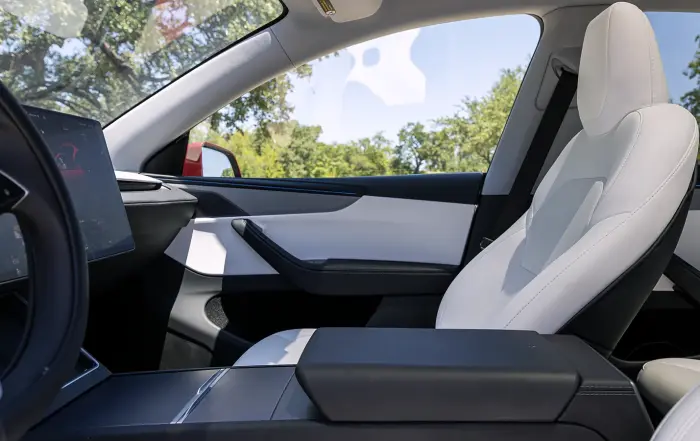
The refreshed interior is a replica of the Model 3, and that’s a good thing. There’s soft-touch stitched vinyl everywhere you look and feel. This includes the door panels, center console, and the entire dash, save for the textile accent piece. The interior finally matches the quality its price tag implies.

The upscale look of the interior finally matches the car’s $50,000+ price tag.
Doors That Thunk
I can’t get over how good the door panels look, especially in the white interior. The panel starts with soft-touch black vinyl and transitions to a contrasting textured white vinyl. The gray cloth material and metallic speaker grille finish the look. Thanks in part to more robust seals, you get that luxury-car “thunk” when shutting doors now. No more window rattles.

The door panel design is absolutely gorgeous with the white interior.
The Seats Are Still Great
Sticking to Tesla’s reputation, the seats are some of the best I’ve sat in. The ventilated front seats offer decently strong airflow that has certainly made a difference in the 100-degree (38°C) summers we get here in Texas. I have sciatica, and despite several road trip days of nearly 12 hours in the seat, I’ve never had numbness or a flare-up.

The Model Y’s seats are some of the best in any car.
An Airy Cabin
The Model Y looks and feels incredibly spacious. With an all-glass roof and no transmission tunnel, headroom and legroom are excellent. That’s despite a higher-than-typical floorboard due to the battery pack. I’ve had passengers as tall as 6’2″ (188 cm) sit in the back for several hours and they had no complaints.

White Interior: A Good Choice?
Over the last year, I’ve stuffed this car with moving boxes, heavy equipment, and home project supplies. I’ve also been known to spill a few things. Despite all of this, I absolutely do not regret my decision to go with the white interior option.
It has held up well with no signs of wear or damage to speak of. I also measured the white seats at 15 to 20°F (8 to 11°C) cooler than the black vinyl trim when the car sits in direct sun. Plus, if you do get it dirty, nearly everything comes out with unscented baby wipes or a gentle interior cleaner. I definitely recommend the white interior option if you prefer the look.
Regardless of what interior color option you go with, you’ll want to replace the cheap, thin carpeted mats that the car comes with. I’ve been using 3W’s all-weather mats and liners for the past year and they have been excellent. The fit is solid and the mats have held up incredibly well.
Plenty of Storage
If you need cabin storage, the Model Y has it. There are two very deep cubbies in the center console. There are also good-sized door pockets that can fit my 40 oz (1.2 L) bottles, though it’s a snug fit.
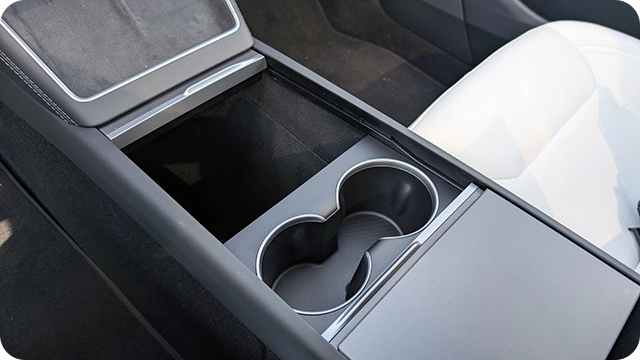
There’s not one, but two large cubbies in the center console.
Ambient Lighting
Say what you will, but ambient lighting can take car interiors to another level. The Model Y’s ambient lighting design has a significant but underrated change compared to the Model 3.

The ambient lighting adds an extra dimension to the Model Y’s interior.
As with the Model 3, the lighting strips extend from the door panels and across the dash. However, the Model Y’s implementation is such that the black dash vinyl covers the silver part of the lighting strip. This eliminates the daytime windshield reflection that plagues the Model 3, where it can look like a gigantic crack.
As a result, it’s far less distracting when you are driving during the day. Kudos to Tesla for addressing this issue. Now they just need to do it in the Model 3. Also, to date, I haven’t had any issues with the light strips peeling (as some early Model 3 Highlands did) or any LEDs going out.
Steering Wheel Changes
The updated steering wheel remains on the thicker side. It’s very BMW-esque in that way. However, the steering wheel is comfortable to hold, while still feeling substantial and premium. Buttons remain on the steering wheel for lights, wipers, and a few other controls.

The steering wheel has a premium feel that’s similar to German luxury brands.
It feels great in the hands, but I’m a little paranoid about damaging it, so I’ve kept a cover over it most of the time.
Modestly Updated Touchscreen
The 15.4” touchscreen received a slight upgrade with smaller bezels and increased brightness. I was hoping for a larger size option because bigger is always better, right? Otherwise, not much different in this department.
I’ve been pleasantly surprised by the lack of glitches or bugs. My older Teslas would get them quite frequently. Think issues like Bluetooth failing to connect, music skipping, screen reboots, etc. But there hasn’t been any of that in the Juniper.

The 15-inch center screen hasn’t changed much, but it didn’t need to.
Rear Touchscreen
Tesla has also added an 8-inch screen for rear passengers. They now have access to climate and media controls. The screen should pop out and extend up to save passengers from neck pain, but at least it’s there.

I wish the screen could pop up, as it would be more usable that way.
A Plus for the HVAC System
Tesla has finally added the ability to turn off the front passenger vent while keeping the others open. This has saved me from so many arguments.
Software & Infotainment
It’s widely accepted at this point that Tesla has the most advanced and best software experience in the car industry and it’s not close.

What other automaker’s software has this many features?
First of all, the screen is extremely responsive, like an iPad, and menus and apps load instantly. Features like voice commands are super useful and reliable. You can control the climate, find and play your favorite song, and plan a long road trip with all of the charging stops included automatically.
That’s not even covering the built-in media applications like Netflix or YouTube. You also have access to a dashcam and Sentry Mode, which uses some of the 8 exterior cameras to monitor the vehicle’s surroundings. Finally, there are various useful functions like Dog Mode and Camp Mode.
I own another EV that has had one software update in five years. Tesla’s commitment to free and, importantly, frequent over-the-air updates is another selling point you shouldn’t take for granted.
Upgraded Bluetooth Functionality
Tesla has improved the car’s microphone and Bluetooth connectivity so that calls are clearer and more stable. After a year of calls, I can say it’s drastically better than my 2020 Model 3. People on the other end say it sounds like we are talking on the phone directly.
Phone Key is better, too. I haven’t had any issues with delays when unlocking the doors or any failures to connect for driving. I haven’t had to use the physical backup key card yet.
Market-Leading Mobile App
Tesla’s mobile app is also the best of its kind. It allows you to control most of the car’s functions from anywhere. For the most part, I use it to precondition the cabin when it’s really hot or cold outside, or adjust the charge level. Premium Connectivity for $10 per month (€9.99 in the eurozone) even gives you access to live feeds of the interior and exterior cameras. That subscription also adds in-car internet access, live traffic visualizations, and music and video streaming.
Speaker System Is Still a Banger
The Model Y’s reputation for having high-quality sound systems remains with the 15-speaker plus a subwoofer setup. Instruments and vocals are well separated, and the whisper-quiet cabin lets you hear all of them loudly, deeply, and clearly.

The Model Y Juniper sound system is awesome.
I’ve found myself making any excuse to drive the car because I love listening to music, and the audio in here is better than anything else I have at home.
FSD V14 Has Made Me a Believer
Tesla’s Full Self-Driving (Supervised) software is one of their most talked-about and criticized features. I was always skeptical that it was worth the cost. That is, until I started subscribing to it about 8 or 9 months ago. Since then, over 90% of my miles have been from the car driving itself. In fact, I’m a little embarrassed to admit I’m pretty reliant on it at this point.
Though FSD isn’t perfect and will make mostly minor mistakes from time to time, it has never put me in a dangerous situation. What it does do, however, is remove the monotony of day-to-day driving and significantly reduce fatigue on longer road trips. In my opinion, it’s worth every bit of the $99 per month (€87 where available in the EU) subscription price. I don’t know if I would buy another vehicle without this capability at this point.
An Even Better Driving Experience
They call it the Tesla smile for a reason. Instant torque, smooth power delivery, great cornering and handling dynamics, and a fluid drivetrain without all the jerking and groaning of a laggy engine. There’s little negative to say.
Softer Suspension
Tesla put a big emphasis on improving the suspension feel, since the legacy Model Y’s chassis was quite stiff. Across the 15,000 or so miles I have put on the car, I can vouch for it being better, though it does still feel tighter than my ID.4’s ride.

Tesla reworked the suspension, with good results.
Nevertheless, sometimes too soft means bounciness on imperfect roads, which can be even worse. Thankfully, that’s not a problem here. What Tesla has come up with is a great middle-ground solution that will keep the majority comfortable.
Front Visibility Is a Theater-like Experience
What do I mean, exactly? Well, depending on your seating position, the windshield can extend above your head. That makes the Model Y’s front visibility feel immersive.
Rear Visibility Could Be Better
On the other hand, the C-pillars are quite thick and the hatch glass is very small with an aggressive angle. Rear visibility is far from dangerous, though it isn’t helped much by the narrower-than-average side mirrors either. Tesla has finally implemented a blind spot warning light to aid you.

Rear visibility is pretty limited I’d say.
Luckily, there’s another solution…
HD Cameras Are a Lifesaver
The latest Tesla models have some of the best automotive cameras on the market. The feeds are crystal clear and high-resolution, with a low input lag. You can view them while driving, and a software option automatically displays the corresponding side camera feed on your screen when you activate a turn signal.

Though it may not look like it in this compressed photo, Tesla’s cameras are high quality.
I’d argue that this is far more useful than any blind spot monitoring indicator as you can see what’s actually happening in real time. The refreshed Model Y also includes a new front camera, which can help you park the vehicle and avoid scraping your bumper. It comes with a sprayer to make it easy to keep clean, too.
Auto Shift Has Gotten Better, But…
Tesla’s Auto Shift feature guesses which way you want to go and selects that gear when you press the brake. It has become more advanced. Now it will also shift from reverse to drive if you press the brake mid-maneuver and turn the steering wheel as instructed on the screen. It’s pretty great and I use this almost every day.
Otherwise, you can swipe up or down on the center screen to select your gear instead. I still wish Tesla had given us the drive stalk back. That dream is probably long gone. But I can’t think of a time in the last 12 months when Auto Shift guessed wrong.
Turning Circle Is Mediocre
At nearly 40 ft (12 m), the Model Y’s turning circle feels a tad wide compared to my ID.4 (which is closer to 33 ft, or 10 m). That makes parking and U-turns slightly more challenging than need be, but it’s a small inconvenience at the end of the day. To be fair, the ID.4 is about 8 inches (20 cm) shorter than the Model Y.
Cabin Noise Test Results
The refreshed Model Y gets dual-pane laminated glass on all four doors, an updated roof tint, and acoustic treatment on the windshield and rear glass.

On top of that, Tesla put a lot of work into the Model Y to reduce noise, vibration, and harshness (or NVH). Did it make a difference? It sure does.
- Driving 75 mph (120 km/h) into a mild 4 to 5 mph (6 to 8 km/h) headwind, I registered 65 dBA.
- That’s better than what I got in my VW ID.4 First Edition (67 dBA) on the same day.
- For context, a 2025 Toyota RAV4 registered 72 dBA in similar conditions.
The cabin is so quiet, in fact, that it took some getting used to. When I first got it on the highway, it was eerie not hearing other cars driving by like you’d expect. For all of those years when Tesla took criticism for having a loud cabin, they have finally made up for it in this car (and the Model 3 Highland as well).
One Thing I Regret
If I could go back and change one thing, I would opt for the all-wheel-drive trim instead of rear-wheel-drive. Why? Well, it’s primarily because the Model Y, like all EVs, has a lot of low-end torque. That means it’s much easier to make your tires spin since that power is being distributed only to the back wheels. When the weather is dry, it’s fairly easy to get used to. However, when road conditions aren’t as nice, it’s just as easy to find yourself slipping from time to time.
Tesla included a new “Slippery Surface” traction mode with a recent software update. But I haven’t had a chance to try it out yet. Hopefully this feature offers an improvement.
Would I Buy It Again?
Absolutely! It’s a big step above my old 2020 Model 3 in every way. Plus, when you compare price, features, and how Tesla makes EV ownership easy for first-time owners, it’s a little difficult to recommend anything else to others.

The Model Y blends fun, safety, and technological advancement into a compelling and highly competitive package. Personally, I’m not sure what other vehicle could beat it as a daily driver for my needs. There are a few flaws, particularly with build quality, but it’s one of the best value crossovers you can buy, if not the best.
Overall, I’d give it a 9.0 out of 10.
Sources