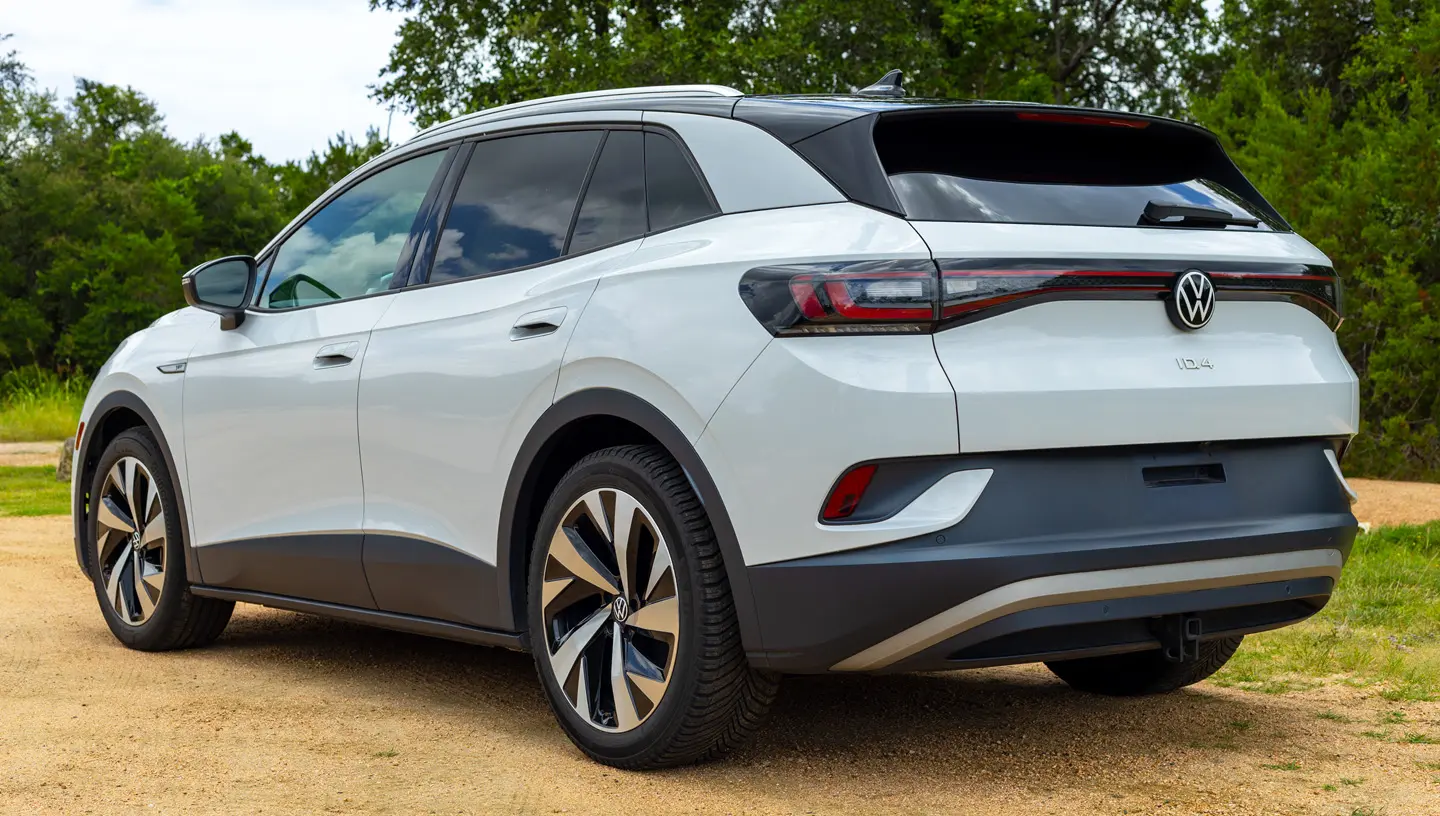

I have owned the Volkswagen ID.4 for over 5 years and 80,000 miles now. While there’s a lot to like, there have been some disappointments as well. But, do I still recommend it to others? Am I selling mine? Let’s get into it.
Real-World Range & Battery Degradation
My First Edition ID.4 had an original EPA-estimated 250 miles of range. Despite this, it has been a perfect commuter vehicle. It handles extended drives just fine and can certainly be a road-trip capable car, assuming you’re traveling somewhere with good charging infrastructure.
Efficiency Has Been Excellent
Unfortunately, the ID.4 doesn’t provide lifetime efficiency data, but over the last 40,000 miles or so, I’ve been getting 3.5 mi/kWh, which is just above the EPA-estimated 3.2 mi/kWh. This means, on average, my ID.4 has been getting a theoretical 270 miles of range instead of the 250 advertised.
Of course, speed, weather conditions, and other factors can significantly affect your EV’s efficiency. I’ve completed highway range tests in both warm and cold conditions, and the outcomes were very different.
Has Usable Battery Capacity Dropped?
I measured my ID.4’s remaining usable capacity by discharging the battery below 10% and then recharging it to over 90%. Using an OBD reader connected to the Car Scanner app, it shows:
- 66.8 kWh of usable capacity
- -13% of the estimated 77 kWh usable capacity when new
That’s 2.6% of usable capacity lost per year on average. Keep in mind, battery degradation usually starts out higher and then slowly decreases over time. Long story short, thanks to the better-than-expected real-world range I’m getting, the usable capacity loss is a complete non-factor at this point.
Home Charging
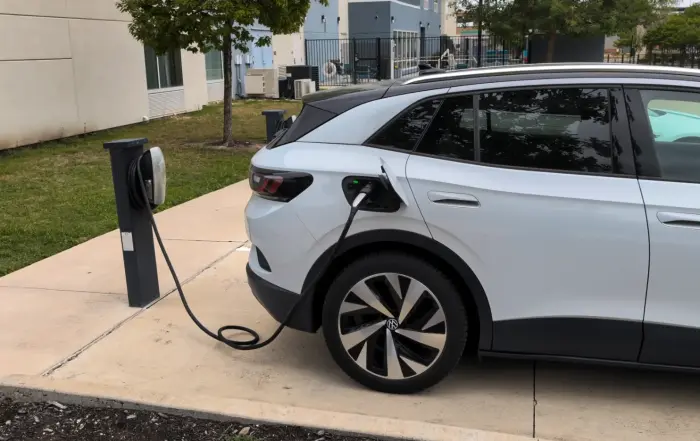
I do most of my charging at home using the included cable, which adds about three miles of range per hour. While this sounds slow, it’s enough to cover the average American’s daily commute of 40 miles if you remember to plug in each night.

Home charging the ID.4 using the included equipment is slow but does the job for many, including me.
For the last couple of months, though, I’ve been using Lectron’s combo Level 1/Level 2 charging cable, which, with 40 amps of power output using the NEMA 14-50 outlet type, is one of the fastest portable charging cables you can buy. You can find it on Amazon.

Lectron’s portable Level 2 charging cable comes with an adapter for regular wall outlets as well.
Depending on the method you choose, Level 2 chargers at home can increase speeds by 5 to 15 times, but not everyone needs this.
Public Charging
Originally, I mostly used the Electrify America network. That’s because my Volkswagen ID.4 came with three free years of charging on this network, which ultimately saved me over $1,000 in charging fees after using nearly 4,000 kWh of energy.
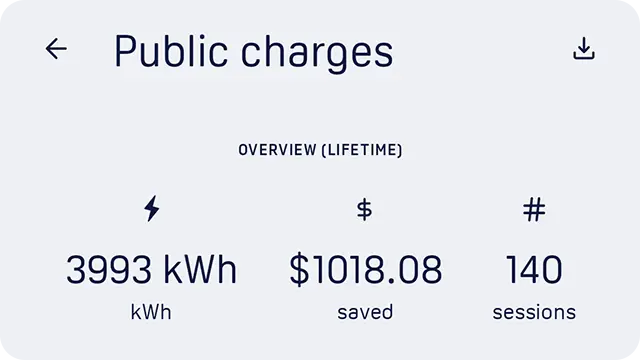
The total amount saved across the promotional 3 free years of charging at Electrify America stations that my ID.4 came with.
Since the promotion expired and the ID.4 finally gained access to most Tesla Superchargers at the end of 2025, I’ve been using these stations instead. While an adapter is required (the adapter I have), it’s been absolutely game-changing since there are so many more reliable options available.

The public charging experience has gotten so much better thanks to VW EVs getting access to Tesla Superchargers.
Networks like EVgo, ChargePoint, and Electrify America have gotten much better in terms of reliability and the number of locations they offer. Do I still run into technical issues and availability problems? Absolutely. But charging hasn’t been as much of a headache as it’s often portrayed.
I would recommend picking up a Tesla destination charger adapter to help with Level 2 charging on road trips, though.
Charging Curve Throttling?
Oftentimes, as EVs get older, their battery management system will throttle their fast charging speeds in order to protect the pack’s health. However, I recently performed a 10% – 90% fast charging session and was surprised to see the top-end power output hit over 170 kW.
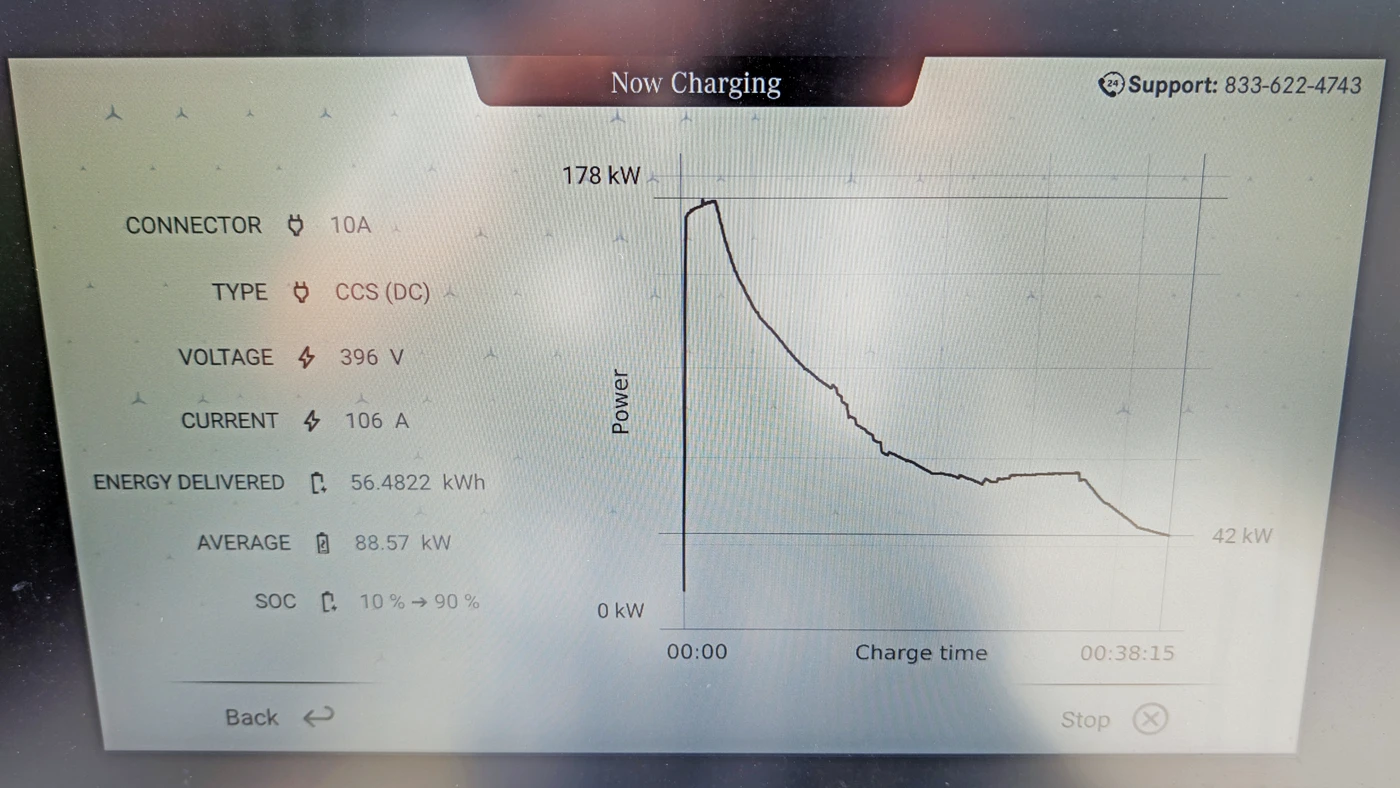
This recent fast charging session shows no throttling of my ID.4’s charging curve.
That was the highest it’s ever been. Needless to say, there’s no throttling going on here. In real-world terms, my car takes 30-40 minutes to charge from 10% to 80% capacity at a public fast-charging station. This is certainly longer than it takes to fill up your car with gas. Luckily, most of these charging stations are located at places where you can get out, stretch your legs, and use the restroom if needed.
VW ID.4 Charging Accessories
There are two charging accessories that I own and would recommend for the Volkswagen ID.4. The first is an adapter that will allow you to plug into Tesla destination chargers. These chargers are commonly found at places like hotels that often allow their guests to charge for free. This can save you a good amount of money if you travel a lot.

The ability to charge at Tesla destination chargers, which are often free and located at POIs and hotels, can save you a lot of money over time.
The second is the NACS-to-CCS adapter which gives you access to most Tesla Superchargers now.
Range & Charging Summary
I’m very happy with the Volkswagen ID.4’s real-world range performance compared to what’s advertised. The public charging experience has improved significantly since I picked mine up five years ago and will only get better moving forward, especially now with Tesla Supercharger access.
Maintenance Costs & Reliability
EVs are advertised to have fewer maintenance needs, which helps you save money over the long term. That has been the case with my ID.4 so far. After a little more than 80,000 miles on the odometer, I’ve spent roughly $1,900 on maintenance (roughly 2.5 cents per mile) and expect that the annual cost will decrease moving forward. Here’s why.
Tires are Important
Most of this expense ($1,500) was from replacing the tires, especially the back OEM tires, which only lasted 20,000 miles or so. This is partly due to the vehicle’s weight and the fact that my ID.4 is rear-wheel drive, with all that power getting pushed through the back axle.
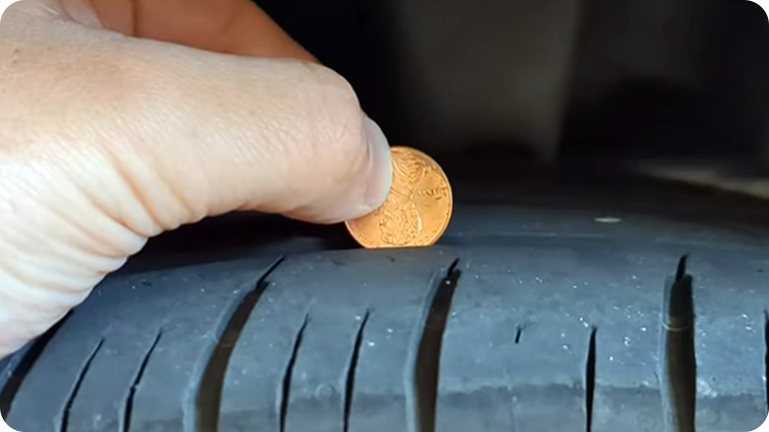
My rear OEM Alenza Sport tires could have been replaced around 17,000 – 18,000 miles.
The ID.4 comes with a staggered tire setup, as the back tires are wider than the front. Therefore, you can’t rotate the rear tires to the front and vice versa. When it came time to switch them out, I opted for the Michelin CrossClimate2s, which are all-season tires with much more tread life.

Changing to the Michelin CrossClimate2 tires has made a big difference in tire longevity and costs.
Though I was initially hesitant because reviews online said they could reduce range and increase tire noise, this hasn’t been the case. It’s been 55,000 miles since I made the switch, and they’re still going strong. Since they cost the same as the OEM tires, I plan on using the Michelin CrossClimate2s for the rest of my ownership.
Other Maintenance Expenses
Other than the tires, the only out-of-pocket costs have been to replace the wiper blades and the cabin filter. These are about $100 combined per year. That’s it. The ID.4 has been incredibly low maintenance, just as advertised.
Service Visits
I have been to the VW dealership four times for service. Two of these visits were related to a door handle recall, one was for a general inspection, and the last was for a software update (version 3.5) and a 12v battery replacement. My 12v battery didn’t have any issues, but it was required for the update.
Is the VW ID.4 Reliable?
When it comes to reliability, the ID.4 has been perfect. It has never failed to drive or charge, including in very hot or very cold conditions. It doesn’t get any better than that.

The Volkswagen ID.4 has never had any driving or charging-related issues.
Software & Mobile App Issues
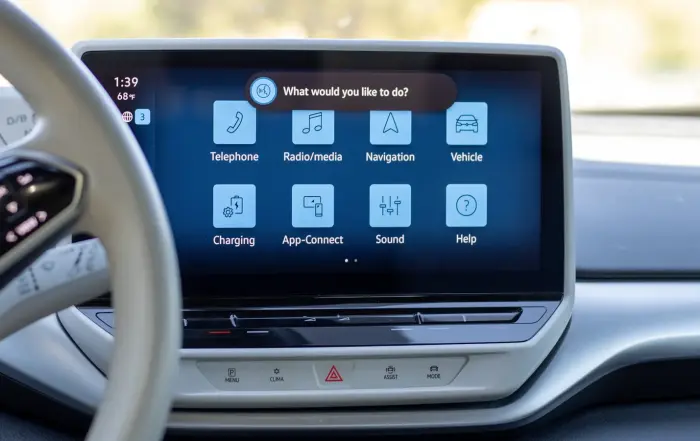
One of my biggest gripes about the ID.4 is the software, including the infotainment system and the mobile app. Both can be very slow and unresponsive at times. It was also two and a half years before the car ever got a software update, and I had to take the vehicle to the dealership to have it done.
What’s the Infotainment System Like Now?
Well, it’s better in some ways, unchanged in others, but it includes new issues as well. The infotainment software, while still notably laggy at times, has improved in daily use as the system warms up after a few minutes.

The software is one of the ID.4’s biggest weak points.
The software update I received didn’t change much. Some menus were reorganized and a couple of issues, like scheduled charging, were fixed. The most notable addition was the auto hold mode that I’ll get to in a later section.
The update did introduce a new issue. There’s now the ability to create multiple driver profiles. While this could be helpful if more than one person frequently drives your ID.4, if it’s only you, you’ll now have to tap the “OK” button every time you get into the vehicle to bypass the screen. This gets old pretty quickly.
The ID.4 does come with wireless Android Auto and Apple CarPlay support, which work well when there aren’t connectivity issues. The screen offers a limited number of customizations with preset templates and widgets, but you won’t find any fancy features like Sentry Mode, dog mode, or the ability to watch Netflix while charging.

The software offers basic features like navigation, but there’s nothing fancy or market-leading here.
Mobile App Improvements
One positive is that the mobile app now connects to the vehicle more reliably than it used to. But, to be clear, there are still connectivity issues. You’ll just experience them a bit less often. There are new options, like adjusting your charging limit, though there still isn’t a way to lock and unlock the car remotely.
The Sound System is Basic
Most ID.4s come with a basic 7-speaker setup. It’s fine but nothing to write home about. If you listen to music in your car a lot, you’ll want to get the Pro S Plus trim, which has a 10-speaker Harman Kardon system that should sound better.

The sound system works fine, but won’t impress anyone.
The Software is What It Is
Though it’s marginally better, the Volkswagen ID.4’s software is still the worst in class. I’ve largely accepted that it likely won’t change for the rest of my ownership. There is a pending over-the-air update, but it apparently hasn’t been rolled out to my vehicle yet, despite being available for at least six months. That pretty much sums it up.
Interior Features, Build Quality & Durability
One of my primary concerns after buying the ID.4 was that the interior wouldn’t hold up over time. My car has the First Edition Space Gray interior with many off-white components like the seats, steering wheel, and door grab handles.
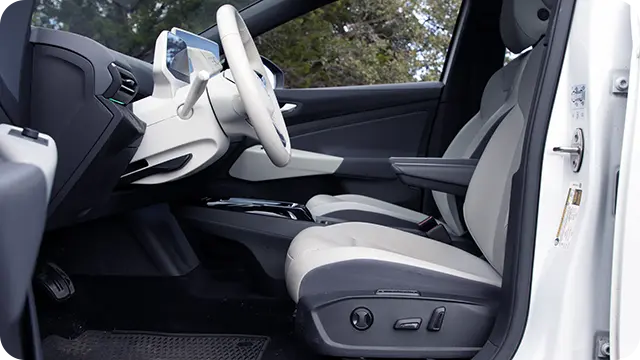
My ID.4’s interior is still in great shape, despite the light-colored materials used.
Despite never having had the car deep cleaned, I’m pleasantly surprised and impressed by how good the interior still looks. The seats show no signs of notable wear or damage and look brand new.
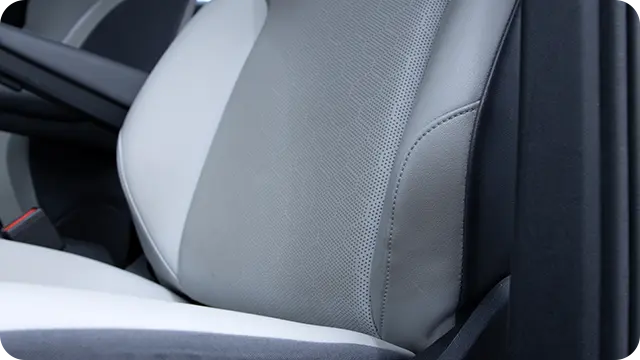
The driver’s seat shows few signs of wear.
The same can be said for the door panels and most everywhere else. Keep in mind, my ID.4 is a daily commuter car that has been constantly exposed to chemicals like sunscreen, hairspray, and bug spray, which are known to damage vinyl-based interiors. Another indicator of the build quality is that it still hasn’t developed any rattles or other undesirable noises.
The Steering Wheel is an Exception
When it comes to the white steering wheel, there are areas of discoloration, and you can see where the vinyl has degraded some. Truth be told, though, I’ve seen vinyl steering wheels look much worse in less time.
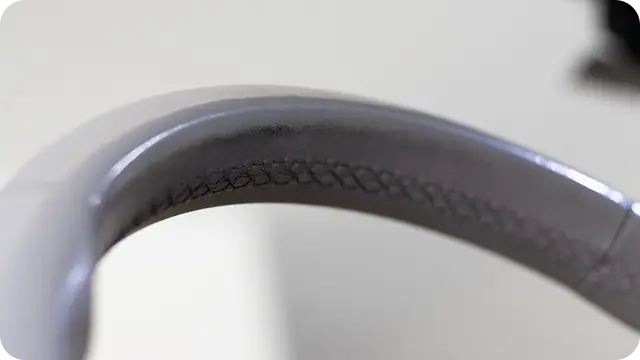
The only part of my ID.4 that is starting to show its age is the steering wheel.
Otherwise, it has a typical design with some premium-looking stitching. The wheel is heated and gets nice and toasty in the winter. There are haptic-touch controls for the ADAS features and infotainment system. I’ll be honest: I’m not a fan of them because they are too sensitive.
I recommend an LCD cleaner and microfiber towels to wipe away fingerprints from the screen and dust from the glossy surfaces. For the vinyl seats and dashboard, you should use unscented baby wipes so you don’t damage the material.
Cabin Space & Comfort
The VW ID.4 is about 4 or 5 inches shorter than most competitors, at around 180 inches long. The Tesla Model Y, for example, is 187 inches long. Despite this, the vehicle still has plenty of headroom and legroom for both the front and second row passengers.

Even though it’s on the shorter side, the VW ID.4 offers a good amount of cabin space.
This is because VW pushed the electronics into the front trunk area. While this removes any storage area for a would-be front trunk, it provides more legroom for the first-row passengers. Like most EVs, the ID.4 doesn’t have a transmission tunnel hump in the second row, which gives the back passengers a little more leg space.
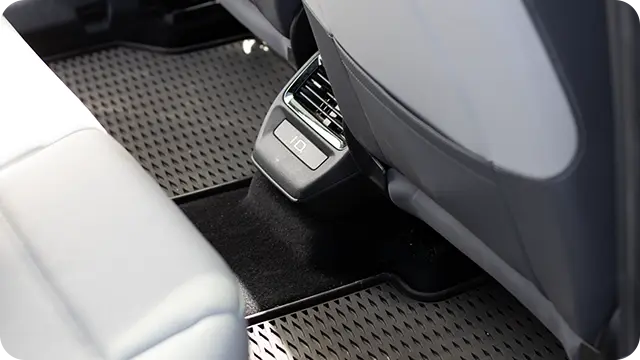
The lack of a transmission tunnel hump creates additional room, so your back row passengers can stretch out some.
Finally, the roofline isn’t as aggressively teardrop-shaped as it is on other electric vehicles, giving the ID.4’s second row passengers more headroom.
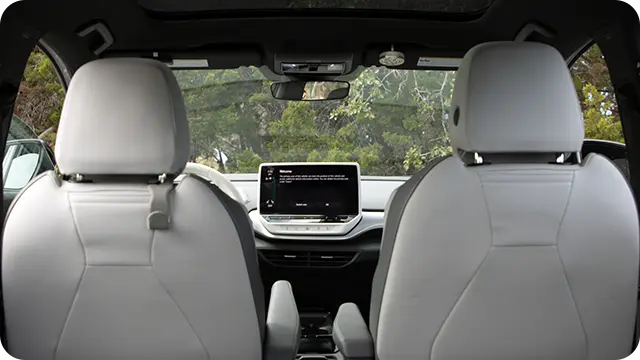
The ID.4’s headroom for both rows is excellent, thanks to a flatter roofline.
Seats
The Volkswagen ID.4’s vinyl seats are moderately cushioned and supportive. This means you can ride in the vehicle for hours at a time without worrying too much about your back hurting.
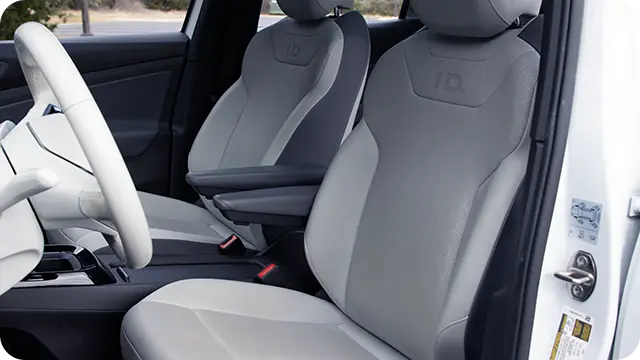
I have no complaints about the ID.4’s vinyl seats.
Both front seats are heated, 12-way power adjustable, and include adjustable lumbar support. You can also save profiles for seating positions and easy entry. There’s also a massaging feature, but I don’t use it much personally.
Though the First Editions didn’t offer a seat ventilation option, it is now available on the 2024+ models. If you’re considering buying an ID.4, I highly recommend the vinyl seating option, as the vinyl seats breathe better and are much easier to keep clean.
HVAC System
The First Edition ID.4’s HVAC system has dual-zone automatic climate controls, so both front passengers can set their temperature independently. Some may appreciate the physical vents, which can be completely closed off if your passenger doesn’t want air blowing on them. There are also a couple of manually controlled vents in the back.
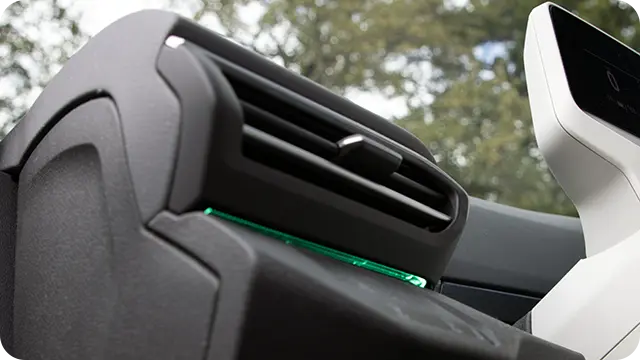
If you are tired of touchscreen-controlled vents, the ID.4 has your back.
Unfortunately, VW ID.4s sold in the US do not include a heat pump option, which means heating the cabin during the winter will be a bit more inefficient. On the flip side, the AC blows cold air within seconds of startup, even on the hottest summer days.
Electronically-Controlled Sunshade
Speaking of the hottest summer days, I have to mention the electronically controlled sunshade, as it’s one of my favorite features. The shade keeps the seats from getting scalding hot if you park outside, and the AC doesn’t have to work as hard to keep the cabin cool. You can partially open or close the shade, too.
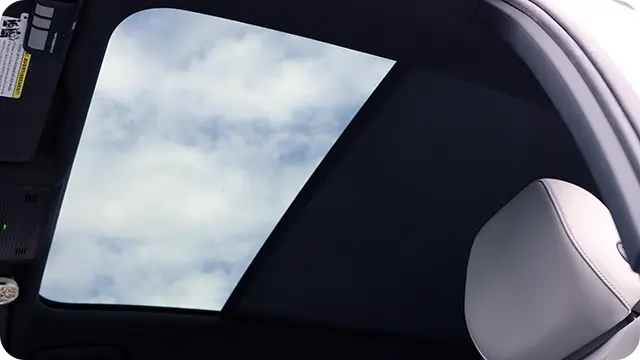
The Volkswagen ID.4’s most underrated feature is the sunshade.
Driver’s Display & Infotainment Screen
Behind the steering wheel is a five-inch driver display that’s attached to the steering column. The screen is decently modern-looking, if not simplistic, and offers some limited customizations. Outside the speedometer, the most useful information it shows is the battery’s charge level and estimated remaining range, which I find quite accurate, assuming your driving is consistent.

The driver’s display is basic, but provides important information like estimated remaining range.
Moving down the dashboard, the second display in the First Edition is a 12-inch, horizontally oriented screen for the infotainment system and vehicle controls. While it’s large and bright enough to make viewing and controlling apps easy, the software side doesn’t hold up its end of the bargain. But we’ll come back to this later.

The infotainment screen is bigger than most.
Interior Nitpicks
As far as nitpicks go, I don’t care for the gloss black surfaces because they scratch easily and are hard to keep clean. You can find this material on the base of the infotainment screen and the center console. If the sun hits it just right, it can be blinding as well.

Gloss black always looks dirty, is hard to keep clean, and reflects sunlight.
However, my biggest complaint goes to the touch-sensitive buttons found on both the steering wheel and driver’s window controls. When it comes to the steering wheel buttons, I find myself sliding my hand against them and activating random things quite frequently.

These buttons are too sensitive.
As far as the driver’s window controls go, to this day, I have never figured out what Volkswagen was thinking when they designed them. There are two physical switches and a touch-sensitive area labeled “rear,” which you tap to activate the rear windows. Because there’s no minimum time required to hold your finger on the button, inadvertently turning it on is frustratingly too common.

The ID.4’s driver’s window controls have the most bizarre design I’ve seen.
Interior Summary
Overall, I appreciate the clean and modern feel of the interior. Sure, it’s a mix of hard and soft-touch plastics and not the most upscale of the bunch, but the cabin is spacious, comfortable, and not as barebones as some. The interior has held up quite well over the years, with the only real sign of wear found on the steering wheel, which was to be expected.

The modern interior is supplemented with beautiful ambient lighting that you can change the color of.
Cargo is Good for a Small Footprint
As mentioned previously, the Volkswagen ID.4 is a few inches shorter than most of the current EV crossover competition. But thanks to the less aggressive roofline and the legroom created by moving a lot of components into the front-trunk area, the ID.4 has more maximum cargo space than a lot of its competitors.

The ID.4 has among the most cargo space in its class.
Competitor Maximum Rear Cargo Space (Back Seats Down):
- Volkswagen ID.4
- Length: 180.5 inches (458 cm; 4,584 mm)
- Cargo: 64.2 cu ft (1,818 L)
- Kia EV6
- Length: 184.3 inches (467 cm; 4,681 mm)
- Cargo: 50.2 cu ft (1,412 L)
- Ford Mustang Mach-E
- Length: 185.6 inches (471 cm; 4,714 mm)
- Cargo: 59.7 cu ft (1,691 L)
- Hyundai Ioniq 5
- Length: 185.6 inches (471 cm; 4,714 mm)
- Cargo: 59.3 cu ft (1,679 L)
- Tesla Model Y
- Length: 187 inches (475 cm; 4,750 mm)
- Cargo: 76.2 cu ft (2,518 L)
Exterior Features & Build Quality
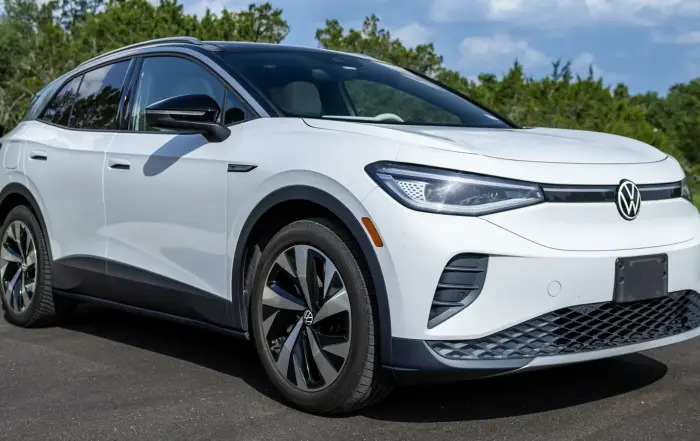
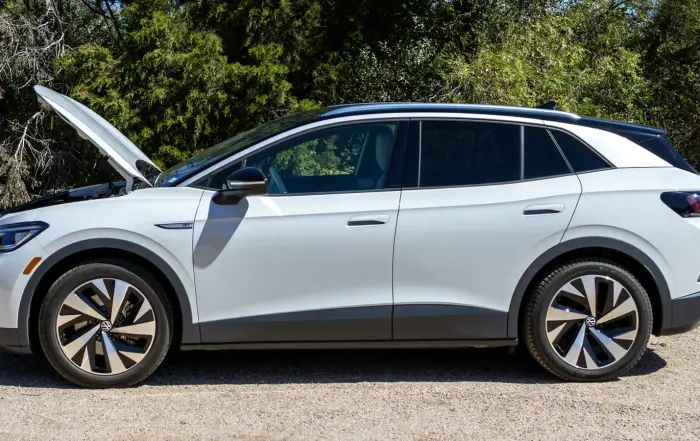
The ID.4 is one of the best-looking crossover EVs on the market, in my opinion. The Glacier White Metallic paint shows no signs of peeling or damage.

The ID.4’s exterior, including the paint, has held up well over the years.
One reason the paint has probably stayed in such great shape is the plastic molding that extends around the entire vehicle, which protects the areas most likely to be hit by rocks, dirt, and debris. I also often hand clean the ID.4 with this gentle car wash which is supposed to be easy on the paint.
Sadly, I have still gotten my fair share of dings over the years, and I wish the ID.4 had something like Sentry Mode to record these events.
Headlights & Automatic High Beams
The VW ID.4 has fantastic matrix LED headlights that get very bright without blinding others. The automatic high beams also work as expected. One notable feature is the cornering lights that help illuminate the sides of the road when you’re turning the vehicle, making driving at night just that much safer.

The VW ID.4’s headlights include a little known feature that improve safety at night.
Large Side View Mirrors Make a Difference
Unlike some of the competition, Volkswagen did not compromise the size of the ID.4’s side view mirrors for efficiency purposes. While this may seem insignificant, the larger mirrors improve safety during daily driving and make it easier to see what’s going on around you.
These mirrors are electronically controlled and include a heating option. They don’t, however, fold automatically based on location, which is a bit of a bummer.
Door Handles & Keyless Entry System
The aerodynamic door handle design featured on the ID.4 might be the best-designed of the bunch. You simply reach under the cover and squeeze the pad to open the door. This saves you from having to explain it to each person who tries to get into your vehicle.
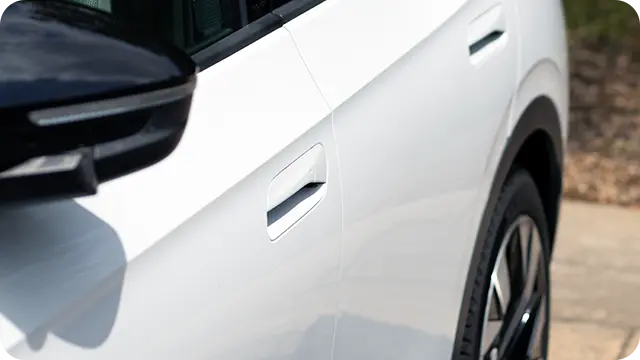
The ID.4’s door handles show that simple and basic can be better.
The keyless entry system and proximity unlock features work perfectly and at logical distances. There isn’t, however, a walk-away proximity locking feature, so you must put your finger on the indentation to lock the doors.
Liftgate & Tow Hitch
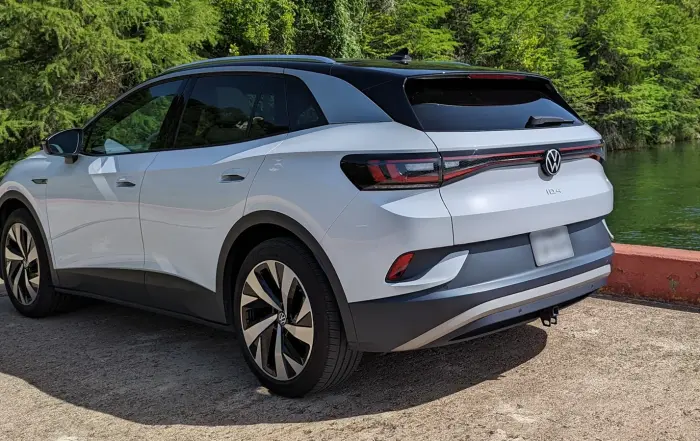
On the back of the vehicle, you’ll find the futuristic-looking light bar that extends the entire width of the liftgate. You can option the liftgate to be fully powered, including a hands-free feature, but I find it to work very inconsistently, so I just push the button instead.

The optional tow hitch allows rear-wheel drive ID.4s to pull up to 2,200 pounds and all-wheel drive configurations to pull 2,700 pounds. I can’t comment on what it’s like to tow with the ID.4, though, as I’ve only used it for bike racks.
Two Minor Build Issues
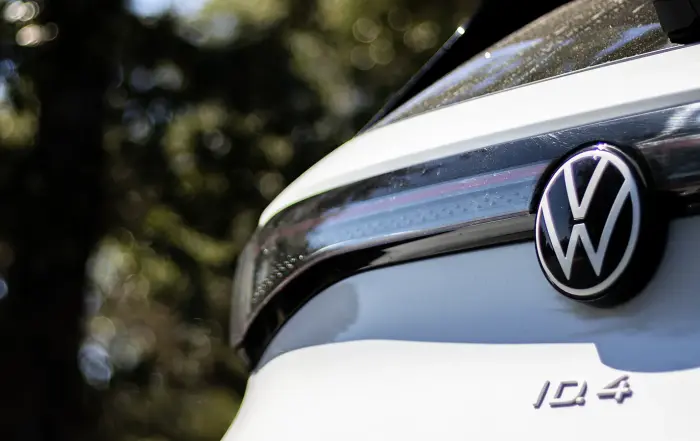
Though my ID.4’s exterior is still in great condition, two minor issues have existed since I picked it up. The light bar, where the logo is, doesn’t quite fit where it’s supposed to, and you can push it in with your hand from time to time. Also, the front passenger door sticks out ever so slightly at the bottom, but it’s barely noticeable.

The rear light bar doesn’t quite fit in place and sticks out some where the “VW” logo is.
Exterior Summary
That said, I’m very happy with how well the exterior is holding up. There are no major concerns like rust or significant panel gaps. Nearly everything on the outside of the ID.4 fits together and works the way it should, and its exterior build quality and durability match its interior.
Driving Experience & Features
The ID.4 offers a great driving experience, depending on what you’re looking for. You sit relatively high up, making it feel more like a traditional crossover compared to some of the competition, which are more like tall sedans. My rear-wheel drive ID.4 goes from 0-60 mph in seven seconds. Acceleration is incredibly smooth; you never feel like you’re getting too much power.
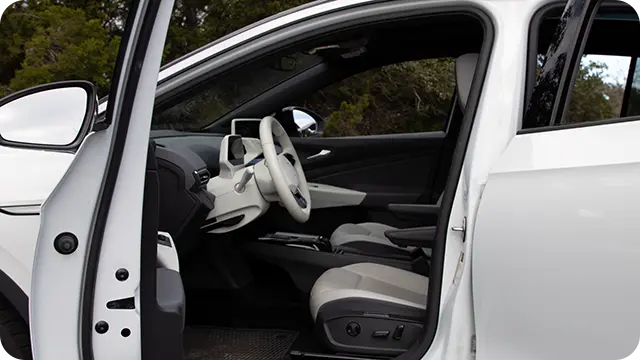
The ID.4 provides a more SUV-like view of the road than other crossover EVs.
Regen Braking & One Pedal Driving
Unlike some competitors, the ID.4 lets you turn regenerative braking off if you want to. With the latest software update, once you come to a complete stop and the new auto hold feature is activated, you no longer have to keep your foot on the brake. Unfortunately, the ID.4 still lacks true one-pedal driving, as you have to use the physical brakes to stop the vehicle; otherwise, it will continue to creep forward.
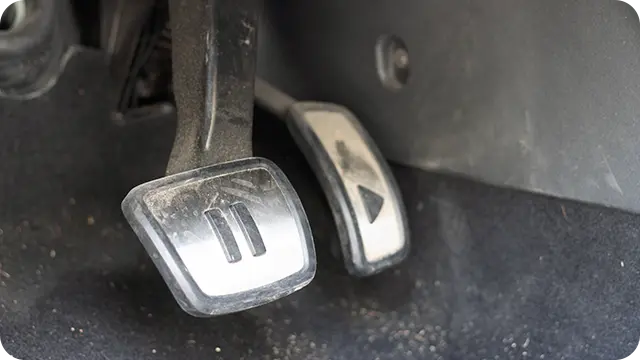
Sadly, driving the ID.4 requires the use of both pedals, which isn’t the case for many other EVs.
Suspension & Handling
The ID.4’s suspension is well balanced, neither stiff nor bouncy. Despite its weight and the size of its tires, ride quality is above average for the class. The vehicle has a tight turning circle (33.5 feet or 10.2 meters for RWD trims), making it easy to maneuver in urban environments. There are also some customizable drive modes, but the only noticeable difference between them is that the steering feel changes from being fairly indirect to a tighter control.
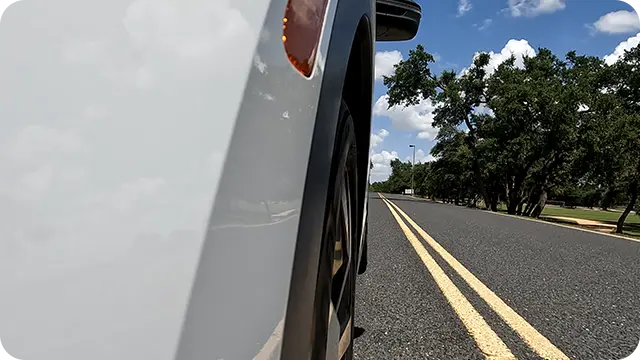
The ID.4 offers solid ride quality.
Visibility & Safety Features
Visibility is quite good, with average-sized A-pillars, large side view mirrors, and a decent view out of the back. The quality of the backup camera is satisfactory, but I prefer the wide-angle view over the default. Frustratingly, you can’t change which one is the default.

The wide-angle backup camera view is much better than the default view.
Features like auto high beams, auto wipers, and blind spot monitoring consistently work the way that they should. The ID.4 offers front and rear collision warnings, as well as automatic emergency braking, which has come in handy more times than I can count.
ADAS is Useful, But Conservative
In terms of ADAS or self-driving software, the ID.4 will steer the vehicle for you on the highway and maintain your speed using adaptive cruise control. It’s pretty limited and there are situations it can’t handle, like curvy roads or construction zones.
Cabin Noise Test Results
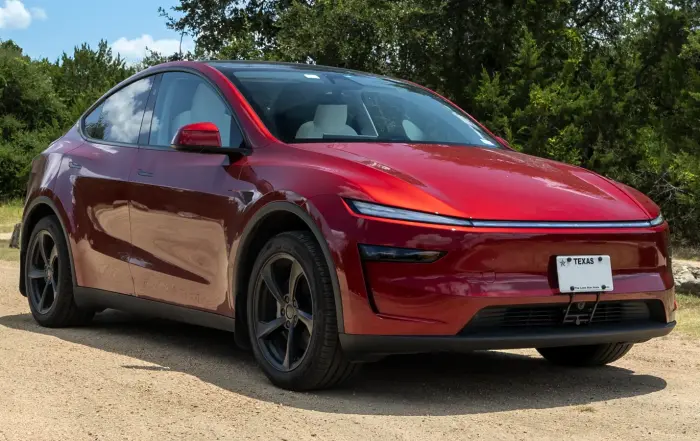
I did a quick, unscientific test where I drove my Tesla Model Y Juniper and my ID.4 at highway speeds of roughly 70 mph. I recorded 68 dB in the Model Y and around 70 dB in the ID.4. Finally, I had a 2025 Toyota RAV4 rental last year and recorded 73 dB with it on the same road. Overall, the ID.4’s measurement is what would be considered average for a vehicle driving at highway speeds, and I wouldn’t consider the cabin loud at all.
Do I Recommend the ID.4?
Knowing what I know now, I still would have bought the ID.4 back in 2021. But since the market today is completely different, would I still recommend it to others? The answer is maybe.

The ID.4 has been a great vehicle overall, but the competition is heating up.
If you’re looking for a crossover EV that offers large storage capacity, a comfortable daily drive, a traditional design, and solid driver assistance features with decent range and charging speeds, then the ID.4 might be for you.
But if you’re looking for an EV that’s more performance-oriented, that can go 0-60 mph in three seconds, and you’re not okay with dealing with mostly minor but frequent software bugs, then the ID.4 might not be for you.
Am I Selling My VW ID.4?
So, am I selling my 2021 Volkswagen ID.4 First Edition? Not anytime soon. The ID.4 has earned my trust from both a build quality and reliability perspective, and if that continues to be the case, I’m willing to overlook the software issues. If I had to give it a rating, it would be an 8.0 out of 10.
Better software and one-pedal driving would make this a strong contender for the best EV crossover. Hopefully VW addresses these in the next version of the ID.4, which is going to be produced starting in late 2026 and carry a new badge: “ID.Tiguan.” While it’s sad to see the ID.4 go away, I’m excited for the next generation of this wonderful EV to arrive!
Sources
Related Articles