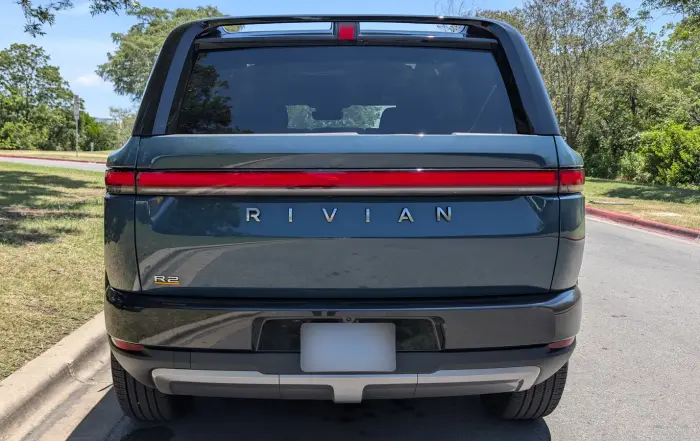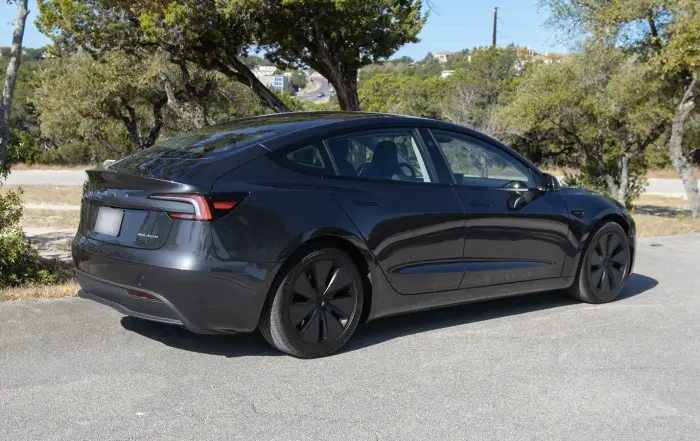

Like many, I’ve been anxiously awaiting the arrival of the Rivian R2. Now, I finally got behind the wheel of one. As a former Rivian R1T owner, here are my impressions and everything else you should know.
What is the Rivian R2?
The R2 is electric carmaker Rivian’s mass-market crossover EV. It competes with a wide swath of other vehicles like the Tesla Model Y and targets buyers considering traditional ICE cars like the Ford Bronco Sport.
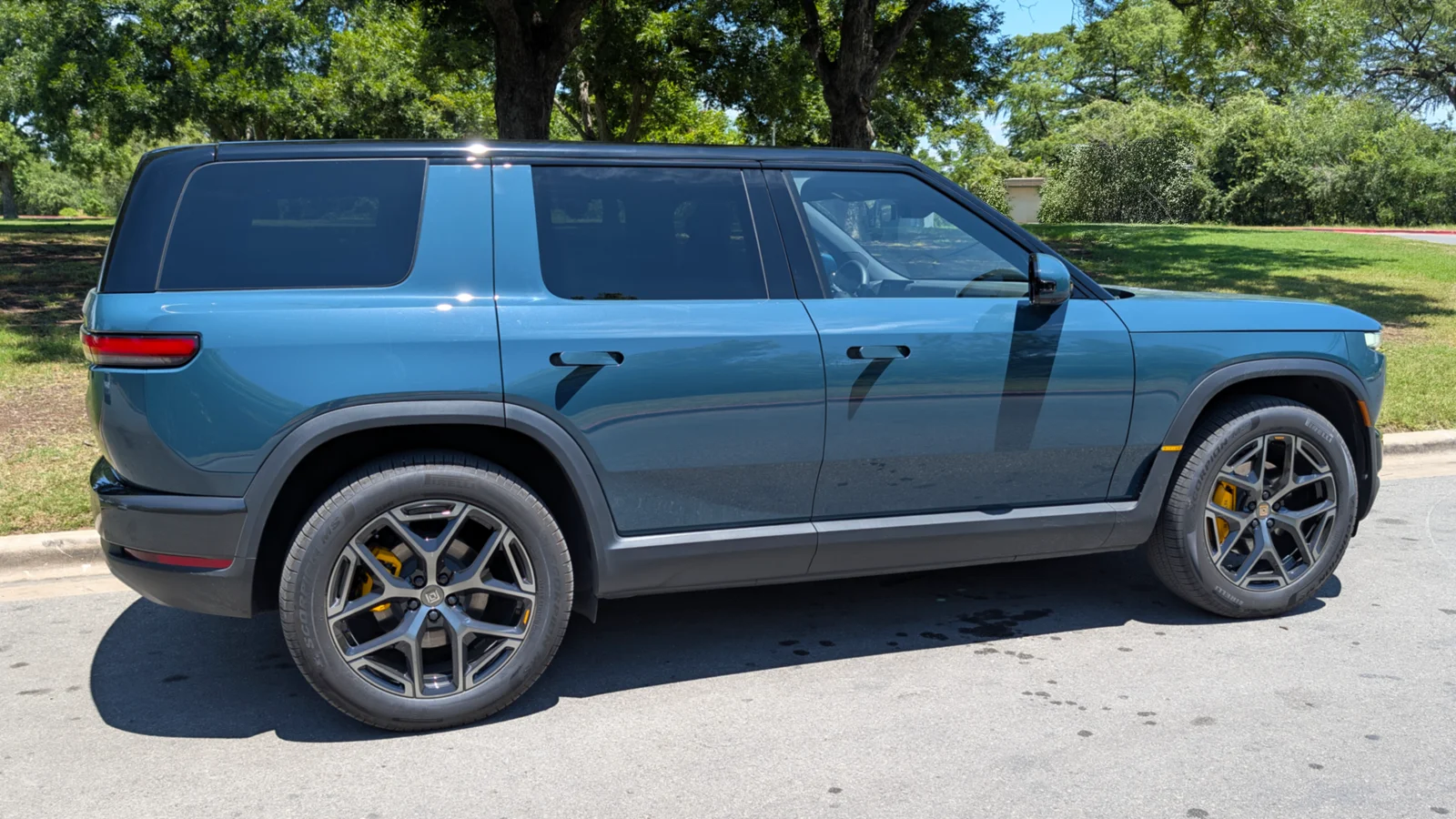
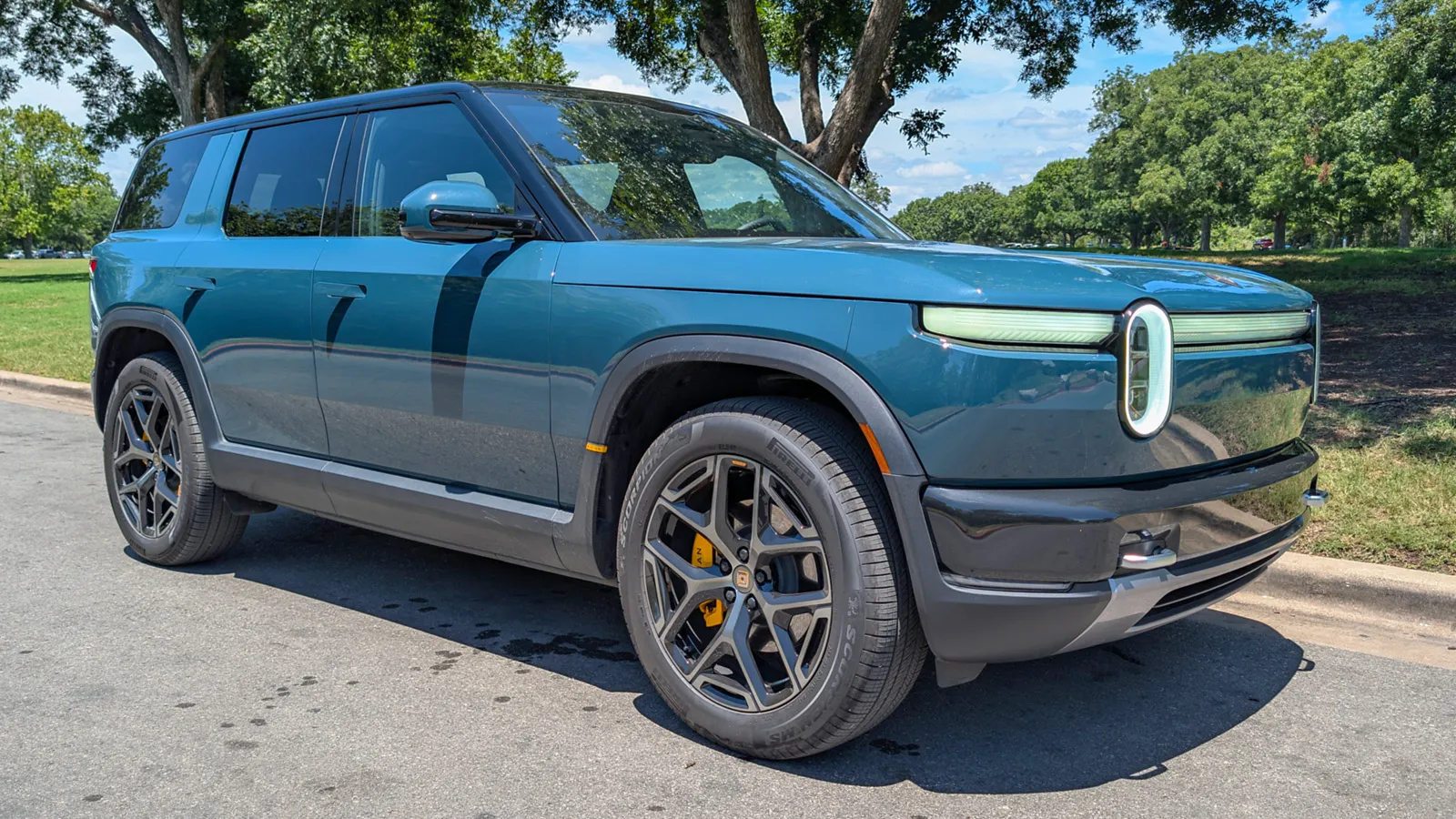
The Rivian R2 is the latest EV in the crossover market.
Rivian R2 Trim Levels & Pricing
There are three R2 trim levels currently available in the configurator:
R2 Performance, starting at $57,990*
- Dual-motor AWD with 656 horsepower and 609 lb-ft of torque
- 0-60 mph in 3.6 seconds
- 330 miles of EPA-estimated range
- For a limited time, orders include the Launch Package: semi-active dampers, a special key fob, the Tow Package, Autonomy+, and the option of Launch Green paint
- 21-inch sport wheels with all-season tires (standard, 20-inch all-terrain tires available too)
- 8 exterior color options including Launch Green and Borealis (an interesting purple color)
- Deliveries started in June 2026
R2 Premium, starting at $53,990*
- Also dual-motor AWD with 450 horsepower and 537 lb-ft of torque
- 0 to 60 mph in 4.6 seconds
- 330 miles of EPA-estimated range
- 20-inch all-season wheels and tires (standard, 21-inch wheels available)
- 6 color options (no Launch Green or Borealis)
- Deliveries starting late 2026
R2 Standard, starting at $44,990
- Single-motor RWD with 350 horsepower
- A tad slower, taking 5.9 seconds to go from 0 to 60 mph
- 275 miles of estimated range
- 5 exterior colors (no Catalina Cove)
- Black Crater (not the “Signature” version) interior color is the only option
- Deliveries starting in spring 2027
*Both the R2 Performance and R2 Premium offer ventilated front seats, premium audio, an optional tow package, the Black Crater Signature and Coastal Cloud Signature interior color options, and the rear drop glass.
Range
The Performance and Premium trims come with an EPA-estimated range of 330 miles, drawing energy from an 87.9-kWh usable battery pack with 94 kWh of total capacity. The Standard trim will achieve 275 miles on a smaller pack starting in 2027. Do keep in mind that tires matter. If you choose the 20-inch all-terrain wheel option on the Performance trim, the rating drops to 307 miles.
Sadly, the Launch Edition doesn’t come with a heat pump. One is expected to be added in a later model year, hopefully in 2027. Rivian has a track record of delaying planned features (ask me about the camp kitchen). For now, that means worse cold-weather efficiency, which is disappointing for an adventure-focused vehicle.
Charging
The R2’s charging capabilities will be on par with most other electric crossovers. A 10% to 80% fill-up will take about 30 minutes. An exciting change to the lineup, though, is that Rivian now uses the NACS charge port, which is based on Tesla’s standard. That means native access to Tesla Superchargers without an adapter. The Rivian Adventure Network will also switch over as well.
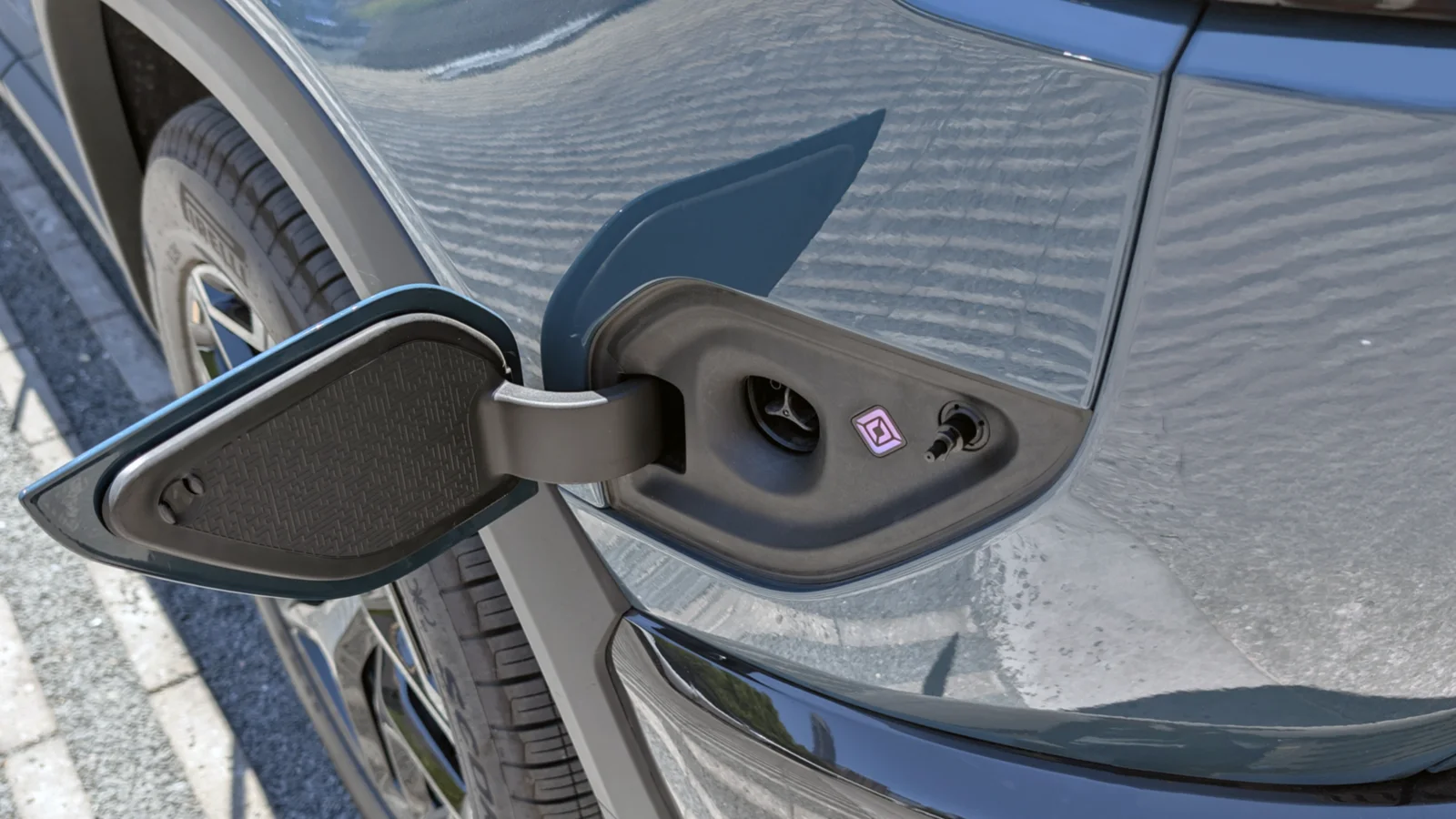
Like other automakers, Rivian’s new vehicles now have the NACS charge port type.
Something I’m paying attention to is whether charging behavior has improved. In the past (including on my R1T), Rivian’s vehicles have had some issues with throttling during longer sessions or when the outside temperature is above 90°F. We will need to wait and see what owners report online as more vehicles are delivered.
Another welcome change is that the charge port door is not electronically controlled. Instead, you push it in, and it pops open like a gas tank door. This is a good thing, because my R1T’s charge port door was a bit loose and I was concerned that it wouldn’t last.
Intriguing Battery Cell Format
The Rivian R2 features a new 4695 battery cell design. These larger cells offer high energy density while possibly reducing manufacturing costs. It’s exciting to see Rivian testing different batteries, but we will need more data from owners to understand how well they hold up.
Towing
R2 Premium and Performance trims can tow up to 4,400 lbs, while the Standard (RWD) is rated at 3,500 lbs. The tow package is included with the Launch Edition but will be a $950 option moving forward.
Driving the R2
I spent time with a Launch Edition R2 that had the beautiful blue-green Catalina Cove exterior color (my personal favorite) and the Black Crater Signature interior option.
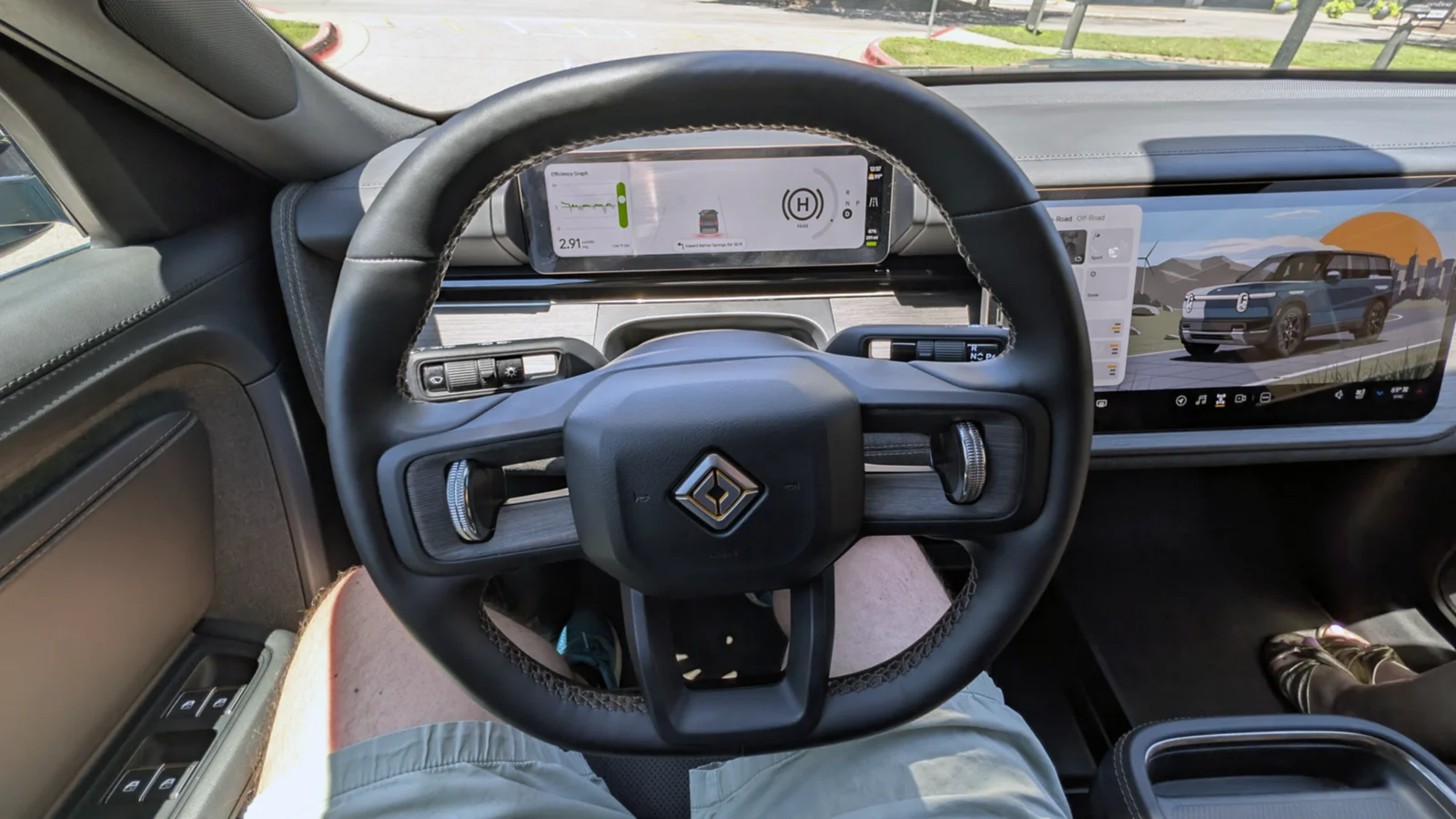
After years of waiting, I was excited to drive the R2.
R2 Rides High, Very R1S-Like
With its class-leading 9.6 inches of ground clearance and flexible seat positions, you sit much higher than in competing EVs. The excellent visibility, boxy design, and long, flat hood make the R2 feel more like an R1S or Ford Bronco than anything else in this class. It’s great to finally have something different.
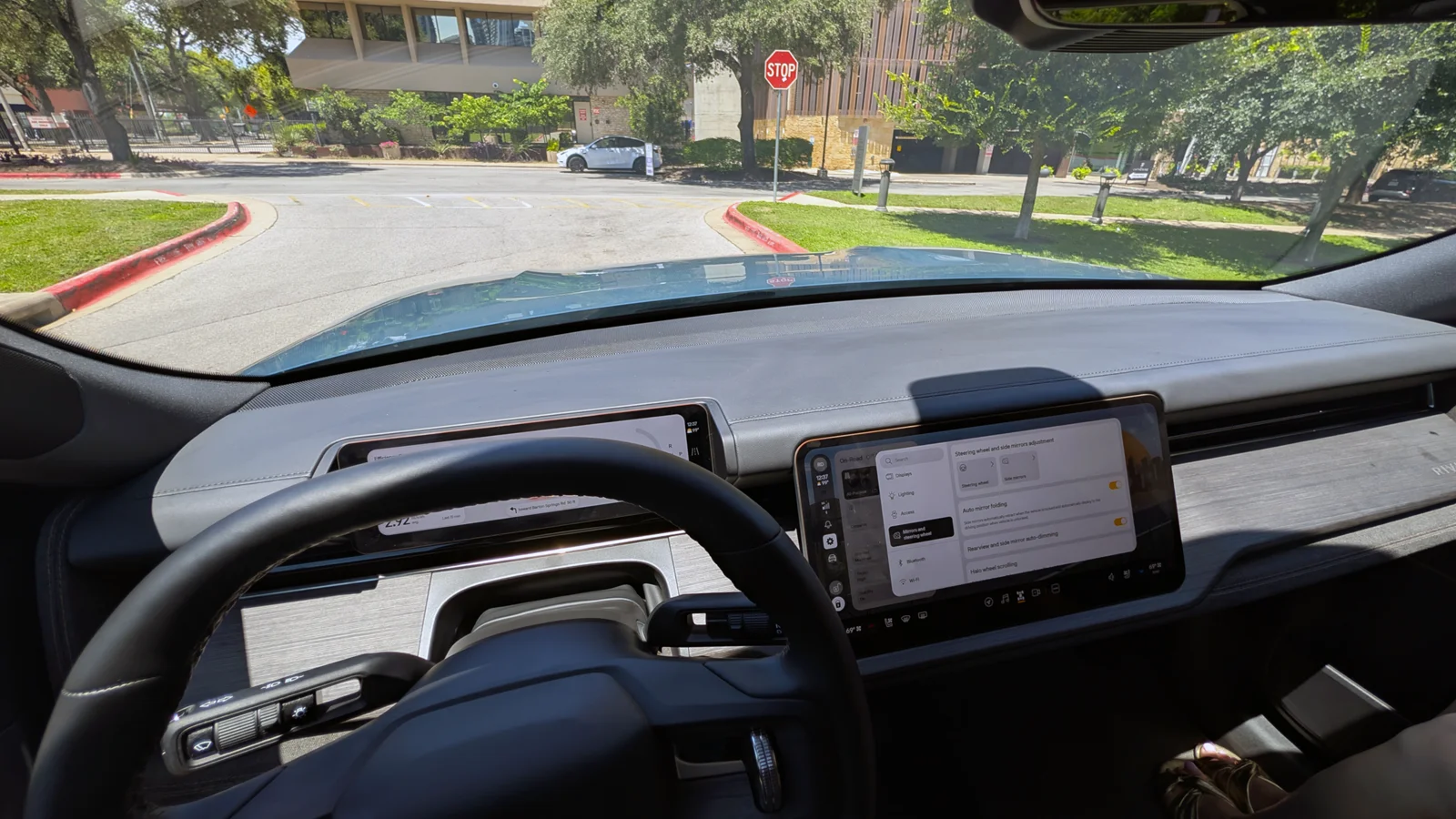
Thankfully, the long hood is also flat, so you can see the end of it.
Suspension Settings
The Launch Edition’s exclusive semi-active dampers offer three settings (soft, moderate, and firm). I found the lowest setting (soft) to be a little loose and too bouncy for day-to-day street driving. However, “firm” took care of this and is the mode I’d keep it in at all times. Note that this adjustable suspension is currently exclusive to Launch Edition vehicles. Moving forward, all R2s will use a fixed coil and damper setup. As long as it leans closer to the “firm” setting, it should work out just fine for most people.
Handling, Acceleration & Regen Braking
Pedal mapping is better than in my R1T, where travel felt a tad too long. It’s much shorter here and feels more natural. Of course, with a 0-60 mph time of 3.6 seconds, I don’t really have to tell you that the car is quick. Very quick. With the updated rear-wheel bias, the R2 felt more controlled through corners, especially when giving it some electrons, and the tires did not spin.
The large 21-inch wheels also help here, and you can feel the feedback from the road through the steering wheel, which can be a good or bad thing, depending on your preference.
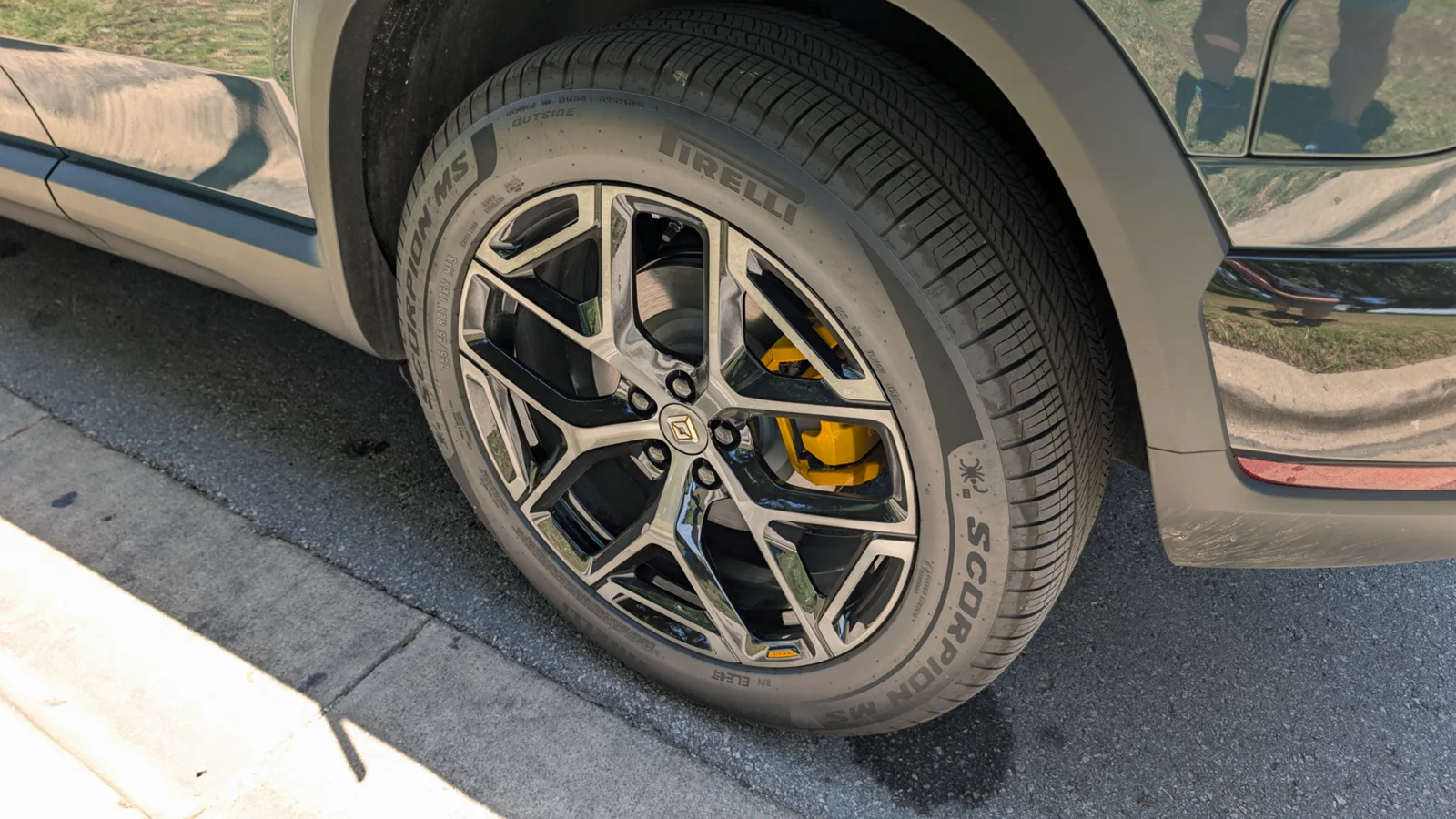
The 21-inch wheels look nice, but I’d prefer smaller options for a smoother ride.
Unfortunately for those who don’t like heavy regenerative braking, it cannot be turned off. Rivian does provide three adjustable settings to tone down the aggressiveness, though. Personally, I love all the Gs I can get, and the high setting was quite strong. The overall one-pedal driving experience was natural and felt easy after driving my Model Y just before this.
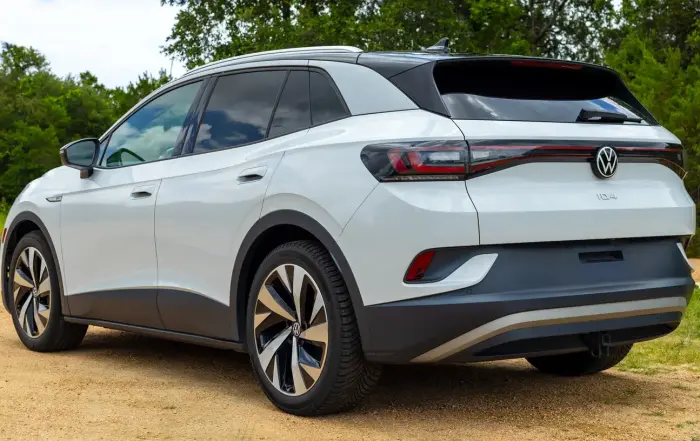
I am a bit disappointed that the R2 didn’t inherit the tighter-than-average turning circle of the R1. Instead, its turning circle is 39.8 feet, basically the same as a Model Y. My VW ID.4, although it’s about 5.5 inches shorter, can complete a 360-degree spin in under 34 feet. What does that mean? Everyday maneuvers like parallel parking, making U-turns, and navigating tight parking spaces are not as easy in the R2 as they are in the ID.4.
Cabin Noise
I was impressed by how quiet the cabin was, too. Not much of the outside gets in, and Rivian has done a good job of keeping resonance caused by uneven roads at bay, despite the vehicle’s shape. The only mark against it is that road noise from the large 21” wheels does enter the cabin, though it’s by no means offensive.
Build Quality
I’m sure Rivian spent a ton of time snuffing out build quality issues with this initial set of R2 vehicles. After all, first impressions of a new model can make or break it. The one I drove was very solid all around. I pressed against the dashboard, headliner, center console, etc., and couldn’t feel anything loose or hear any strange noises. The lone issue I noticed was that the front passenger door seal wasn’t set properly and was bubbling in one corner. It’s not a big deal. Mobile service could fix it in 30 minutes or less.
Improved Cameras
Another area where Rivian needed to improve was the camera quality. Those on my old R1T were quite low-definition given its price tag. Well, they did exactly that. They’re clear, lag-free, and genuinely helpful for parallel parking. And yes, a 360-degree view is included. No complaints here.
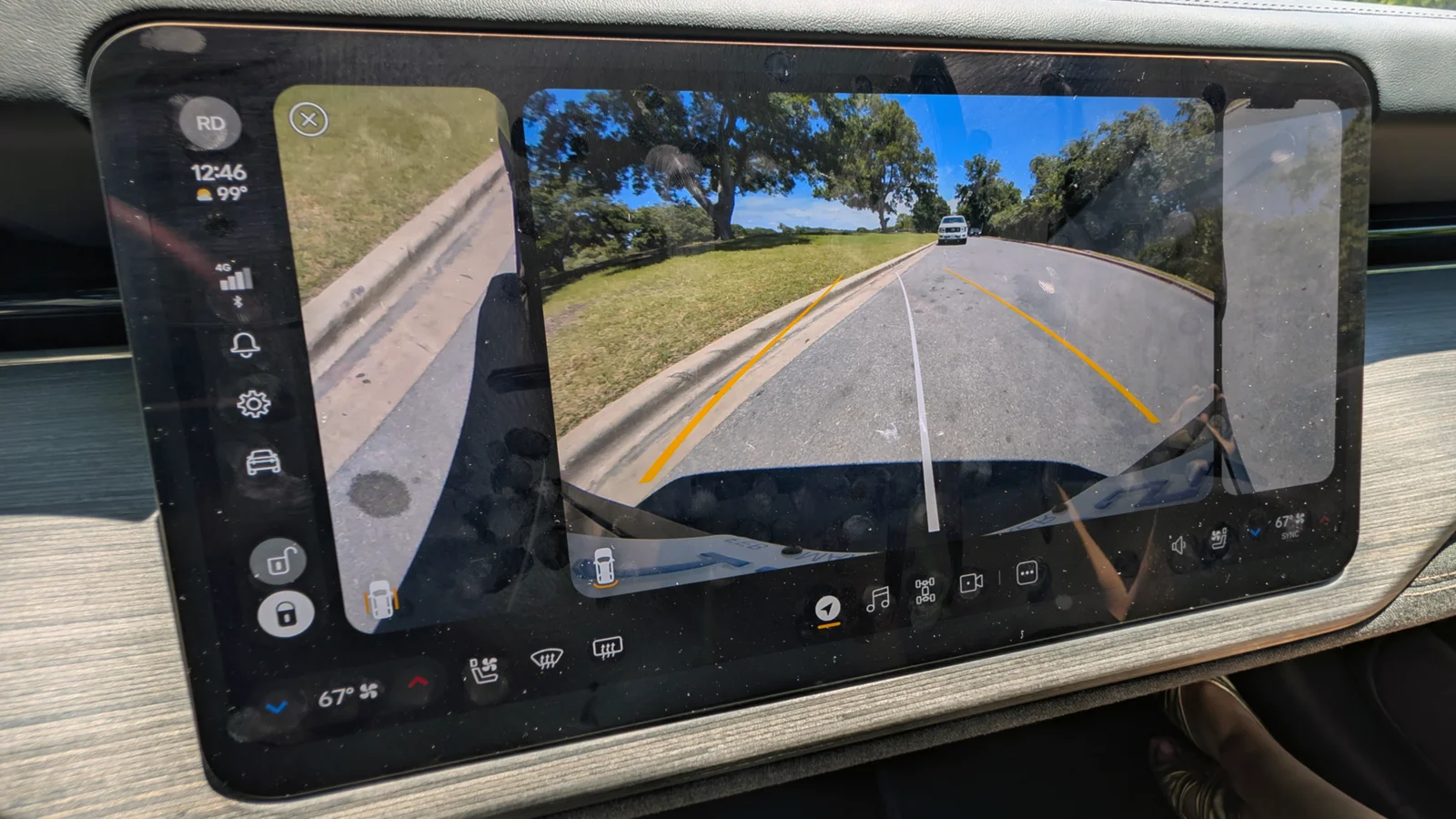
R2’s camera resolution is great and better than a lot of its competitors.
Interior Design & Features
Rivian’s interior design aesthetic can be described as a Range Rover blended with a Tesla. I call it upscale outdoorsy minimalism. Instead of a utilitarian approach, Rivian’s interiors are more intricate. Inside, the R2 has a mix of materials from soft-touch vinyl leather (Rivian calls it Adventex) to canvas-like textiles, along with a wood veneer trim piece that extends the width of the dashboard.
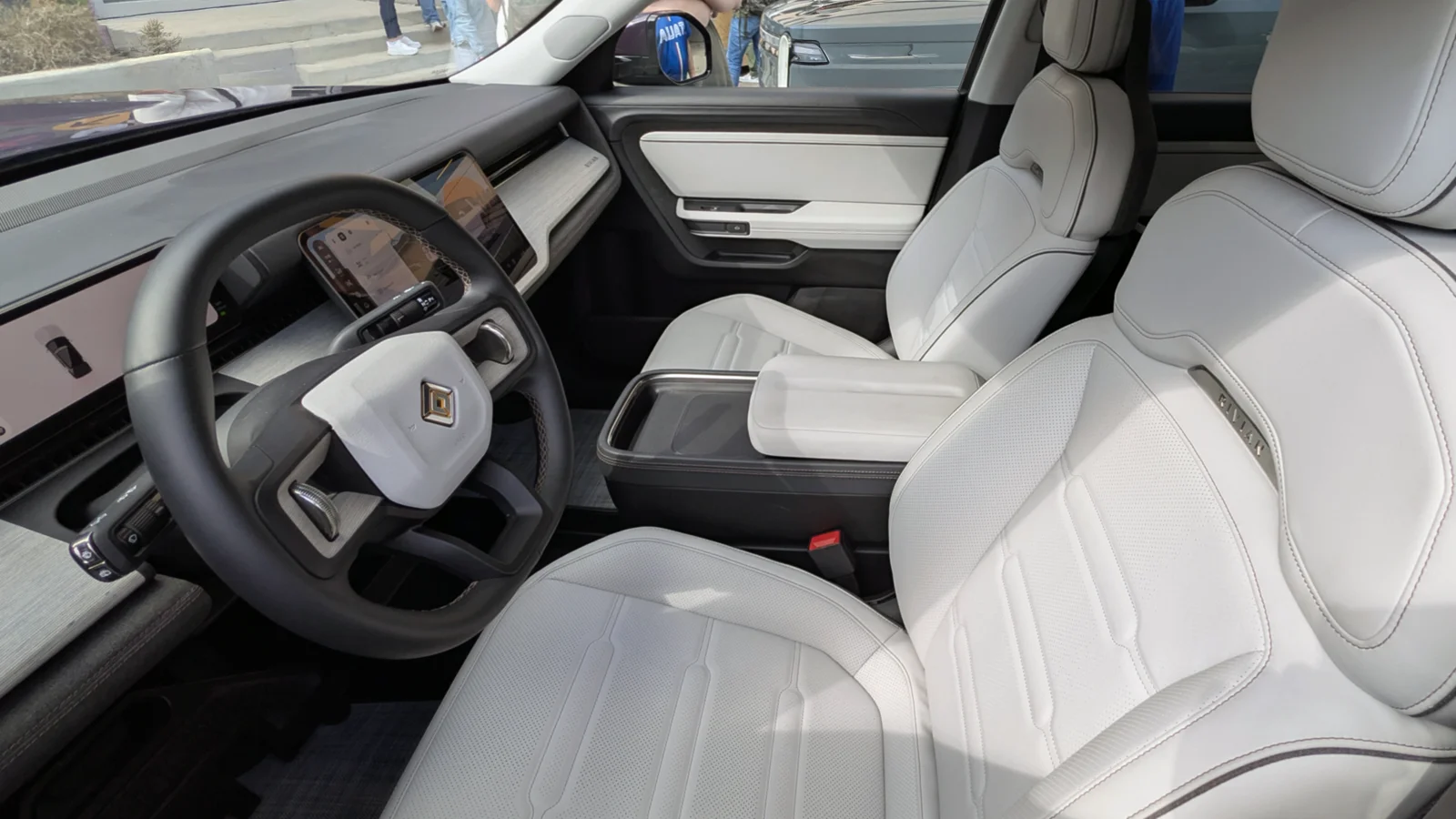
The contrast that comes with the Coastal Cloud interior option is the best choice, in my opinion.
Copious Amounts of Cabin Space
The design isn’t just for looks, as the first thing you’ll notice when you get inside is how large the cabin feels. There’s enough room in here to make even Shaq blush. It should be plenty for nearly everyone. Front passengers get 40.9 inches of headroom and 41.4 inches of legroom, while the second row gets a very similar amount, with 40.4 inches of both.
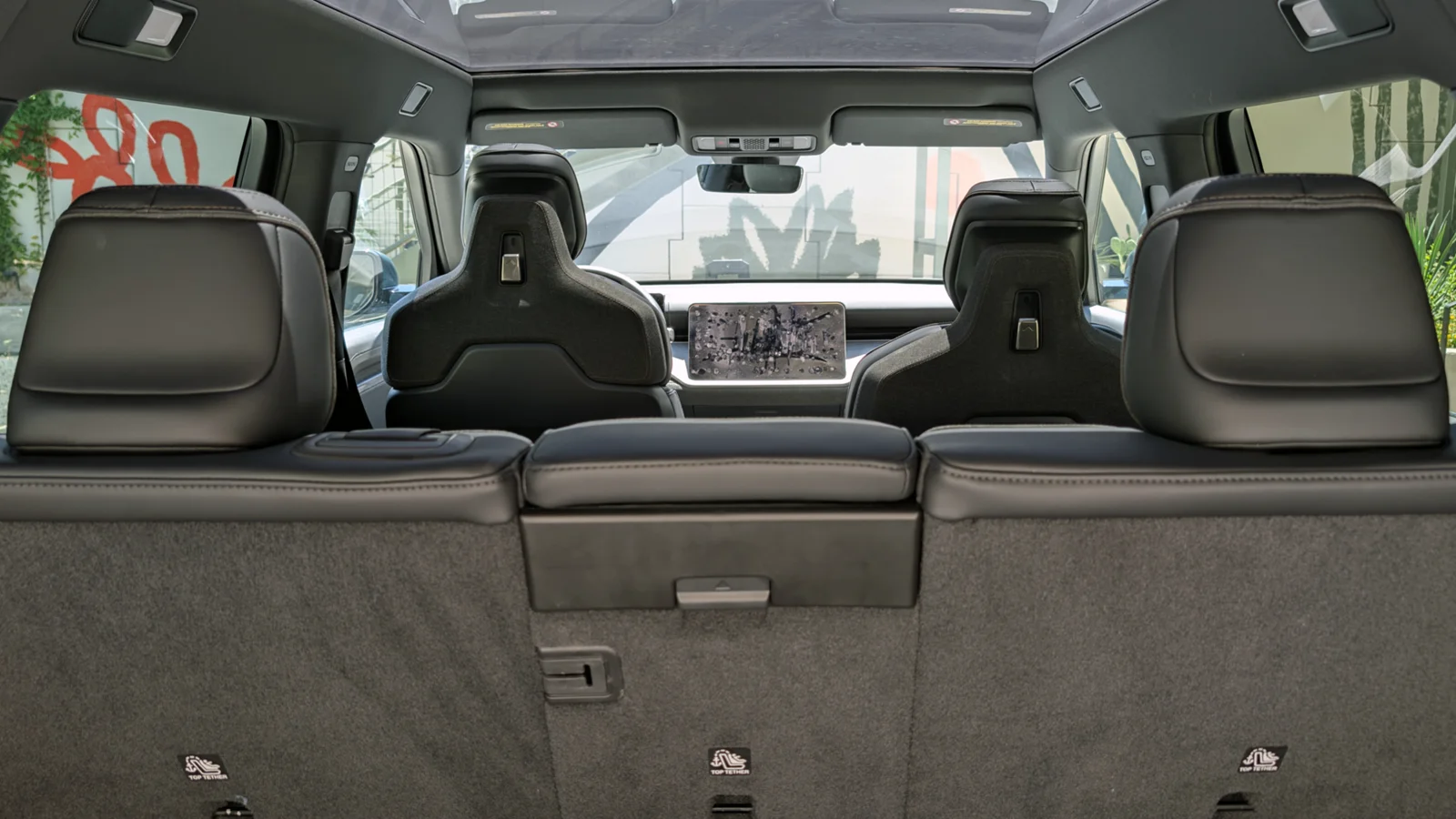
No one is going to be complaining about R2’s cabin space. It’s generous.
Seats
The seat padding is divided into multiple parts with accent pieces embedded within. R2’s seats are all heated, with cooled seats saved for the front only (on the Premium and Performance trims). I have sciatica issues, so when seats in a vehicle are bad, I’ll find out pretty quickly. Luckily, that wasn’t the case here. I found them to be quite comfortable and well-padded.
Though I must say, I’m not the biggest fan of the amount of stitching they used. While it looks nice, sitting up against it for many consecutive hours can irritate your back.
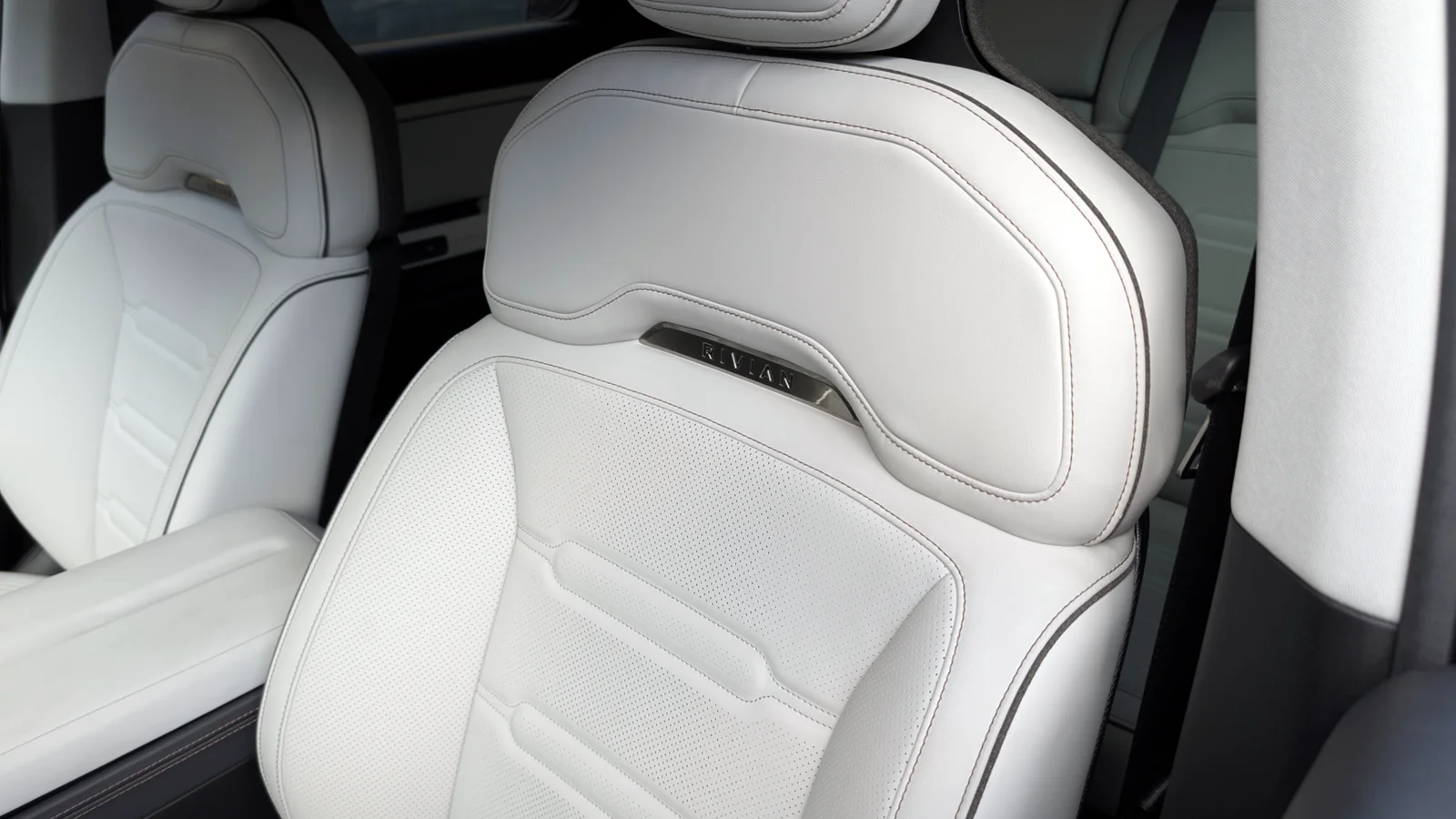
The ribbed design of the seats helps improve the cool airflow. But that is a lot of stitching…
What I am a fan of, however, is the ventilated function. The airflow is strong and ice cold. Thanks to the ribbed seat design, the seats are not one large, flat surface like those in my Model Y or ID.4. That makes it harder to block the airflow, so you get to feel more of it.
A Better A/C System
Speaking of cold air, Rivian owners like me can tell you the initial HVAC system launched with the R1 platform was subpar. In fact, it was loud and underpowered. I’m very happy to say that it seems Rivian has taken a big step in the right direction with the updated A/C design. It was 99°F during my time with the R2, and while the A/C had to stay running, the cabin remained nice and cool. The system never sounded like it was struggling to keep up.
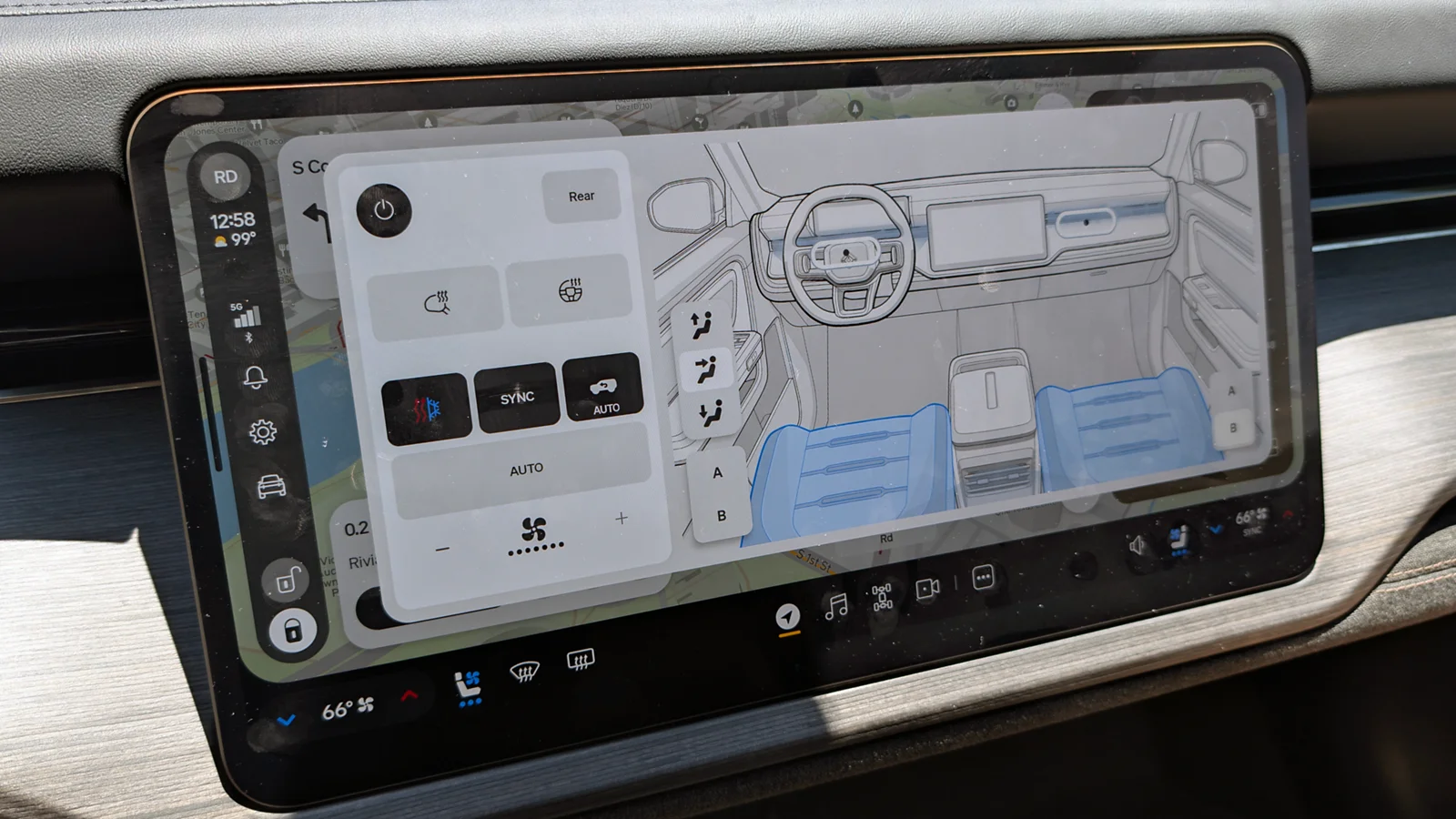
The A/C system is much better in here than those found in Gen 1 R1 vehicles.
Second Row
The seats come in a typical 40/20/40 split so that you can squeeze things like wood or outdoor gear in the middle, if you need to. The backs of the front seats feature a hard shell covered in a textile-like material. They include USB-C ports, one on each side, and a chrome-finished coat hook. There’s an expandable storage area that looks like it can fit quite a bit of stuff.
There isn’t a screen back here, but rear passengers do get the old-timey simple manual vents with fan control as part of the three-zone climate system. Honestly, no big deal. Sadly, there aren’t any 120V outlets inside the cabin (only one in the rear cargo area), which is a huge bummer.
Two Front Displays Remain
When the R2 was revealed, I was excited to see that Rivian kept both a driver display and a center display, as I, like many others, prefer having the speedometer in front of me. The 15.6″ center screen is carried over from the R1S.
Overall, Rivian’s software has been behind only Tesla since they launched their first vehicles. I enjoy the new art direction with the cel-shaded graphics that they’ve gone with, too. The UI, though, is still a little more complicated than it needs to be. The good news is that they can change it at any time and make the experience even better.
Sound System
Many were disappointed when the excellent Meridian sound system found in my older R1T stopped being offered a few years ago (and for good reason). Rivian now produces only speakers made in-house, which are, at best, good but not great. The R2 mostly continues this trend. The premium audio option I tested sounded closer to my VW ID.4’s stock system than to Tesla’s incredible setup.
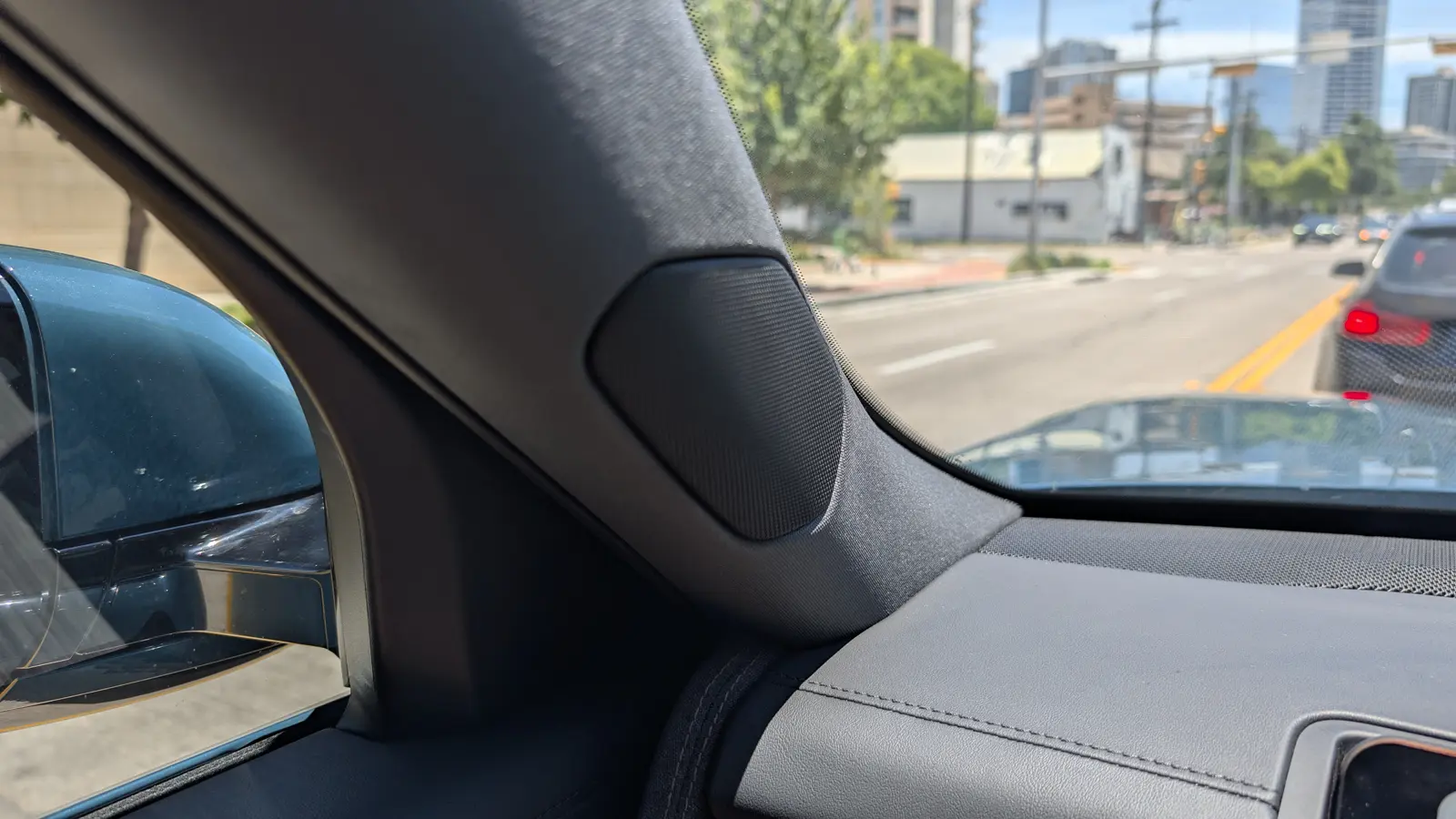
To be clear, it’s not bad and doesn’t sound washed out. But despite the 975-watt, 9-speaker setup with two subwoofers, it just doesn’t have the power or depth that the Model Y Juniper offers. It’s not going to wow you, but it will suffice for most people, I imagine.
Center Console
The center console is a simplified version of what you get in Rivian’s current vehicles. Instead of opening from two separate sides, the R2’s console has a single padded cover. Inside is a decent storage space with two USB-C ports. In front is a wireless charging pad that features magnets to keep your phone(s) from sliding around. It is MagSafe compatible and fits two phones at once.
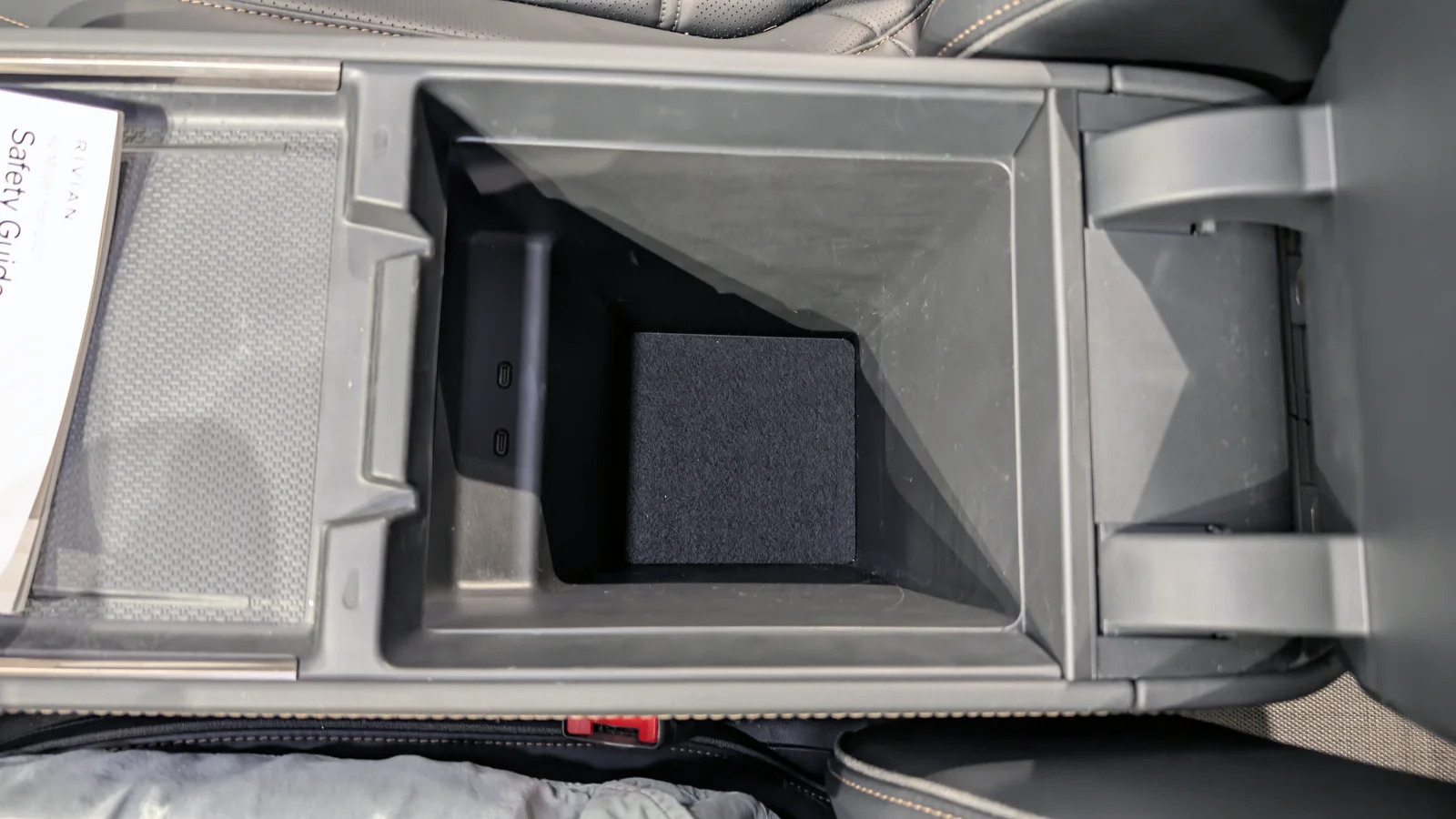
he center console cubby has some usable storage and, more importantly, two USB-C ports.
Push on the front end to extend the cup holders, and there’s an additional storage drawer below it that you can pull out. It’s about 4-5 inches wide, 3 inches deep, and 9 inches long. It was designed, literally, to fit a standard-size (rectangular) tissue box.
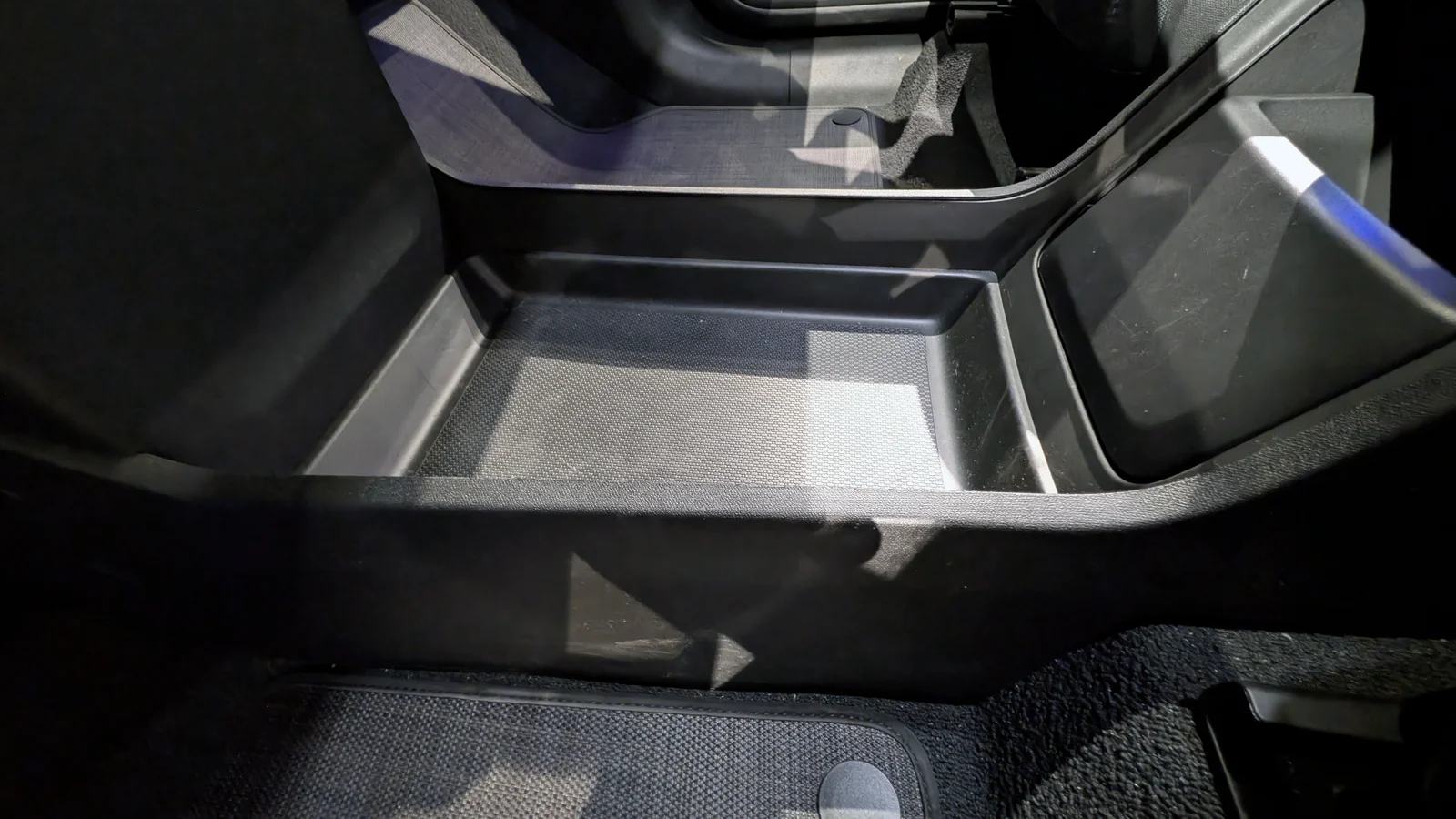
There’s extra storage on the floorboard, as well as even more in a compartment that slides out (right side).
Overcompensating on Glove Boxes
When the R1 vehicles were initially shown, one big head-scratcher was that they were missing a glove box. Well, Rivian has corrected this on the R2 with not one, but two individual glove boxes. As a bonus, you open them by pushing them in. No fumbling with the center screen here.
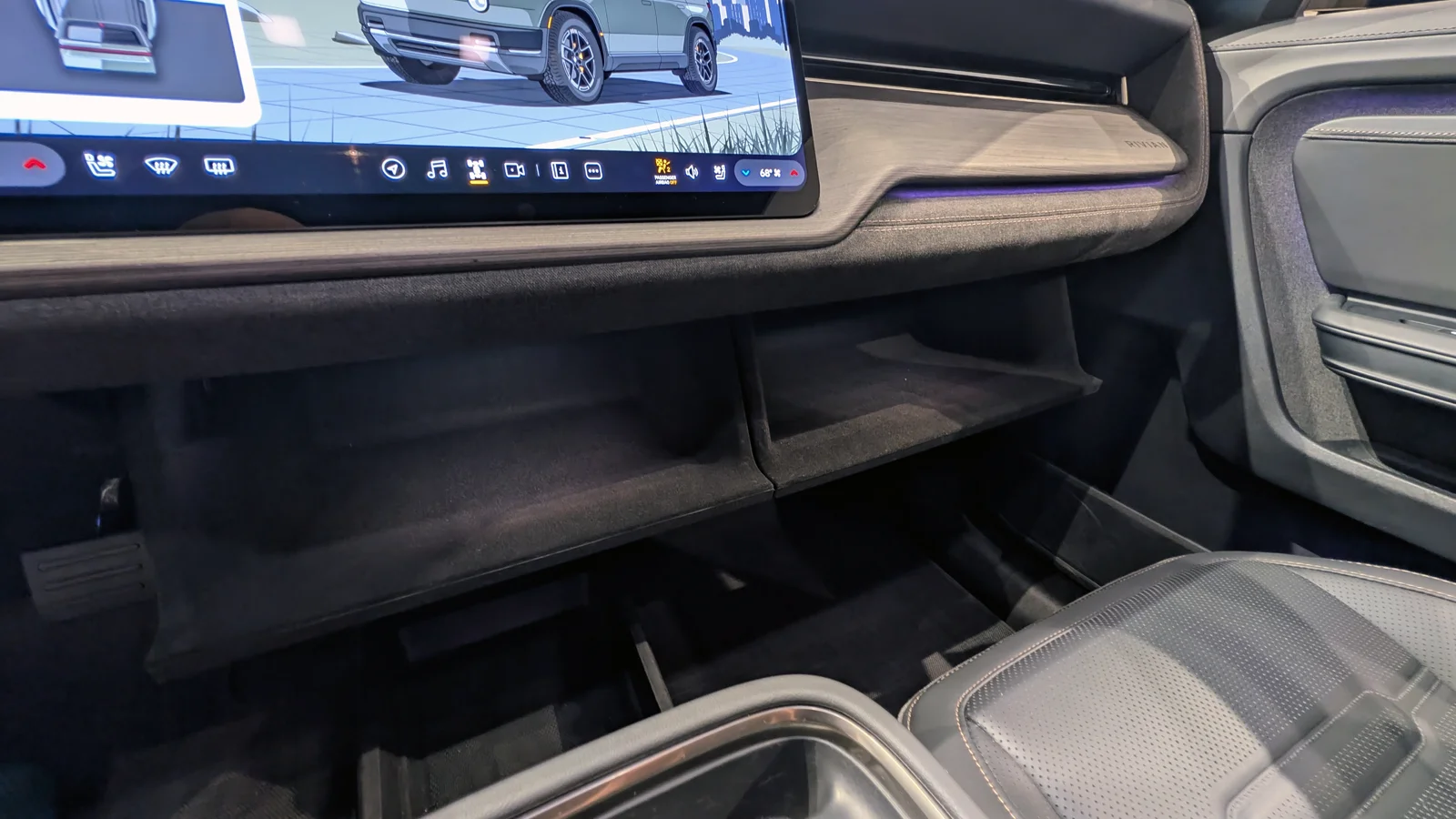
You get not just one, but two glove boxes. However, while I was in the driver’s seat, the one on the left hit my knee when I opened it.
There is one unexpected quirk to mention. If you’re a shorter person like me, the drawer nearest the driver is close enough to hit you on the knee when you open it. I can’t imagine that it would feel good if it were full. Also, they feel quite flimsy and somewhat cheap. I’m not confident that they will be durable over the long term.
An Interesting Steering Wheel
At first glance, R2’s steering wheel doesn’t appear to be anything special. It’s actually a fairly basic design featuring some contrasting colors, stitching, and wood accents. The wheel is very familiar and comes with a flat top and bottom to provide extra knee clearance and reduce obstruction of the driver’s display.
However, Rivian has added two large scroll wheels called Haptic Halo wheels. As the name suggests, they provide dynamic haptic feedback. They can be pressed, tilted side to side, and scrolled. So far, you can control media playback, climate settings, and the information shown on the driver’s display.
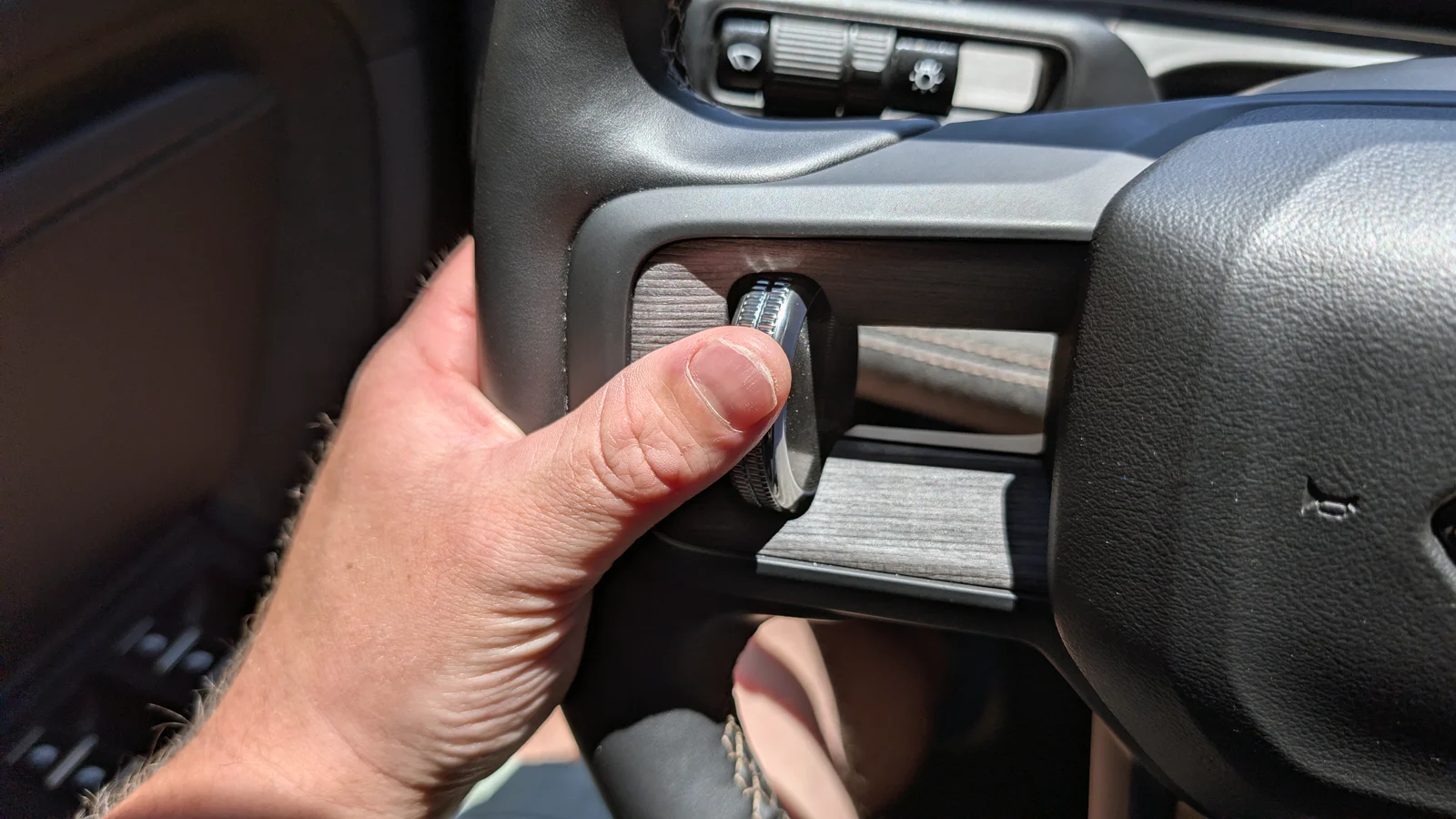
Not sure what to make of these new scroll buttons on the steering wheel just yet.
My initial reaction is that they are a little strange. The click you feel is a bit too noticeable and a bit of a sensory thing (if you’re sensitive to that like I am). I bet owners will just get used to them over time, though.
Glass Roof
The popular EV glass roof trend lives on, as R2 offers one as well. Although it is tinted, Rivian has not mentioned offering the electrochromatic Dynamic Glass option found in R1 vehicles. There’s no sunshade either. I didn’t notice too much radiant heat coming in from it on my test drive, though it’s certainly not zero. I’d grab a cover for it personally.
Door Panels
The R2’s door panels are mostly soft-touch where it counts. Up top, you’ll find a good amount of stitched vinyl, and the cloth trim carries across. The door pocket sides extend out, giving you extra width, just like in the R1 vehicles. If you hate pressing a button to open your doors, I have bad news. You’ll have to do just that as they have electronic actuators. On the positive side, there’s a large stretchable door pocket that should fit oversized water bottles.
Oh, and how could I forget? Sticking to tradition, Rivian includes its signature rechargeable flashlight in the driver’s door of Premium and Performance models.
Interior Summary
As with the exterior, I think Rivian hit the R2’s interior design out of the park. Though the interior was clearly designed to meet a lower price point, the core of Rivian’s identity remains very noticeable. Wood accents and detailed trim give it a rugged yet futuristic look. There is also plenty of passenger and storage space.
Exterior Design & Cargo
One of my favorite things about the R2’s exterior is that, instead of creating something risky, Rivian simply shrank the design of the already handsome R1S SUV.
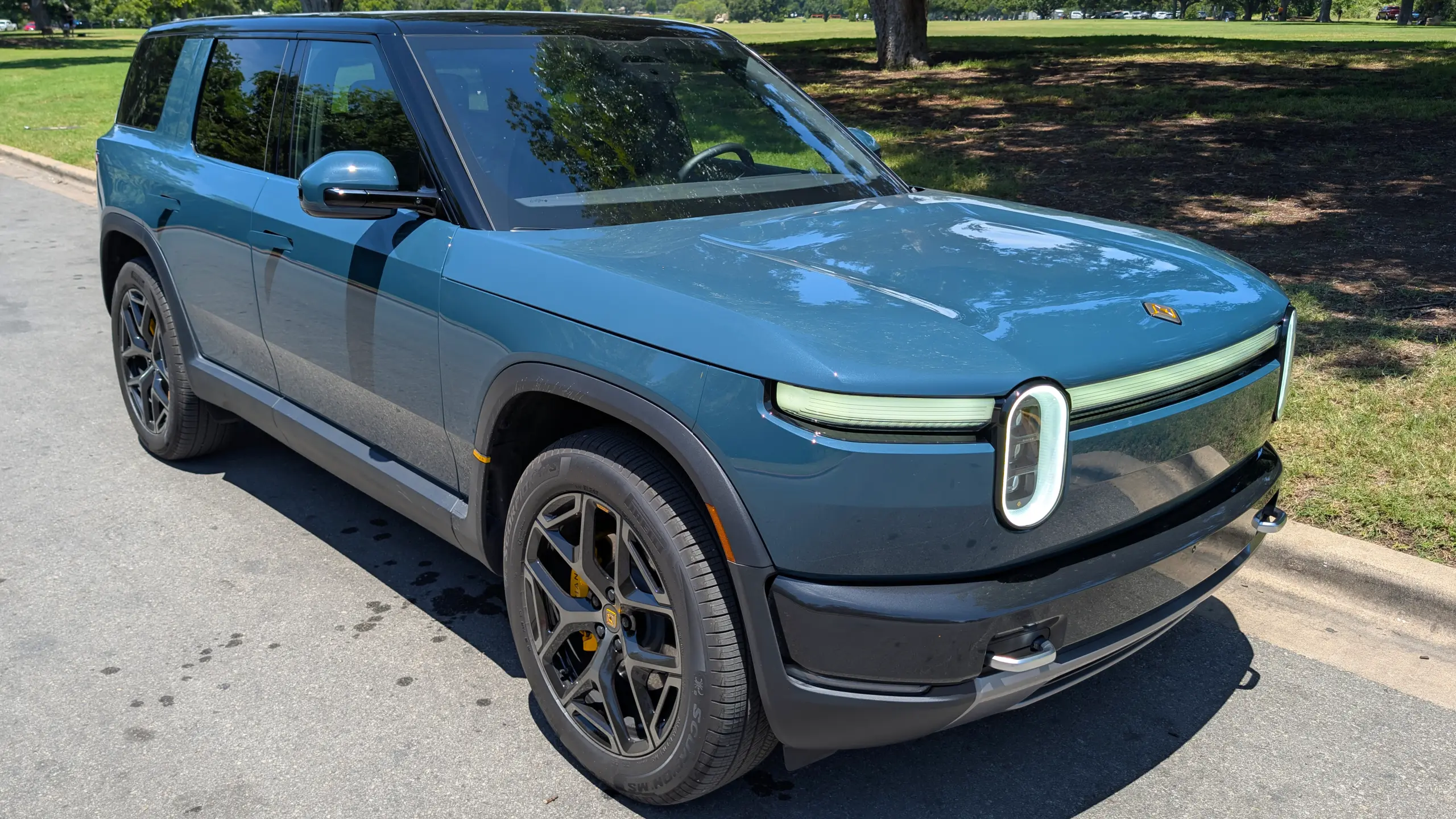
Don’t fix what ain’t broken.
Updated Lightbar
There are some improvements to the playful, Range Rover-esque physique, though. The front lightbar is now 3-dimensional instead of being flat, which adds character to its whimsical face. The door handles are essentially the same design as those on Rivian’s larger vehicles. They sit retracted and flush when you’re driving or the vehicle is locked, then extend out when parked and unlocked. I’m a fan.
My Favorite Frunk
I loved my R1T’s automatic front trunk, or frunk. Well, R2 has a similar feature. You can open the frunk from outside the vehicle using a small, touch-sensitive button located just below the lightbar. Inside, there is a generously sized storage compartment with 5.2 cubic feet of space (25% more vs the Model Y’s frunk). That is enough for groceries or some gear.
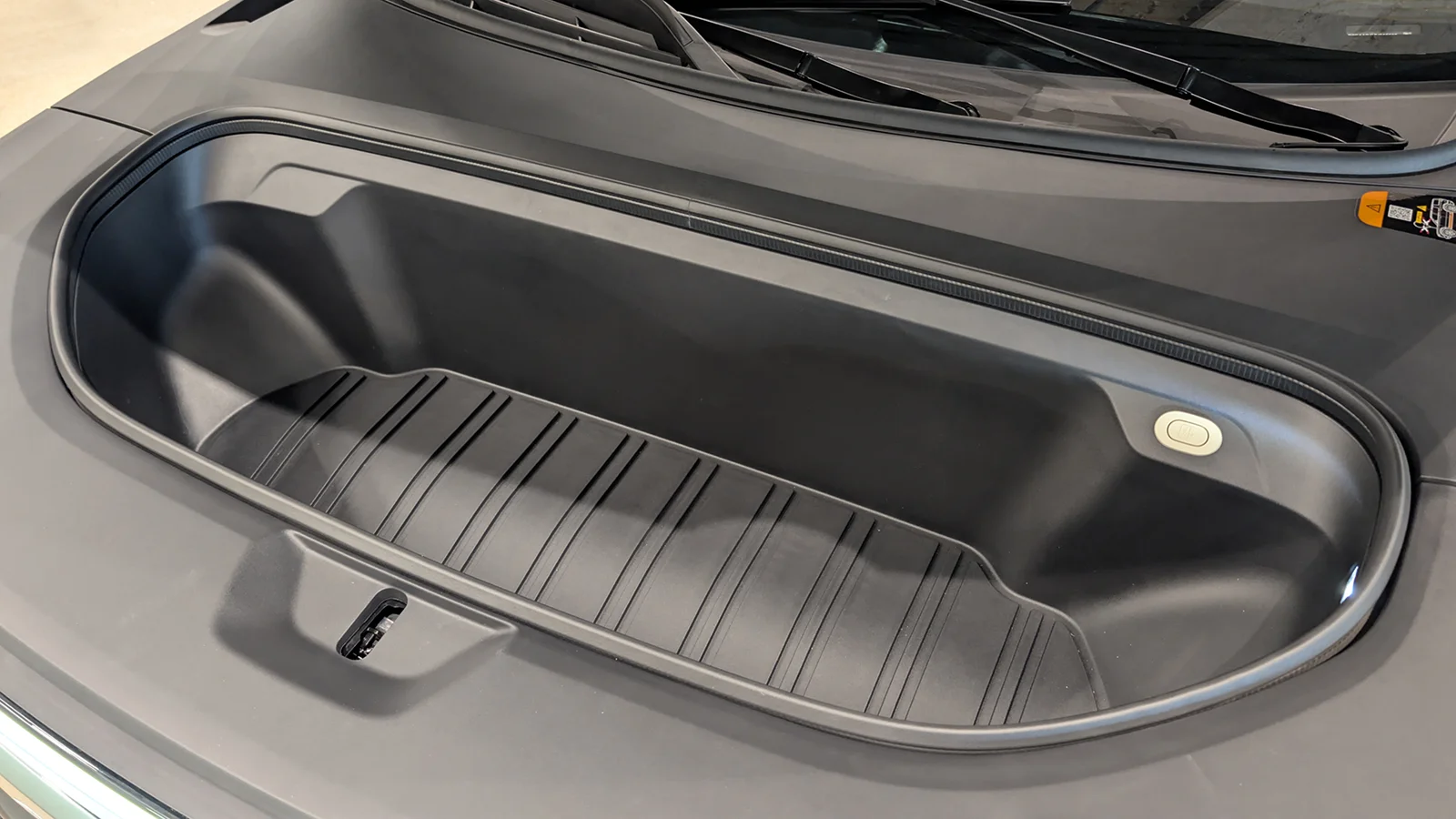
R2’s frunk is the most usable, if you ask me.
I’m thrilled Rivian kept this, even if there are a few cons to consider. First, the time from touching the button to the frunk actually opening is a bit too long in my opinion. The hood doesn’t open very high, so someone around 5’11” or taller could hit their head on it if they aren’t careful. While I don’t mind that Rivian cut costs by omitting a power-closing frunk, the manual mechanism feels awkward. You push the hood down, it catches, and then it soft-closes itself.
Leading Cargo Capacity
The boxy design continues to pay dividends, in this case through additional rear storage capacity. The R2 offers 28.7 cubic feet with the rear seats upright and 79.4 cubic feet with the seats folded flat. It beats out the Model Y’s 76.2 cubic feet and completely outclasses vehicles similar in length like the Ford Mustang Mach-E (59.7 cubic feet) and Hyundai Ioniq 5 (59.3 cubic feet).
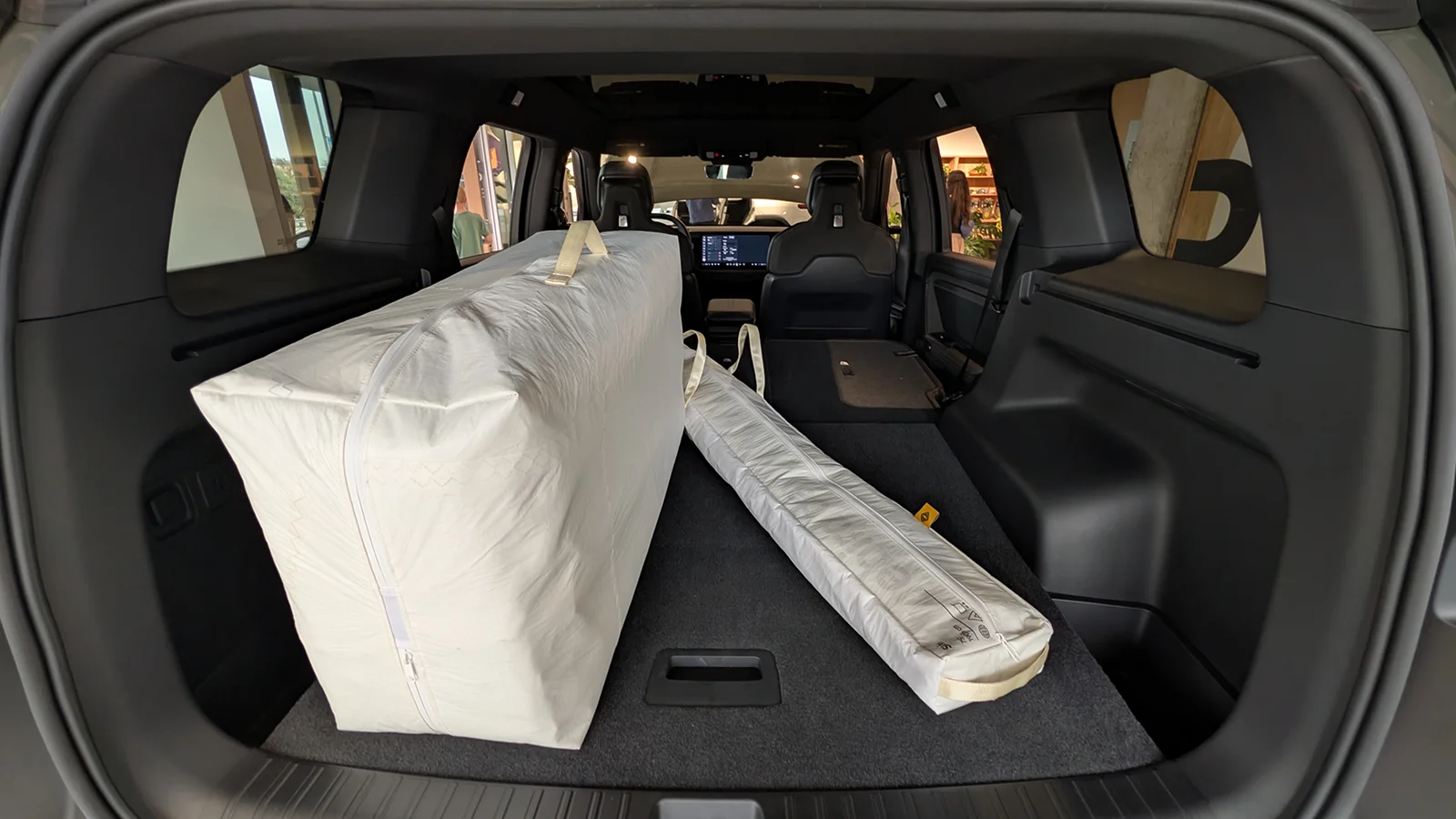
As you can see, there’s plenty of cargo space to go around.
Perhaps the only con I can think of is that folding the rear seats is a manual process. There are no power-folding options. When it comes to power, however, the R2 includes both a 120V outlet and a 12V outlet in the rear cargo area. Having both outlets is a useful setup that offers more flexibility than those in competing vehicles.
Functioning Rear Window
If you need even more room to haul stuff, the tailgate glass can be rolled down, so you can stick things out of the back (Performance and Premium trims only). It’s also great for bringing more fresh air into the cabin.
You can press a touch-sensitive button on the tailgate to roll the glass up or down. The opening also lets you quickly place objects in the back. The drop glass can also be opened inside the car using the overhead console. In fact, all windows can be rolled down at once using a button labeled “5x”.
Exterior Summary
R2 is a unique offering in the crossover EV space. Most go for efficiency above all else, and R2’s boxy design is the antithesis of that. It takes the good from its older siblings and combines that with some updates to fit a smaller canvas.
R2 Accessories
The R2 uses the same rooftop crossbars as its larger siblings, which should mean many of the same accessories are compatible. Rivian is also developing a rooftop tent (with climate vents and USB-C ports!) specifically for this vehicle, along with an outdoor projection screen and other camping goodies like a mattress set made in partnership with Hest.
Perhaps the most exciting accessory (at least to me) is the vehicle-to-load adapter, which Rivian has named the “Field Outlet.” It plugs into the charge port and provides two handy 120V outlets with a reported maximum output of 2,400 watts total. There’s no 240V support, but paired with the outlet in the cargo area, it gives R2 external charging capabilities that most crossover EVs don’t offer.
Autonomy and the Lidar Roadmap
In a somewhat bizarre move, Rivian announced that beginning next year, the R2 will ship with its Gen 3 autonomy hardware, including a lidar sensor and advanced chipset. The company claims its new autonomy computer, ACM3, will offer four times the processing power of the Gen 2 hardware currently shipping in all new Rivians, including the R2.
As you’d expect, it was the number one topic of conversation in the showroom, where employees had to explain to numerous prospective customers that they didn’t need this new Gen 3 hardware to get their best future hands-free driving experience. They claimed that this new hardware was for training only and that all Gen 2 vehicles would have the same capabilities thanks to this shared knowledge. You can consider me skeptical on that one.
Rivian’s current self-driving software is nothing too special and certainly doesn’t hold up to Tesla’s FSD. The bottom line is that if you care about autonomy tech or think you will in 2-3 years, I would wait until R2 comes with the new hardware, regardless of what Rivian says.
Overall Thoughts
I greatly enjoyed my time with the Rivian R2 and believe it has a chance to be a strong contender in the crossover EV market (and hopefully beyond). It brings some things to the table that competitors don’t, including a wonderfully bold, boxy design and a significant amount of cargo and cabin space, all while offering 330 miles of range. Plus, it’s very enjoyable to drive.
The software experience is still better than most. Rivian has addressed a lot of previous issues, and the price is right on target for where it needs to be. While there are open questions regarding reliability and durability that no one can answer yet and there are likely to be some hiccups along the way, this is a strong entry into the category.
If you are feeling a little wary about buying a car from a new brand, keep in mind two things. First, every R2 has a four-year/50,000-mile basic warranty. The battery and drivetrain are covered for eight years or 120,000 miles. Second, you could always do a shorter lease instead of purchasing one outright.
As a side note, I do have a reservation that I plan to keep after my experience. Because I think this one can be a winner.
Ordering the Rivian R2
You can order an R2 on Rivian’s website for a refundable $100 deposit. Order windows are now opening in waves for reservation holders. With a slow initial production ramp, you can probably expect an R2 in your garage sometime between the middle and end of 2027.
Sources
Related Articles