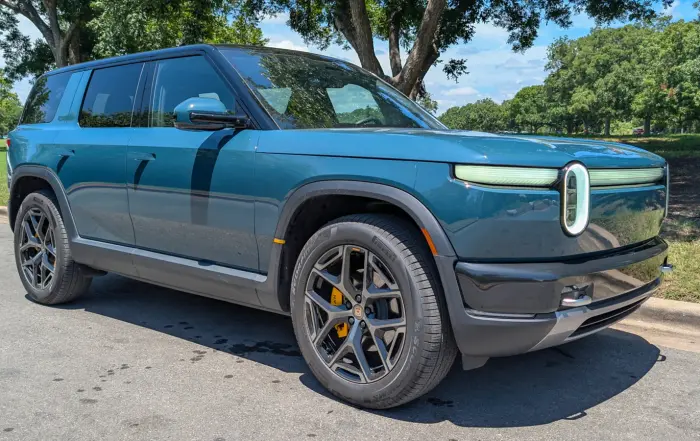
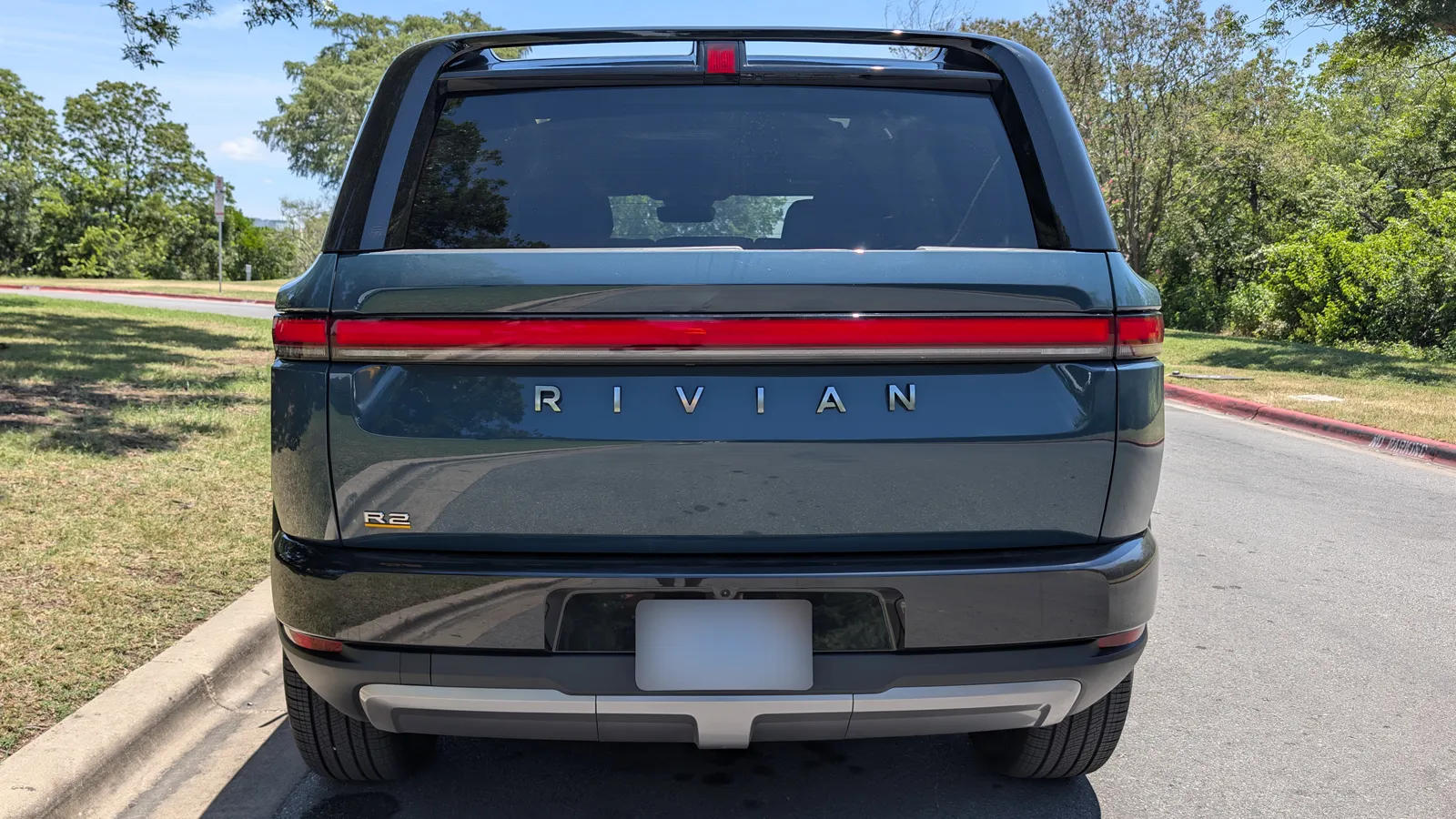

Rivian is an EV maker that debuted at the 2018 Los Angeles Auto Show, where they unveiled their all-electric R1S, a three-row SUV, and R1T, an electric truck. I happened to be there that day and got a chance to see the vehicles in person.
Long story short, I placed a deposit and took delivery of my 2022 R1T four years later. Here’s my experience with owning a Rivian, including what I like and the issues I’ve had.
What Is Rivian?
Rivian is an American EV manufacturer founded in 2009 by CEO RJ Scaringe. They are headquartered in Irvine, CA, with a car plant located in Normal, IL. They produce “electric adventure vehicles” or “EAV” for short, with the idea of combining a Range Rover’s luxury, with the offroad capability of something like a Jeep.

The Rivian factory in Normal, IL, which I toured in 2023.
Rivian’s Current Vehicles
Rivian currently sells three different vehicles. The first two are are a truck and SUV that share the same platform (R1). A third vehicle, the R2, was released in 2026 and competes in crossover electric vehicle market against the Tesla Model Y.
R1T & R1S
Rivian’s first vehicle was a pickup truck called the R1T, which they started delivering to non-employee customers in 2022. The R1T is 217 inches long, placing it between the size of a Ford Ranger and an F-150.

My Rivian R1T with the Rivian Blue exterior color.
It has a 4.5-foot bed with the tailgate up, and it extends to almost 7 feet with the tailgate down, thanks to a gooseneck hinge design.
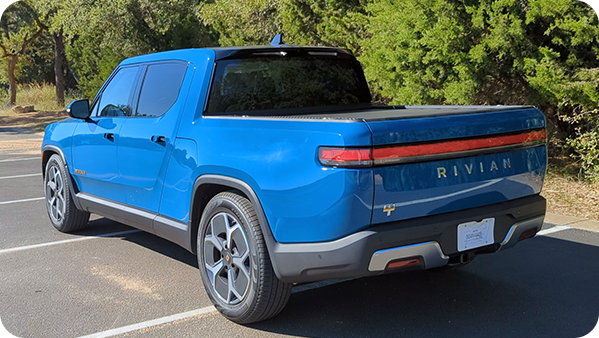
The bed is small with the tailgate up, but quite useful when you lower it down.
The other, a three-row SUV called the R1S, is a bit shorter at 200.8 inches which is about the same size as a standard Range Rover. It offers up to a whopping 104.7 cubic feet of storage, including the lay-flat third row seating.
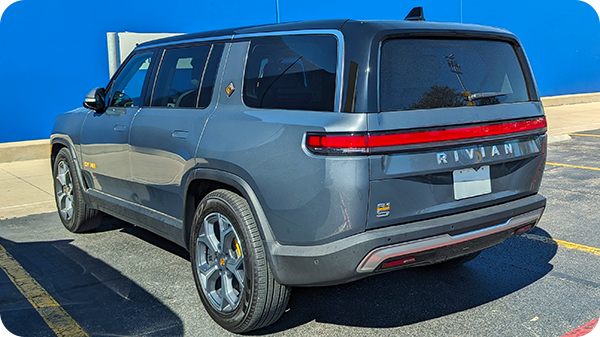
The Rivian R1S is a three-row electric SUV (seen here in El Cap Granite).
The R1T and R1S share a vehicle skateboard platform (referred to as “R1”), including drivetrain and wheel options. They can be configured with either a dual or quad motor setup, on-road or off-road tires, and two battery pack sizes that provide anywhere from 329-420 miles of range.
Neither model is cheap, however. The R1T currently starts at $79,990 for the dual motor AWD version with the Large battery pack, which provides up to 329 miles of range. The R1S is more expensive, with a base price of $83,990, also with 329 miles of range.
R2
Rivian’s R2 is their mass-market crossover that competes against the likes of the Tesla Model Y in the EV segment, as well as against ICE vehicles like the Ford Bronco Sport and Jeep Wrangler.

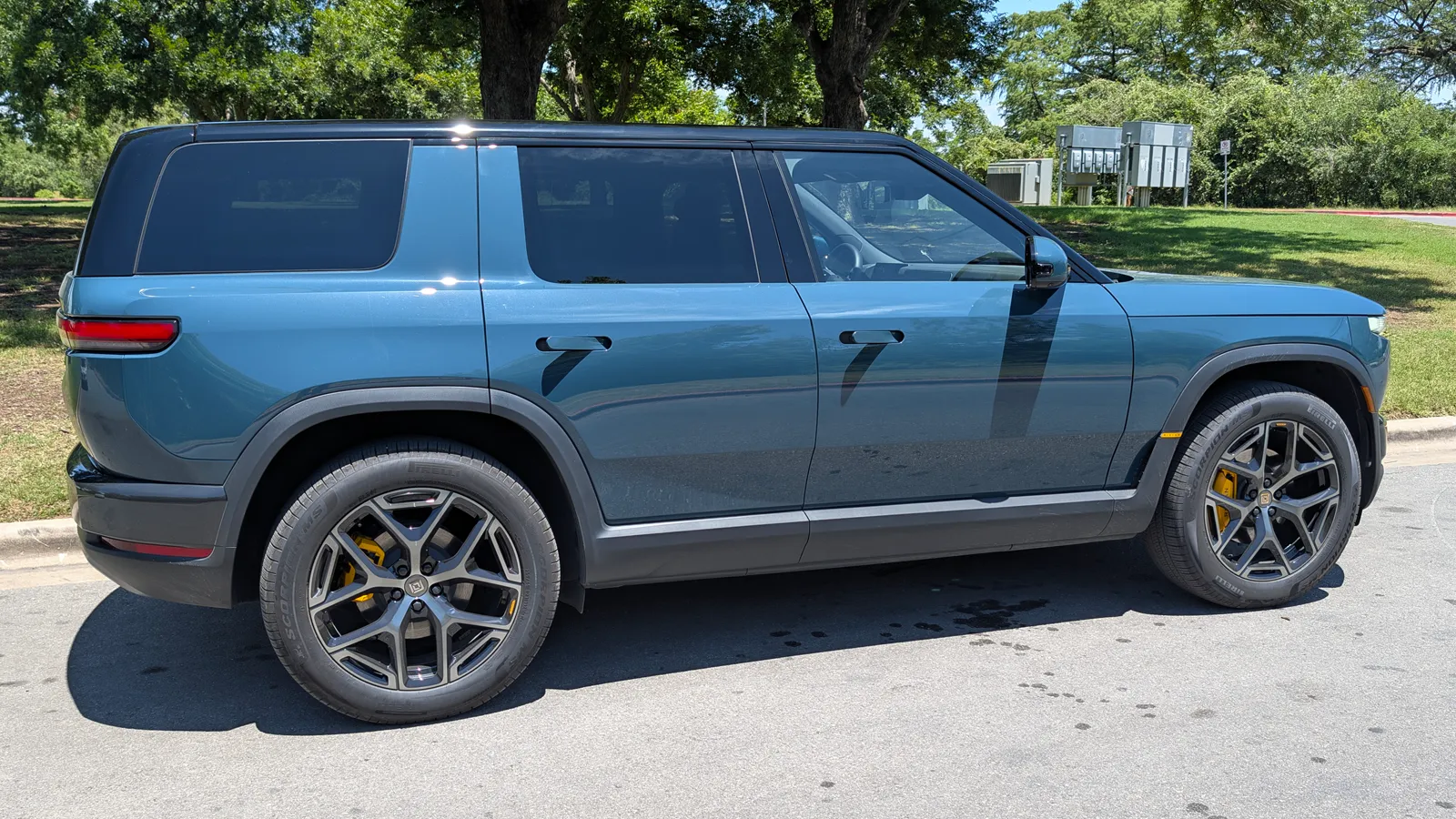
Deliveries began in June 2026. The starting price is $44,990 for the single motor RWD Standard trim (which doesn’t go on sale until spring 2027). The current offering is an AWD Performance Launch Edition which starts at $57,990.
Rivian’s Future Vehicles R3/R3X
Rivian has announced their next generation of cars called the “R3,” and “R3X.” Both are going to be smaller rally-type vehicles. Not much is known about the R3 and R3X, and they aren’t expected to hit the market for a few more years.
How Do You Buy a Rivian?
Like Tesla, Rivian doesn’t use the dealership model. Instead, they sell directly to customers from their website with set pricing.
Here’s how it works:
- Configure a Rivian built specifically for you, or browse the R1 Shop to find a pre-built vehicle for quicker delivery.

Rivian’s R1 shop contains available R1S and R1T inventory in your area.
- Place a $1,000 deposit for either an R1S or R1T (R2 order deposits are $100).
- The deposit for custom orders is refundable until you confirm your configuration. After that, it’s non-refundable.
- For vehicles in the R1 Shop, the deposit is non-refundable.
- You can switch your custom order between an R1T and R1S until it’s confirmed for production.
- After placing a deposit, you will be assigned a guide who will be your point of contact throughout the sales process.
- Track the progress of your order with a 7-step process display in your account dashboard.
- Depending on your state’s direct-to-consumer sales laws, provide proof of insurance, sign paperwork online, and complete financing before delivery.
- Your guide will help coordinate a delivery date at your local delivery center.
- On your delivery date, inspect the vehicle with the delivery specialist for any cosmetic defects or issues.
- If any are found, create a service ticket in the mobile app.
- Complete any remaining paperwork, receive your keys, and drive off in your new Rivian.
Pros of Owning a Rivian
Here’s why I like owning a Rivian and why an R1T or R1S could be a good fit for you.
Real-World Range
Both vehicles offer an estimated 270-400 miles of range, depending on the battery pack size, wheels, and motor configuration. My quad motor R1T with 21” road tires was advertised to get up 314 miles of range.

During this short trip, my R1T got 2.48mi/kWh or ~325 miles of estimated range if driven from 100% to 0%.
In my experience, I regularly exceed this estimate, even during highway driving at 70–75 mph. This is especially easy if I place the truck in “Conserve” mode, which disables the rear motors. Range anxiety isn’t much of an issue for many Rivian owners (unless you are towing, more on that later).
Big Vehicles That Drive Small
Both the R1S and R1T have a comparatively small turning radius, making it easy to drive in city settings and perform maneuvers like U-turns and parallel parking more easily than similarly sized SUVs or trucks.

Despite being longer and heavier than the Model Y, it’ll feel just as easy to drive after a few weeks.
If you’re transitioning from a smaller car like a Model Y, there will be a learning curve, but with some practice, you won’t have a problem overcoming it.
Instant Torque Makes a Rivian Glide
One thing I’ve always disliked about larger vehicles is that they feel sluggish and heavy. You put your foot on the accelerator, listen to a loud engine groan for a few seconds, and then it starts to accelerate. Not with a Rivian. Both the R1S and R1T are a dream to drive, thanks to the instant torque electric motors offer.
This torque also helps with towing. Have you ever wondered what it would be like to accelerate a 6,000 lb+ truck or SUV from 0-60 mph in around 3 seconds? Well, I can tell you, it’ll ruin your favorite roller coaster.
Excellent Handling
Though true of all EVs, excellent handling is especially noticeable and appreciated on a Rivian. I’m not saying they drive like a sports car, nor am I suggesting you take them around mountainous curves at highway speeds.
However, thanks to the lower center of gravity from the heavy battery, these vehicles feel far more planted to the road and safer to drive than your typical top-heavy truck or SUV.
Rivians Perform Well in Safety Tests
Both the Rivian R1T and R1S received the IIHS’s Top Safety Pick+ award. Electric cars are generally safer than their ICE car counterparts thanks to the extra weight, larger front crumple zone, low center of gravity, and rigidity provided by the battery pack.
Not to mention, it’s very difficult to get them to rollover, even with a strong side impact.
Software That’s Better Than Most
When it comes to software, Rivian is the most competitive alternative to Tesla that you can buy in America. There are many similarities between the two carmakers’ approach to software. For example, Rivian’s in-vehicle software is fully proprietary and regularly updated with over-the-air updates.

Rivian’s software is some of the best, despite how new the company is.
Rivian offers a built-in dashcam and security video recording system called Gear Guard (similar to Tesla’s Sentry Mode), along with a host of other pre-configured modes.
While audio streaming platforms like Spotify are offered within the vehicle’s native operating system, video streaming apps like YouTube have since been added through software updates.
I find Rivian’s software to be very intuitive, responsive, and overall to be a great user experience for the most common use cases.
Futuristic Without the Sacrifice
Rivian’s interior design is a cross between modern, luxury, and rugged. However, unlike some of the competition, Rivian still provides its owners with traditional features and physical components that you would expect at this price point.

While Rivian took a somewhat minimalist approach, they didn’t sacrifice features.
For example, they have a 360-degree view camera that greatly assists with parking, towing, and other needs. Rivian also has kept ultrasonic sensors. You’ll find blind spot monitoring sensors, rain sensors, and automatic high beam sensors all present.
Storage and More Storage
Both Rivian models offer a plethora of usable storage, albeit in different ways. I’ll focus on the R1T since it’s the vehicle I am most familiar with.
This electric pickup offers a four-and-a-half-foot bed, which can be extended to 7 feet with the tailgate down. Additionally, you get 11 cubic feet of storage in the automatic front trunk, which is perfect for a grocery haul.

Rivian’s automatic and spacious front trunk is one of my favorite features.
That’s not all. You can lift the driver’s side back seat cushions for additional storage cubbies. Of course, one of the most talked about features of the R1T is the gear tunnel, which Rivian says is large enough for a surfboard.

The gear tunnel extends the width of the truck, about 79 inches.
On the other hand, both of the back two rows can be folded down flat in the R1S.

With the seats folded down flat, you have plenty of room for a small air mattress.
A family of four going on a road trip can easily pack all of their bags and gear inside either the R1S or R1T with room to spare.
Offroad Capable
I’m going to be honest, I’m not an off-roader and I never left the pavement of the city. But it feels weird to write a Rivian article and not mention features like quad motors, the air suspension, and included air compressor that can be useful in re-inflating your tires after a day on the rocks.

A Rivian is the best EV to offroad in.
Cons of Owning a Rivian
While there’s a lot I like about Rivian and their vehicles, it is a brand-new company that’s selling a product which is notoriously difficult to succeed in making. Everything from parts to the manufacturing, delivery, and vehicle service can cause issues for owners. Here’s what you should keep in mind.
My Rivian Had a Variety of Build Issues
I was one of the first owners to take delivery of an R1T in my city. At the time, Rivian had only been on the market for 4 or 5 months. I expected there to be some issues, and there were:
- The vehicle pulled to the right (a tire balance didn’t fix this).
- The steering wheel shook at highway speeds.
- There was additional wind noise from the roof (components were not fitting properly).
- Air suspension calibration issues.
- The suspension also made a “knocking” sound on acceleration and deceleration.
- A rattle in the center console.
- The automatic tonneau cover seemed likely to break at any moment.
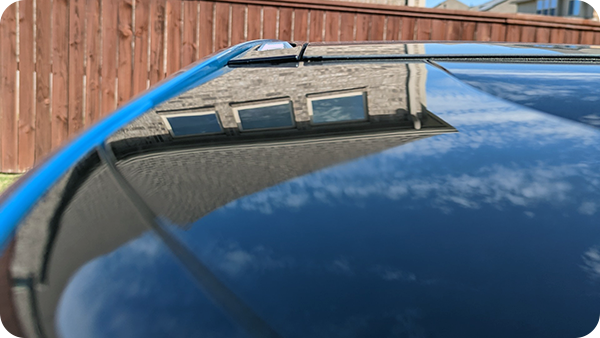
These black plastic pieces on my R1T’s roof were causing wind noise because they weren’t set in place properly.
While some of these issues were addressed by a Rivian service center, the most severe ones, such as the vehicle pulling to the right and the suspension knocking sound, did not have known fixes. I’m sure Rivian is constantly improving their manufacturing processes, but I would expect some hiccups.
Software Bugs
As with other newer EV-only brands, Rivian’s vehicles are computers on wheels, which inevitably means you’ll run into some bugs. Though not extremely common, issues like disappearing menu items and media playback problems can occur.
One problem that seems to bother many owners is the proximity lock feature, as well as phone-as-a-key (PAAK) connectivity. Simply put, sometimes the vehicle doesn’t unlock quickly or locks/unlocks when you don’t necessarily want it to.
Despite these problems, I find that Rivian generally ships very stable software updates. However, you’ll need to be patient as they work through features that are still a bit unpolished.
Not Enough Service Centers
This is a two-part issue. First, many areas do not have a Rivian service center at all yet. Given the context above on build quality issues, it may be unwise to purchase a Rivian if you can’t drive it or have it towed to a service center that’s nearby.

The amount of Rivian service centers is growing, but there’s still not enough in some areas.
The second part of this issue is that some service centers in the highest demand regions like Southern California have wait times for non-critical issues of up to 3-5 months. That’s a very long time to have to deal with a vehicle that’s not working properly.
These issues will get better over time as Rivian adapts to its demand and invests in more service centers across the country.
Charging Can Take A While
Both home charging and DC fast charging on the road will take longer with Rivian’s very large battery packs. They are also some of the least efficient EVs, thanks to their size and shape, along with a 400V system architecture, which maxes out at a charging speed of around 220kW.

Charging a Rivian isn’t a bad experience, but it could be quicker.
Using a regular wall outlet, you can expect to get about 1-2 miles of range added per hour. Though DC fast charging is much quicker, the total amount of time you’ll spend to replenish your battery from 10% to 80% state of charge can take anywhere from 45-60 minutes.
Compare this to the Hyundai Ioniq 5’s 800V architecture, which can refuel its battery pack from 10% to 80% in less than 20 minutes. Yes, the Ioniq 5 has a much smaller pack, but the amount of range added is similar.
Towing Range
This isn’t exclusive to Rivian, but all electric vehicles will lose about half of their range when towing at maximum payload. That means if you order the dual motor max pack, you can expect 180-200 miles of real-world range.
If you primarily tow only for short distances, this won’t be an issue. If you plan to take a camper on a cross-country road trip, you’ll need to stop every couple of hours to charge.
Company Longevity
It’s certainly fair to ask, will Rivian be around to service your vehicle in 2, 3, or 5 years? No one can answer this question.
However, keep in mind that Amazon has a massive 100,000 electric delivery van (EDV) order, Rivian has spent a tremendous amount of time lowering production costs, and more affordable vehicles are on the way.

While the road ahead isn’t easy, Rivian is well positioned to succeed.
With all of that in mind, and in the worst possible scenario that Rivian itself does not survive as it is, it’s likely that service and parts will still be available to its tens of thousands of customers. In my opinion, we are a long way from needing to worry about this.
Should You Buy a Rivian?
If you can deal with some hiccups and mostly minor issues here and there, I think Rivian makes some of the best electric cars you can buy.
Not only are they both very functional, but they are also incredibly fun to drive, extremely safe, and provide a generous amount of range that will meet the needs of most buyers. However, if you need to tow for long distances, a plug-in hybrid or diesel might be a better option.
Rivian FAQ
What Does “Rivian” Mean?
The company’s founder and CEO, RJ Scaringe, was raised in Florida, near the Indian River. The name of the company comes directly from a combination of these words.
What Is the MSRP of a Rivian R1S?
The current base MSRP of a 2026 Rivian R1S with dual motors and the Large battery pack, capable of 329 miles of range, is $83,990.
What Is the MSRP of a Rivian R1T?
The current base MSRP of a 2026 Rivian R1T with the dual motor and Large battery pack configuration, which offers 329 miles of range, is $79,990.
How Much Range Does a Rivian Have?
The Rivian R1T truck offers up to 420 miles of EPA-estimated range with the dual motor Max pack configuration, while the R1S SUV provides 410 miles with the same setup.
Can Rivian Use Tesla Superchargers?
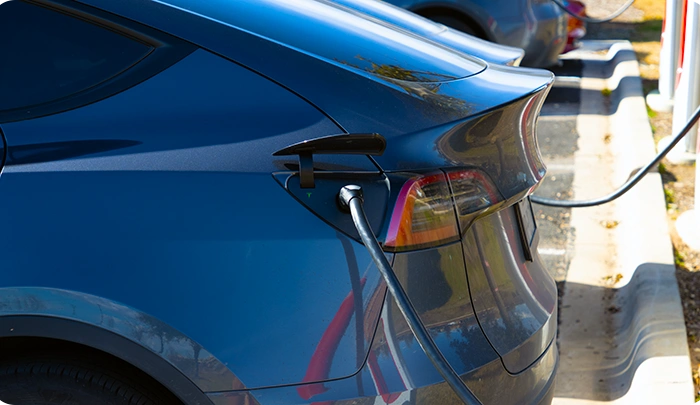
Yes, Rivian gained access to most V3 and V4 Tesla Superchargers in 2024 using a compatible adapter, and all 2026 models now come with a native NACS charge port.
Sources
Related Articles