

If you’ve been around EVs, you’ve probably come into contact with or have used electric vehicle supply equipment (EVSE). But a common misnomer in the world of electric cars is to call all EVSE “chargers.” Let me explain.
EVSE vs Charger – What’s the Difference?
EVSE is any hardware (including its software) that aids in the delivery of electricity to an EV, while a “charger” provides an EV’s battery pack with energy (electricity) directly for storage. Notice the subtle difference? All chargers are EVSE, but not all EVSE are chargers.
The key point to understand is that EV batteries are designed to store electricity in the form of direct current (DC). But many power sources, like your home’s electrical system, provide energy as alternating current (AC), which an electric car can’t use without it being converted first.

Your EV’s mobile charger isn’t a “charger” at all.
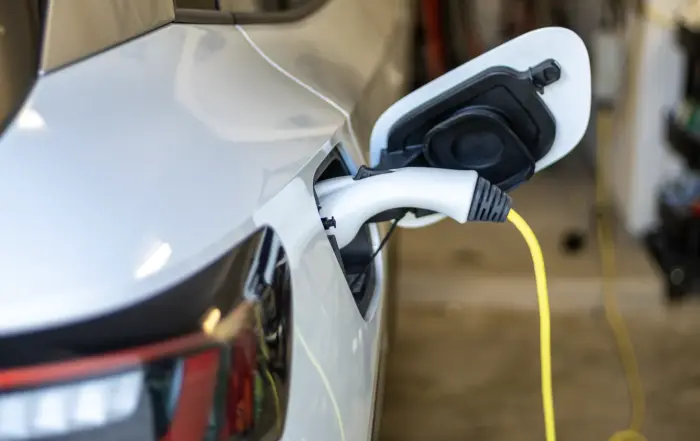
That’s why EVs have onboard charging equipment that changes AC power to DC. This means the cable you are using to plug in at home isn’t technically a charger, but it is EVSE. It’s only supplying the flow of energy to the car’s charger, which in turn fills up the battery pack.

An EV’s onboard charger is located in a housing attached to the battery pack (Tesla Model Y shown).
Lower power output public charging stations (often referred to as “Level 1” and “Level 2” charging – more on that below) which supply up to 19.2 kW of energy in the US or 22 kW in Europe, are also not chargers, as they provide AC power as well.

Yes, even many public stations are making your EV’s onboard charger do all of the work.
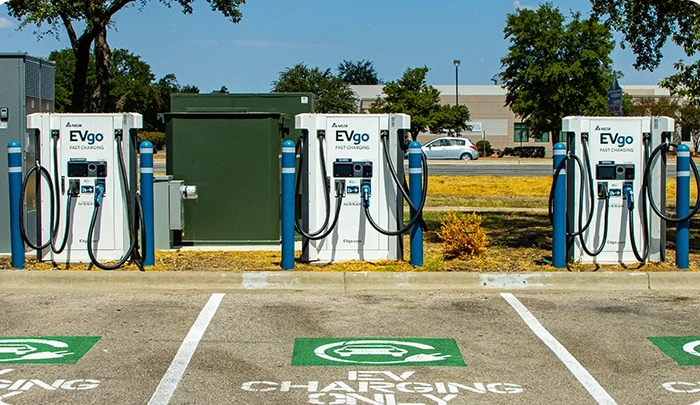
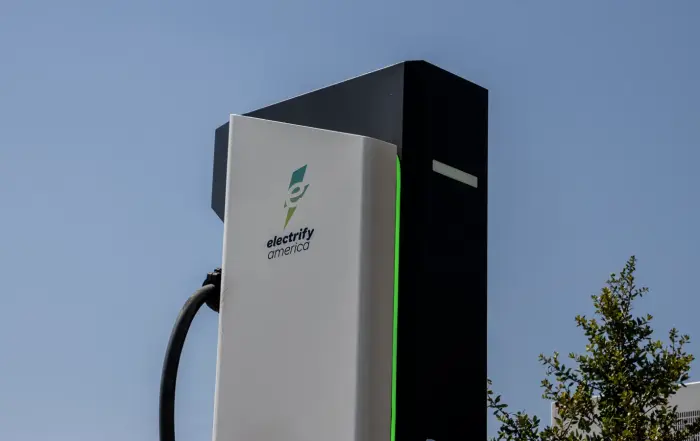
The only EVSE that are correctly referred to as “chargers” are DC fast chargers, like those operated by Electrify America and EVgo. This is because these stations, as their name implies, provide the needed DC power directly to the battery pack and can bypass the vehicle’s onboard charger. That’s one of the reasons they can fuel EVs at a rate 15-100 times that of basic home charging.

Fast chargers are, in fact, chargers (and EVSE).
Since electric car terminology can already be complicated, it’s common in the automotive industry for people to refer to all cables and equipment that assist in providing power to EVs as “chargers.” I also refer to EVSE as “chargers” throughout this website to keep things simple and to match the language you’ll hear from dealerships and other sources.
Why Do EVs Need DC Power?
Without getting too in the weeds on how electricity works, the simple answer is that DC power is more stable for storage, can be transferred more quickly (faster charging rates), and the related hardware is cheaper to produce for automakers.
AC Power Is Used for Driving
While DC power is required for energy storage, most electric vehicles have AC-based motors. That’s where a power inverter comes in, which changes its function based on whether the vehicle is being propelled or not.

Tesla’s famous Plaid rear drive unit is two AC permanent magnet motors connected together.
If you are in drive or reverse, the inverter converts the stored DC energy from the battery to usable AC for the motors. If you take your foot off of the accelerator and allow regenerative braking to kick in, then the inverter will process the unused AC energy back to DC for storage.
What Is EVSE Made Up Of?
EVSE contain a lot of components that are important to ensure safe power delivery to an electric car. Exactly what they will be made up of depends on whether they charge the vehicle directly or if they are just delivering energy to the onboard charger instead. Here are the basic parts:
- Housing or Enclosures: EVSE comes in different forms such as basic cables with small electronic boxes, wall-mounted units, and large tower-like structures used by public fast charging stations.

Fast charging hardware is contained in a larger housing because the wiring and electronics are more complex than other EVSE.
- Electronics: To keep you and your vehicle safe, EVSE use a variety of electronics to control power flow and to monitor the session.

Even the most basic EVSE have a small box with electronics that ensure a safe charging process.
- Firmware: Software is needed to run the basic operations of an EVSE for it to work properly.
- Network Connectivity: Some EVSE, like Tesla’s Universal Home Charger, can connect to the internet which allows remote control over the devices and for them to receive software updates.
- Plug Types: Though this is likely to change in the future, current EVs use different charge ports. EVSE is usually designed to be natively compatible with one type, while adapters allow other vehicles to use them.
Types of EVSE
The diversity of EVSE is based on different energy outputs or charging speeds, plug types, and setups. For example, some are meant to be used only at home or on the road, while others can be taken with you.
Level 1 Charging (120V)
The slowest method to recharge an EV is by using a mobile connector (often called a “mobile charger”) which is typically included with the purchase of any new electric car. This equipment works with the basic wall outlets you have at home (120V) and provides roughly 2-4 miles of range added per hour of charging.
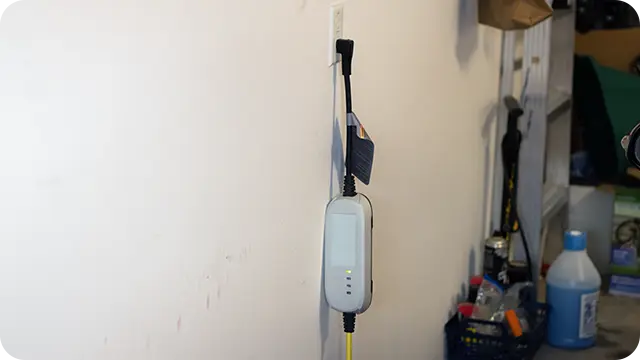
My Level 1 EVSE plugged in at home.
These devices are almost exclusively the cable-with-a-small-box type that can be taken with you or moved around. Again, this type of hardware is not a charger in technical terms.
Level 2 Charging (240V)
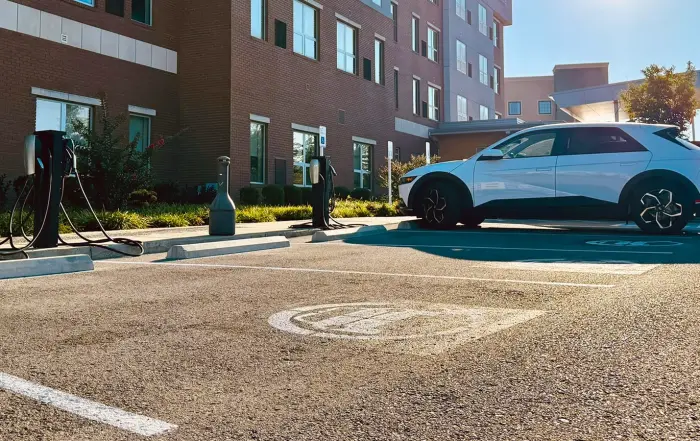
The next step up in charging speeds is commonly known as “Level 2” charging. EVSE in this tier can be purchased to use at home with a 240V outlet or by being hardwired. These units are also used as public charging stations. Level 2 EVSE can improve the rate of recharging your electric car to 15-40 miles of range added per hour.

Public Level 2 EVSE operated by Blink.
Equipment in this tier can be a mobile connector type like Level 1 EVSE, wall-mounted and plugged into a 240V outlet like a NEMA 14-50, or wall-mounted and hardwired directly into an electrical system.
Level 3 Charging (480V+)
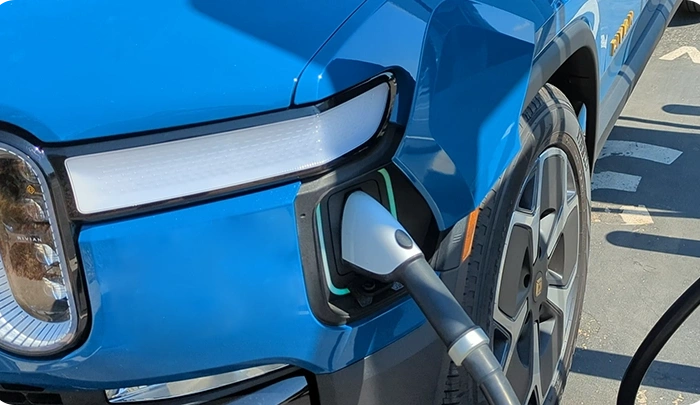
DC fast chargers, or simply “fast chargers,” are EVSE that bypass your vehicle’s onboard equipment to provide the quickest way to refuel your EV. This is the hardware you’ll likely need to use when on a road trip, for example. Companies like Electrify America, EVgo, and ChargePoint, along with the Tesla Supercharger network, have the most locations nationwide.

A Level 3 charger (EVSE) operated by EVgo.
Fast chargers have a range of energy outputs and EVs have a different limit of power that they can accept. Broadly speaking, fast charging stations can take an average EV from 10% state of charge to 80% in around 30-60 minutes. This is about 10-15 times faster when compared to Level 2 EVSE, and up to 300 times the rate of Level 1 equipment.
Sources