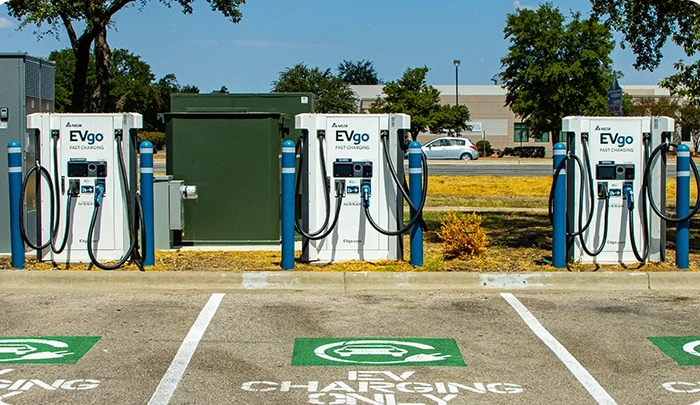


If you own an EV, you’ll eventually need to charge it away from home. But you need to know that there are different types of public charging stations and some may not even be compatible with your specific electric car. Here’s everything you need to know.
What Is a Public Charging Station?
Think of public chargers like gas stations. Their job is to fill your EV’s battery pack full of energy, often very rapidly. Though most EV owners will choose to plug in at home because it’s the most convenient and least expensive method to recharge your vehicle, there are many situations where this won’t be sufficient. For example, on road trips, while towing long distances, or in other cases where you just need a quick charge that would otherwise take hours at home.
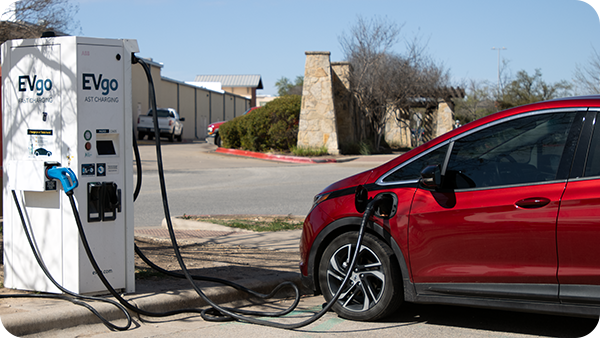
Public chargers are your way of adding range to your electric car while away from home.
Public Charger Power Output
A key differentiator between gas pumps and public chargers is that while you can expect the amount of time it takes to fill up your gas tank to be about the same regardless of which station you pull into, the same cannot be said about electric car chargers. This is because public stations offer a range of power outputs, from 1 kilowatt (kW) to 350 kW.
There are considered to be three charging levels, here’s more about them.
DC Fast Chargers
If you need to add range rapidly, then DC fast chargers (or simply “fast chargers”) are what you are looking for. Depending on your specific EV model, the most powerful stations can charge your vehicle from 10% state of charge to 80% in about 30 minutes or so.
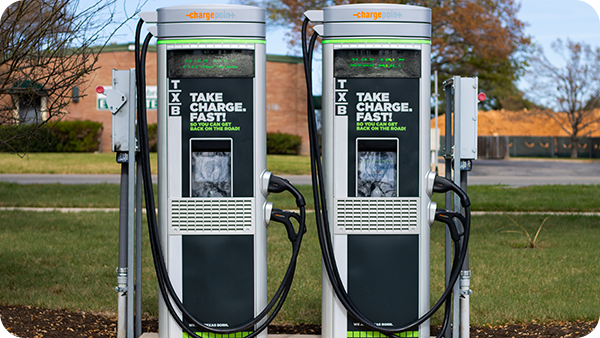
Fast charging with stations like these is the quickest way to add range to your EV.
Even still, fast chargers range in power output from 50 kW to 350 kW, so knowing what the station can provide and what your electric vehicle can accept is important to save time and money. These stations are considered to be “Level 3” charging or the quickest way to add energy to your electric car.
Destination Chargers
If you’re not in a hurry, destination chargers can add range to your electric vehicle while you’re doing something else, such as exploring a national park or sleeping in your hotel. These chargers are commonly found at points of interest like shopping centers, hotels, and popular attractions. Although destination chargers could theoretically have a Level 1 power output (up to 2.4 kW or 2-4 miles of range added per hour), most are Level 2 charging capable, which results in about 15-40 miles of range added per hour (up to 19.2 kW).
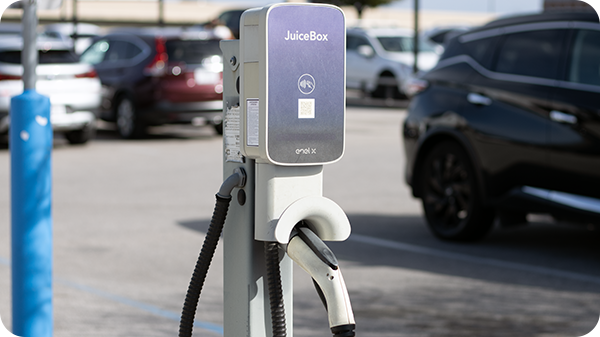
Destination chargers are becoming common and are a convenient way to top off your battery.
Many destination chargers are completely free to use, especially at hotels or attractions. However, if you are not a customer of the business providing the charger, you should ask for permission before plugging in.
How to Know What a Charger’s Output Is
Now that you know public chargers have different power outputs, how do you tell them apart? For those stations that have both types, one clear indicator is the size of the equipment. Fast chargers require a lot more hardware to handle all that extra power output, whereas destination chargers are much smaller in comparison, often small boxes.
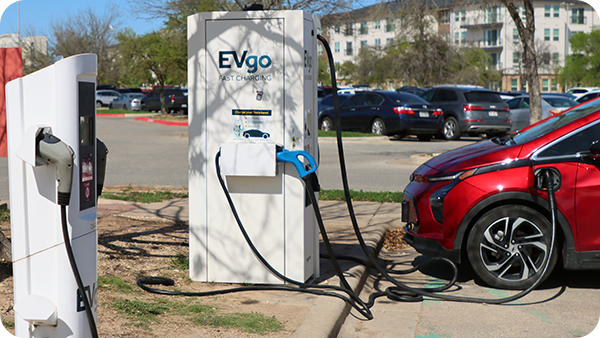
It’s easy to tell which has the higher power output just by the size discrepancy between them.
Plus, you’ll never mistake a fast charger and destination charger because they use different port types, which will be discussed later. The only current exception to this is Tesla, which uses the same port and connector regardless of power output.
Even individual stalls at a fast charging station can have different power levels. With this, there are a few ways to figure out what each one can provide. You can download the network’s mobile app, which will also allow you to see if any units are out of service.
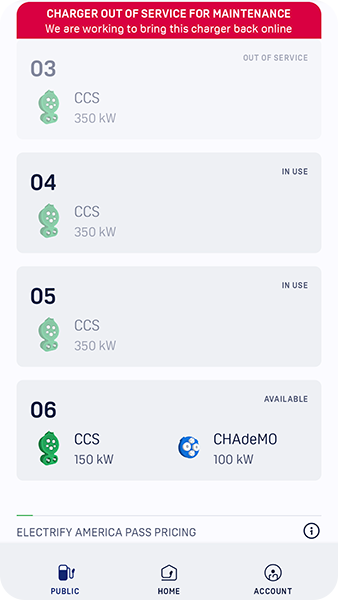
Charging network apps not only tell you the location and power output of chargers, but also whether they are in use or not working.
If you don’t have the app, you’ll find a charging speed label on the stall or within the touchscreen menu.
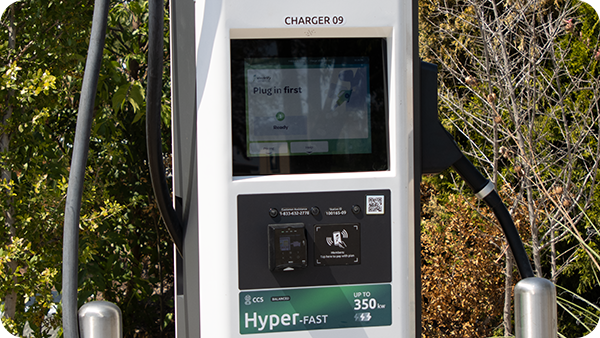
Some fast charging stalls have their speed clearly labeled. This one shows an output of “350 kW.”
Can You Charge at Any Public Station?
Standardization of charge ports and network access is not quite there yet, but with adapters, you’ll have access to most public charging equipment. Since late 2025, nearly all EVs can use most of Tesla’s Supercharger network with an adapter, and most automakers now ship native NACS ports. Additionally, some chargers might be reserved for patrons of a business, like those provided at hotels.
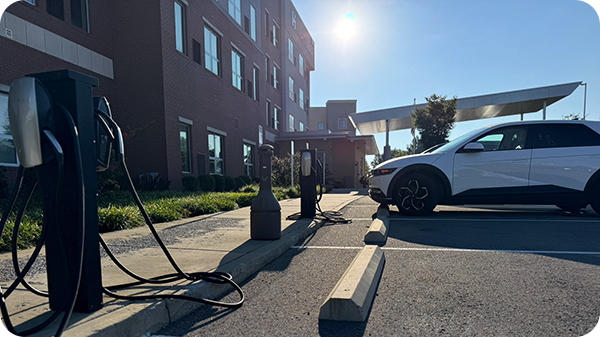
Chargers at hotels like those seen here are reserved for guests.
Tesla Supercharger Network
Tesla has one of the largest, and certainly the most reliable, fast-charging networks in the world. Tesla fast chargers, called “Superchargers,” were initially exclusive to Tesla owners. That changed in 2023, when most automakers joined a partnership with Tesla, allowing other EV owners access to many supercharger locations with an adapter. The program rolled out on a make-by-make basis, and since late 2025, nearly all EVs can use most of the network with an adapter.
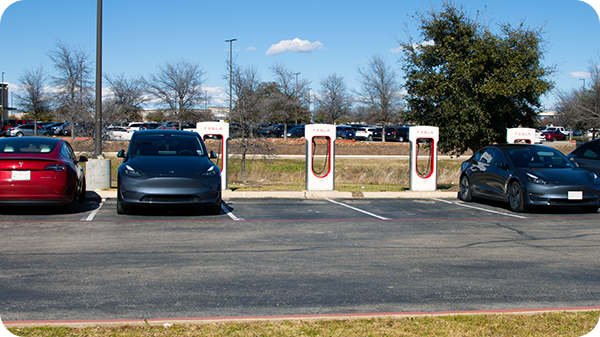
Non-Tesla EV owners wanted access to Superchargers, and now they have it.
Most automakers now ship Tesla’s in-house created charging port as standard equipment as well. Some Supercharger locations, such as those with older versions of the hardware, are still not available for non-Tesla EVs to use even with an adapter, at least for now.
Charger Port Types
In the United States, public chargers are compatible with four main charge port types.
SAE J1772
The SAE J1772 port, also known as the J-plug, is used for Level 1 and Level 2 charging on most non-Tesla EVs. It supports charge rates of up to 19.2 kW.
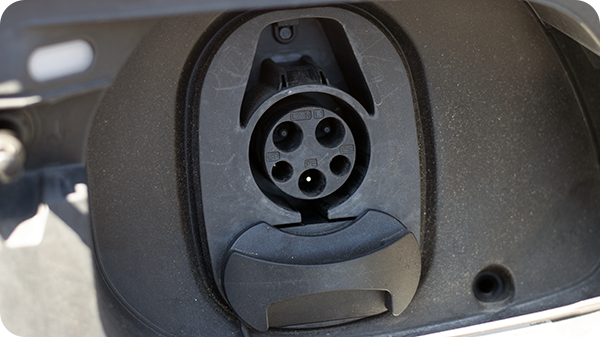
The five pin-based SAE J1772 port only supports Level 1 and Level 2 charging.
Combined Charging System (CCS)
CCS ports are coupled with most J1772 equipped EVs in the US and Europe. They include two additional large pin connectors which provides Level 3 fast charging speed capabilities up to 350 kW.

CCS ports use both the J1772 connectors with two additional large sized pins at the bottom.
CHAdeMO
Predominantly only used in Japan where it was developed, the CHAdeMO port type can also be found on some Japanese plug-in hybrid vehicles and EVs in the US. The current generation CHAdeMO equipment allows for charging speeds of 400 kW, but EVs with this technology in the US charge at much slower rate, topping out around 62.5 kW.
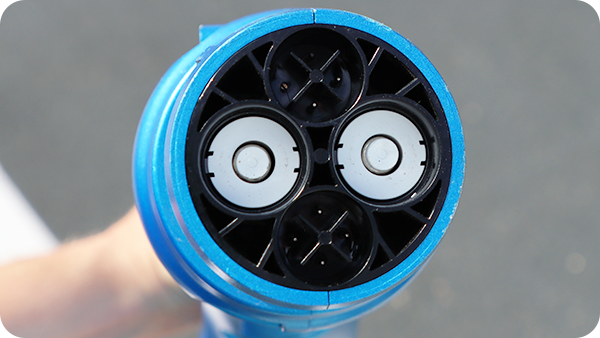
A CHAdeMO charging handle.
Tesla or North American Charging Standard (NACS)
The NACS port supports all three charging levels, and the latest Tesla V4 Superchargers output up to 500 kW. In the United States, most automakers now use NACS as the standard port for their new EVs.

The NACS port is used for all three levels of charging.
How to Charge at a Tesla Supercharger
Tesla has made plugging in at supercharger stations an easy and straightforward process. Unlike other networks, Superchargers at the same location all have identical output, so if one charger outputs 250 kW, they all do.

A typical Tesla Supercharger station location.
- Before arriving at the station, make sure you have a valid credit card linked to your Tesla online account, as there’s no way to pay directly at the charger.
- Check your car’s in-car software or a mobile app like PlugShare (non-Tesla owners), to make sure the station is working.
- Once you arrive, double-check that an open space has a working charger.
- After pulling into a stall and parking, make sure your charge limit is set to the correct desired level.
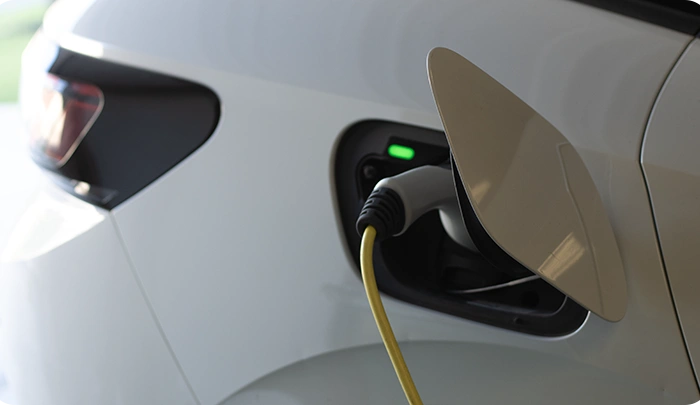
- Plug the charging handle in. If the charge port indicator is blinking green, you’re good to go.
- Session information will also appear in your vehicle’s app and the in-car software so you can double-check charging speeds are looking good.
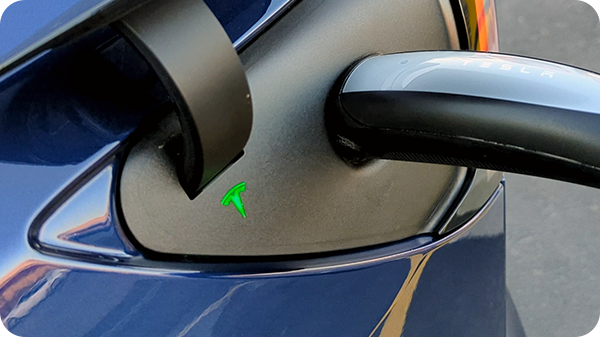
- Payment is automated through the credit card linked to your Tesla account, so when you’re finished, just remove the charger and hang it back up.
Charging at a Public DC Fast Charger
If you are fast charging at another network, like EVgo, ChargePoint, or Electrify America, the process is similar to Tesla with the only difference being able to pay at the stall.

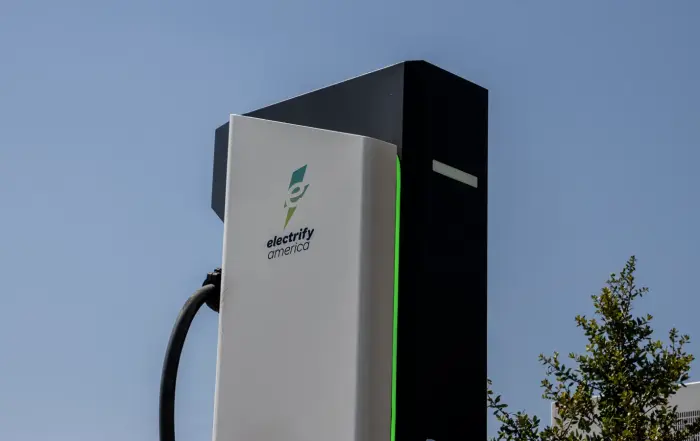
A fast charging station operated by Electrify America.
- Open the network’s app to check that the charging location you are wanting to use is operational.
- Once you are at the station, use the app to find an open and working charging stall that’s the correct speed for your vehicle.
- Upon parking, make sure your charge limit is set to the desired level.
- Plug in your vehicle.
- You can then pay for your charging session, typically with a credit card, Apple Pay, or Google Wallet.
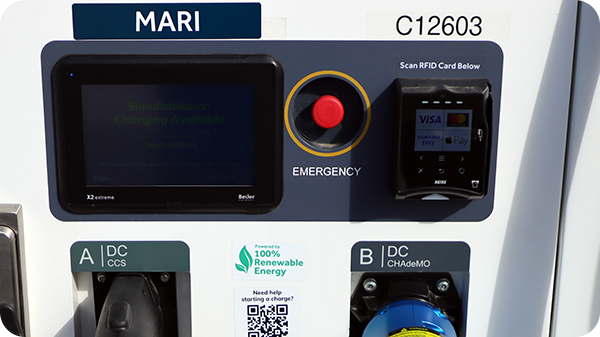
- After the payment is authorized, it can take up to 1-2 minutes for the charger to communicate with your vehicle and to start the flow of electricity.
- After the session is done, disconnect the charger and hang it back up. Your card will be billed just like at the gas pump.
Fast Charging Tips
While in most cases using public fast charging stations is a pretty painless process, I have some tips to share.
Tips to Save Time
- To make the process as quick as possible, download the app for the networks you plan on using.
- Some chargers have wonky software, and this has saved me a ton of hassle in the past.
- Create a free account with each charging network and save your payment information.
- Even if a charger has a card reader, I’ve experienced issues where it’s been broken or otherwise not functioning before.
- Precondition your car if it has the option for it.
- If you are driving a Tesla, just navigate to the supercharger station using the in-car software and this process will happen automatically.
- Fast charging stalls often share power. Therefore, you should try to leave a space between you and another charging vehicle, if you can.
- Older Tesla Superchargers will be labeled something like “1A” and “1B” for example.
- You don’t have to worry about this at newer Superchargers that have an output of 250 kW or greater.

Avoid using chargers that share power if another EV is already plugged in. They will often have labels like “1A” and “1B.”
- Always check that you are getting the expected power output that matches your vehicle’s charging curve (more on that below).
- Just because a session successfully starts doesn’t mean that the charger is working properly.
- Consistently monitor your charging session, especially if you are away from the vehicle.
- I’ve had sessions abruptly stop after a few minutes, which can waste a lot of time if you don’t notice the problem as soon as it happens.
Tips to Save Money
- Many charging networks offer a paid subscription with reduced rates.
- If you fast charge frequently, you’ll save quite a bit of money with these programs.
- On road trips, try to integrate free destination chargers into your plans.

I’ve used destination chargers to save hours and hundreds of dollars on fast charging during road trips before.
- Move your vehicle immediately after the session has completed, as stations charge idle fees which are often expensive.
- It’s also courteous in case someone else is waiting to charge, which is becoming more common.
- Look up the charging rates and fee types prior to plugging in.
- Don’t assume that a charger costs the same as one down the street, as they can be drastically different.
- Some chargers have time of use (TOU) rates, session fees, or just charge by the kilowatt-hour (kWh) of energy provided.
Charging at Destination Chargers
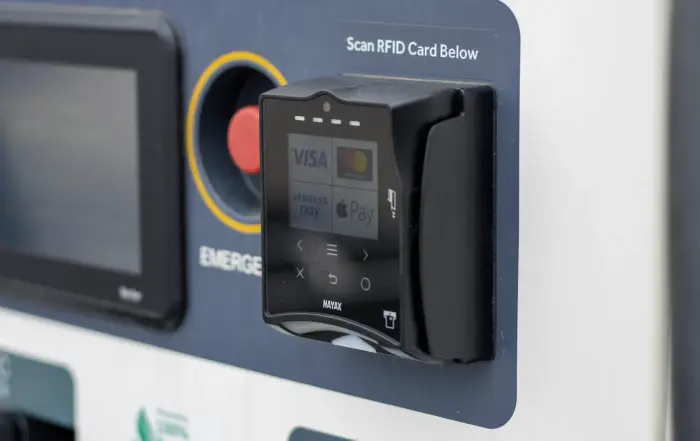
If they require payment, destination chargers are similar to public fast charging stations, so you should follow the steps above. They might require the app for you to initiate charging or to pay, have a card reader, or NFC tap icon on them.
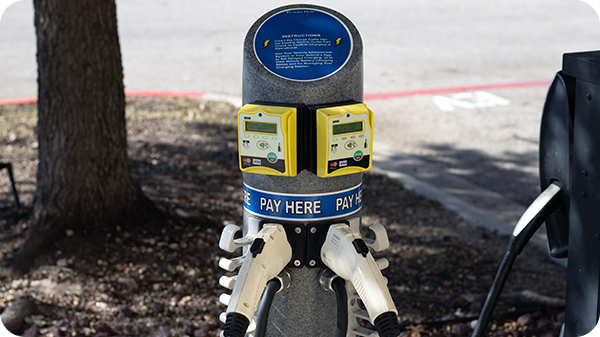
This hotel’s destination chargers require you to pay before they can be used.
If they are free, then you just plug in and nothing else is necessary. Tesla destination chargers don’t even have payment screens, which means you’ll either be paying the property owner to turn them on or they are free to use, just plug in.

This shopping center’s destination charger is completely free, you just plug in.
One important note, some free destination chargers might have a time limit associated with them. This usually isn’t the case for those found at hotels, but mostly those located in shopping centers, where you are only expected to stay an hour or two at most. If you are there longer, you can always unplug and plug back in. Of course, always be considerate of others when determining how long to stay.
Why Isn’t My EV Charging Faster?
Over the years of owning an electric vehicle and talking with new owners, I’ve heard “shouldn’t my car be charging faster” many times. Here are some important concepts to know when it comes to fueling up your EV.
Your EV’s Maximum Charge Rate
This is covered briefly above, but one of the key details you should research is how much maximum power input your electric vehicle can handle. Some EVs can accept charge rates up to 350 kW, while others can only intake 125 kW or less. Plugging your EV into a faster charger with an output it can’t accept will not make your vehicle charge any more quickly.
Charge Curves
In order to protect the cells, EVs don’t charge at the same rate from an empty to full. Instead, charging speeds are highest with a low battery and then slowly taper as the pack fills up with energy. This is called a charge curve. Generally speaking, you’ll experience near maximum charging speeds until 30% or 40% state of charge, with power dropping significantly after 80%.

Though my ID.4 can accept 125 kW of power at 79% state of charge, it’s pulling in far less than that (68 kW).
The last 20% of battery capacity could take 4-5 times longer to charge than the first 20%. Charging your car’s battery to 100% frequently can damage the cells. Therefore, you should try to unplug after 80% state of charge or so anyway, unless you really need the extra range.
Weather Conditions
While it won’t hurt your electric car, very cold weather can temporarily cause a loss in useable capacity, as well as slow down charging speeds. That’s why preconditioning your electric car prior to fast charging in the winter is always a good idea. As the battery warms up, it’ll be able to get closer to the normal charging curve that you would expect.

If it’s freezing outside, you can expect slower charging speeds, especially if your car’s battery isn’t warm.
On the other end, batteries hate the heat and it can permanently damage them. Though rare, if it’s extremely hot outside, a charging station might have reduced power output and your EV might take in less energy to help keep the battery cool.
Charger Stall Issues
Unfortunately, it’s quite common to not experience a charging station’s advertised speeds. This could be due to a technical issue with the charger, communication problems between the vehicle and stall, or lower power being supplied to the location than what it was built for.
Troubleshooting Charging Issues
While some charging issues are due to equipment problems that you can’t fix, there are others that can be remedied on the spot. Here are some things to try if you are getting a slow charge or the equipment is unresponsive.
Unplug, wait for 30 seconds or so and plug back in.
- Sometimes, there’s just a simple communication error between equipment and it needs to retry.
- I’ve successfully unplugged from a slow charging session and plugged right back in to get the expected speed before.
Close and reopen the charging app.
Similar to the above, it could be a communication error and the app might be miscommunicating with the station.
Reset your vehicle.
- EVs are like computers on wheels and they can experience strange bugs at times.
- Yes, failure to charge has been a bug for many, including myself, in the past.
Change Stalls
- Of course, changing stalls is the quickest way to try again, if the current one isn’t worth dealing with.
Contact support for the charging station.
- This sounds like a long shot but it really isn’t.
- I’ve had Electrify America successfully remotely reset an inoperable station within a few-minute phone call.
- It’s always worth calling if you can’t move to another stall.
Sources