

You might be surprised to learn free public charging stations exist. A lot of them, actually. As a six-time EV owner, I’ll explain what you need to know.
Finding Free Charging Stations
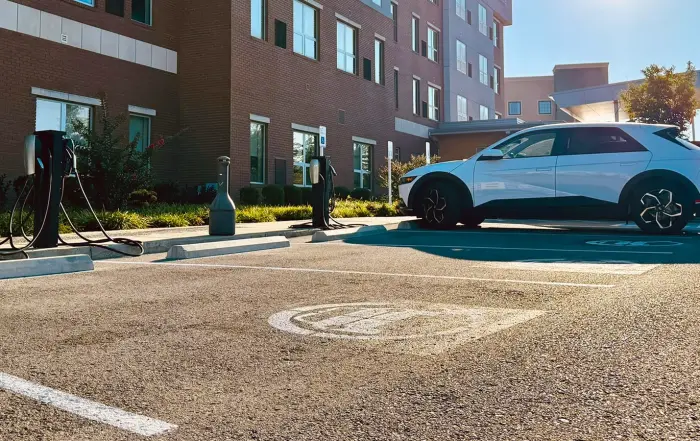
Most free electric car charging equipment will be what is known as destination chargers. Networks or businesses install them for public use or as an incentive for customers.
You’ll see them at places like:
- Shopping centers
- Hotels
- City parking garages
- Government buildings
- National and state parks
- Colleges

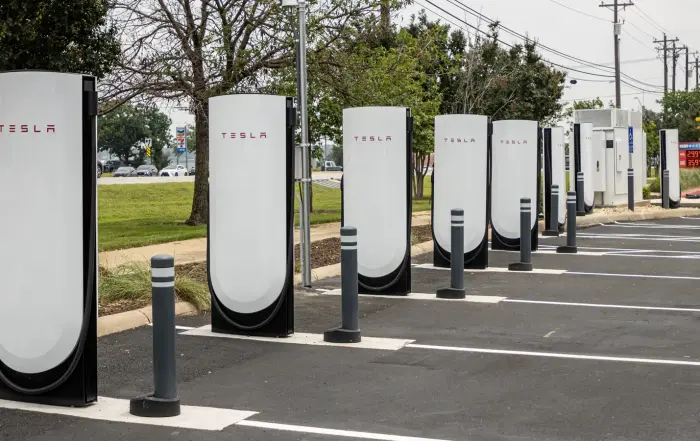
These free Tesla destination chargers are reserved for guests at this hotel.
This equipment is typically capable of Level 1 or Level 2 EV charging, meaning that you should expect anywhere from 3-40 miles of range to be added to your EV’s battery pack per hour of charging. To tell the difference, Level 1 EV charging power output goes up to 1.9 kW, while Level 2 output can be as high as 19.2 kW.
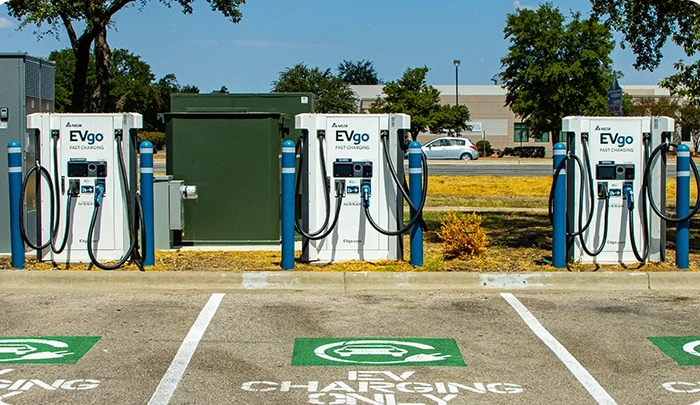
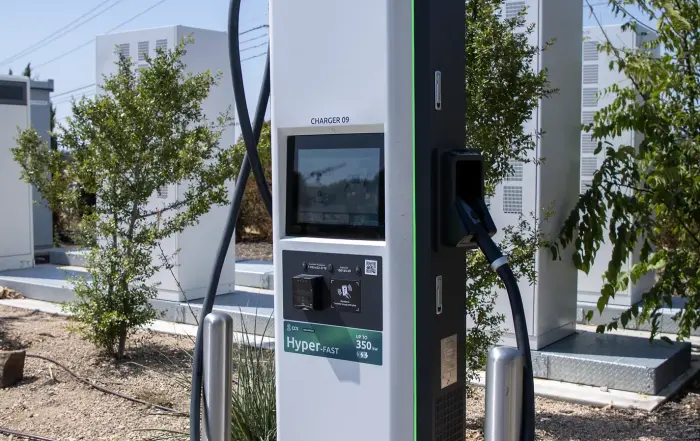
I have come across free Level 3 DC fast charging stations before, but they are quite rare.
Not All Destination Chargers Are Free
Keep in mind that while many destination chargers are free to use, not all of them are. This is especially true today. Even some hotels now require payment to activate their chargers. Also, destination chargers at private businesses (like hotels) are for customers only. Though some may let you charge if you ask.
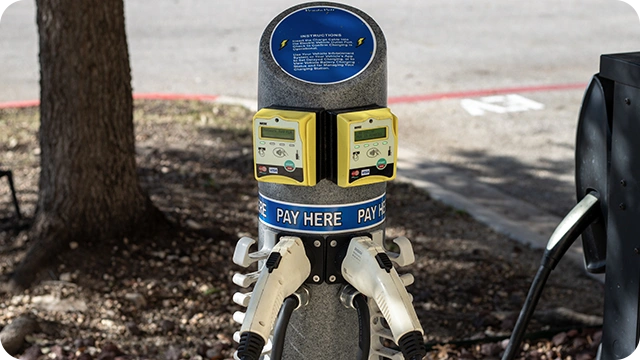
These destination chargers had a payment added to them.
Finding Free Charging
To find free EV charging, you can use a website or app like PlugShare, which is my favorite personally.
PlugShare
PlugShare’s “free charging” filter shows available equipment in your chosen area. Plus, you can view user ratings and photos to help you find the stations once you arrive. For the best results, input your EV model.
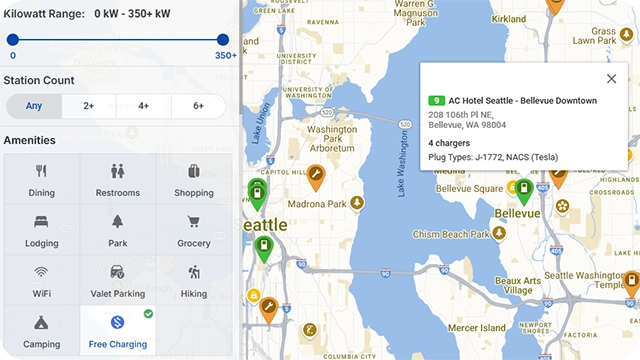
Source: plugshare.com
Things You May Need to Charge for Free
Some equipment activates automatically when you plug in your vehicle. Others may require an adapter or a smartphone app to start charging.
Adapters
To access more free chargers, I suggest buying one of two adapters for your EV, depending on your model.
- If you own a new Tesla, the car should’ve come with a J1772 adapter.
- If you bought a used Tesla or lost the adapter, you can pick one up for around $40.00.
- For most other EVs, you will want a NACS adapter. This lets you use Tesla destination chargers.
- I own one made by Lectron which has worked great. It costs around $120.00.

My VW ID.4 isn’t natively compatible with Tesla destination chargers, so I had to buy an adapter.
Apps
You will often need to download a smartphone app to use public charging equipment.
Major public EV charging networks include:
How to Know if a Charging Session is Free
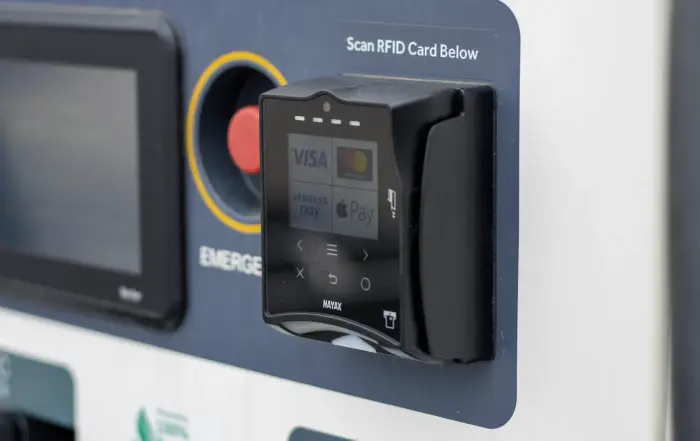
To see if a session is free, check the rates in the charger’s mobile app. Alternatively, many stations will have a screen that shows the cost of charging. Don’t assume a charger is free just because it lacks a screen or payment terminal.
For example, some networked Tesla destination chargers cost money to use. Luckily, they often have a QR code to scan with your phone. This shows the price before you plug in.
Rest assured, though. Chargers you have to pay for will always show the price upfront or have a clear payment method required.
Plan Free Chargers Into Road Trips
You might be surprised how many hotels and tourist spots have free chargers. That means you can get a full charge while you are sleeping or out enjoying your time doing something else.
Each free full charge could save you $25.00-$50.00 or more, as DC fast chargers can be expensive. Depending on your trip, you may be able to avoid paying for charging altogether. It would require some tight planning, though.
When trip planning, use an app like A Better Routeplanner (ABRP) with addresses copied from PlugShare. ABRP can then help you determine how long and where else you’ll need to charge along the way.
Other Ways to Get Free Charging
You can avoid charging costs in other ways beyond using free destination chargers. Some automakers provide free charging promotions with the purchase of a specific EV.
My Volkswagen ID.4, for instance, came with three free years of charging using Electrify America. I saved over $1,000 from this promotion, despite charging at home more than 90% of the time.
Charging networks have referral programs, too. For example, Tesla owners can use their referral points to cover Supercharging sessions.
Free EV Charging FAQ
Here are answers to common questions about free electric vehicle charging.
Is Electric Car Charging Free?
Typically, no. Usually you’ll pay for electricity to charge your EV at home and on the road. However, there are free public charging stations available.
How Can You Get Free EV Charging?
To charge your EV for free, there are a few options. First, you can find and use free public charging equipment. You can also purchase an EV model that comes with a free charging promotion. Finally, if you own a Tesla, you can use referral points to cover Supercharging sessions.
What Is the Cheapest Way to Charge an EV?
The most cost-effective way to charge your electric car on a daily basis is at home, where electricity rates can be half or one-third that of public chargers.
Do Free EV Charging Stations Require an Account?
Some charging networks require you to create an account, even if the session is free. This may be for a variety of reasons like tracking usage, equipment communication, and controls if the station lacks a screen.
Sources
Related Articles