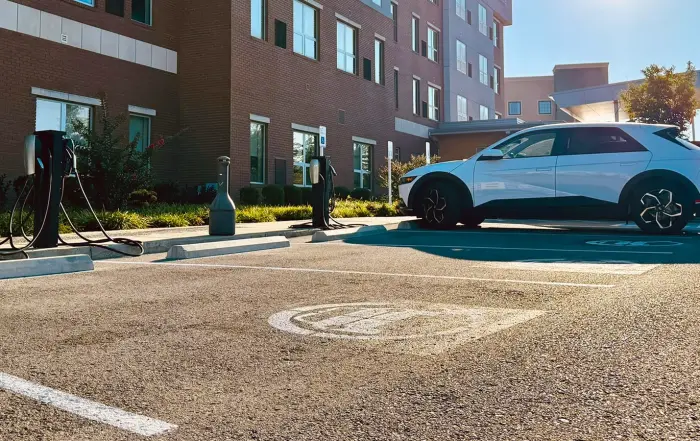


Fast and reliable charging infrastructure is often a top concern for new EV owners. If you just bought your first electric car, you’ll want to learn about what public charging stations are available in your area, as well as the largest networks that you’ll find out on the road. Here are some names you need to know.
Public EV Charging Levels
Unlike fueling up your gas tank, which occurs at a similar rate regardless of what pump you are using, public EV chargers don’t offer the same power output, and electric cars can’t all accept the same power input. Therefore, it’s important to highlight the two most common types of public charger levels and what you should expect from them.
Level 2 Chargers – use 208V+ outlets that provide between 5 and 40+ miles of range added per hour, depending on your specific vehicle. When it comes to Level 2 chargers, you will typically use these to “fill up” when you are spending time at work, a POI, or overnight at a hotel.
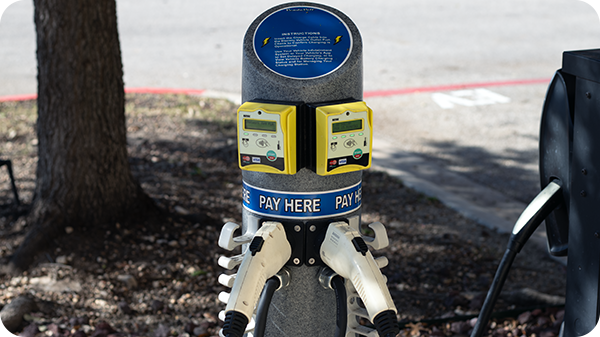
Level 2 EV chargers at a hotel.
Level 3 (DC) Fast Chargers – are those you’ll want to use on a road trip when you need to rapidly recharge and get on your way. Level 3 charging speeds vary pretty drastically by the stall and your EV’s capabilities, but you can expect a 10-80% battery recharge to take anywhere from 30-40 minutes.
Largest Public Charging Companies in the US
While there are certainly many public electric car charging networks and the list is growing constantly, stations operated by these companies are the ones you’ll likely encounter the most. I recommend downloading their mobile apps, creating profiles, and signing up for a membership with one or more of them if you plan on frequently using their networks.
Blink

You’ll typically find Blink chargers at a mall, convenience store, or an office building. Blink is mostly known for their slower Level 2 charger. In total, Blink has over 5,500 station locations, of which only a small portion are Level 3 chargers.
ChargePoint
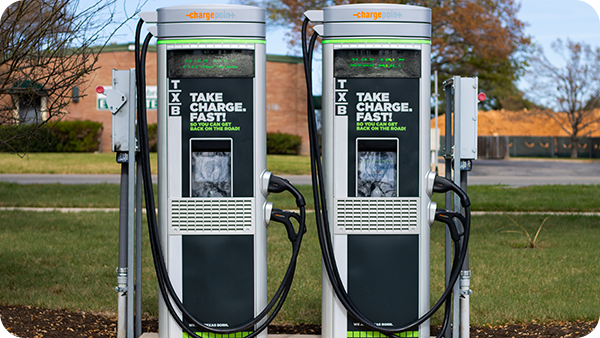
ChargePoint operates more than 30,000 charging station locations. ChargePoint’s network is a mix of Level 2 and Level 3 charging stalls, with most of their fast chargers providing between 72-150 kW of power. In my personal experience, ChargePoint locations are usually reliable in terms of uptime, but getting the rated speed is hit or miss. You’ll likely come across their stations both around your city and on the road.
Electrify America
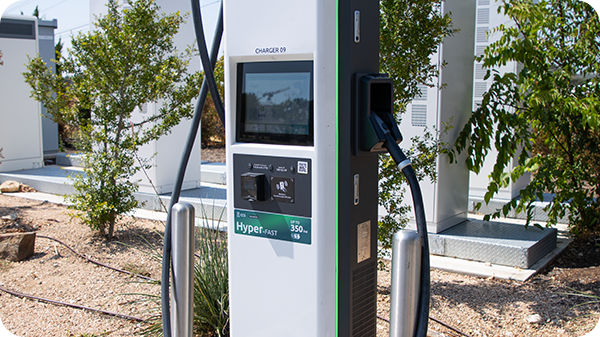
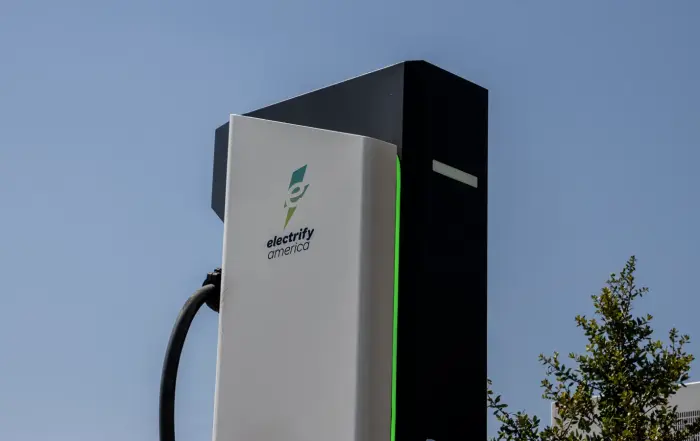
Electrify America, which is a subsidiary of Volkswagen Group of America, has more than 1,000 stations in 47 states, plus the District of Columbia and Canada. Their more than 5,000 chargers are almost all Level 3 chargers providing at least 150 kW of power, with many offering a market-leading 350 kW. Therefore, they are a top choice for many when charging away from home.
Electrify America has received a fair bit of criticism from EV owners for downtime and inconsistent charging speeds, however. In my experience, Electrify America offers the best charging speeds, are usually working, and it’s the network I opt to use if I have a choice on my road trips. They are currently in the middle of both a massive expansion and renovation of their older stations, so I expect their reputation to only improve from here.
EVgo
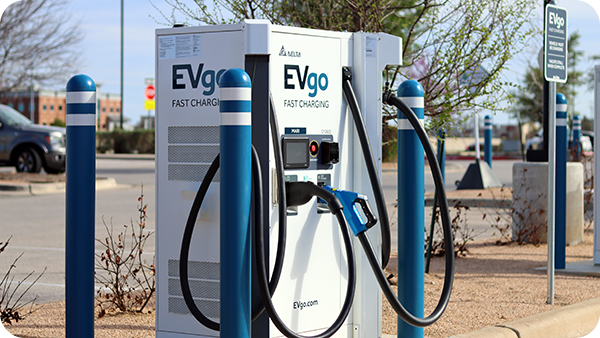
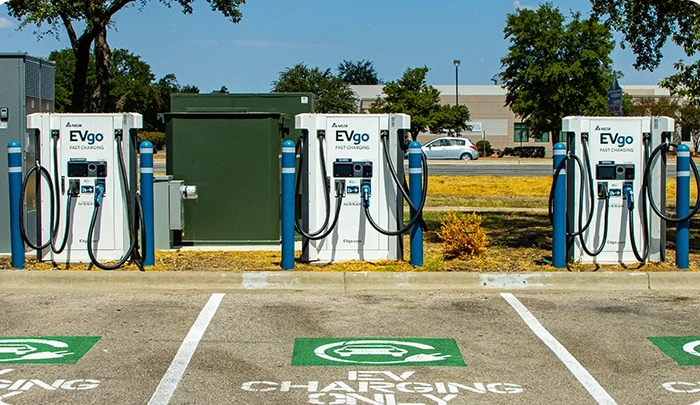
EVgo, like Electrify America, primarily offers Level 3 chargers. They can be found nationwide in the US, with more than 1,000 stations containing over 4,000 stalls. EVgo chargers provide anywhere from 50-350 kW of power. For me, EVgo has been less reliable compared to Electrify America, with most stalls failing to achieve the advertised peak charging rates and experiencing frequent downtime.
Tesla

The clear standard for EV public Level 3 charging is the Tesla Supercharger network, and it’s not particularly close, with over 7,000 stations across the world and reliability that is entirely unmatched. Up until 2024, only Tesla owners could use the network. That changed thanks to a partnership with other carmakers, and since late 2025, nearly all EVs can use most of Tesla’s Supercharger network with an adapter, and most automakers now ship native NACS ports.

The red dots are Tesla Supercharger (Level 3) charging locations in the US. Source: tesla.com
There are also 40,000+ Level 2 Tesla chargers, called “Tesla destination chargers” which any CCS-based EV can already use, if you buy an adapter. Needless to say, now that EV owners have access to the Tesla network, concerns about the lack of charging infrastructure are dwindling significantly. I’ve had nothing but positive experiences using these chargers, both with charging speeds and uptime.
Jolt (Formerly Volta)

Jolt, formerly known as Volta, is an EV charging company that also primarily focuses on Level 2 charging. Their stations are commonly found in retail parking lots and other public spaces, and they are often completely free. Jolt has 1,500 stations in the US.
Many More on the Way
Charging infrastructure is set to grow significantly over the next few years. Specifically, a group of automakers joined forces to develop the IONNA network, which is aiming to have 30,000 charging stalls completed by 2030.
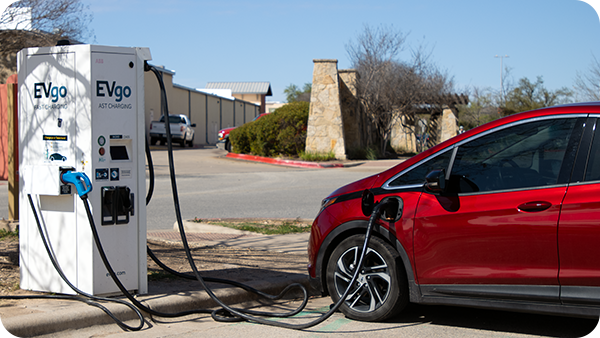
Charging infrastructure is growing rapidly, with tens of thousands of new stations coming soon.
Of course, the networks above are not standing still. Tesla opens a new station every few days, TravelCenters of America announced a deal with Electrify America to implement 1,000 stalls across 200 travel stops over the next 5 years, and Rivian is investing heavily into the Rivian Adventure Network, which opened to all EVs in 2024.
For now, though, the six networks above are the ones you should become most familiar with and plan to use for your public charging needs.
Sources