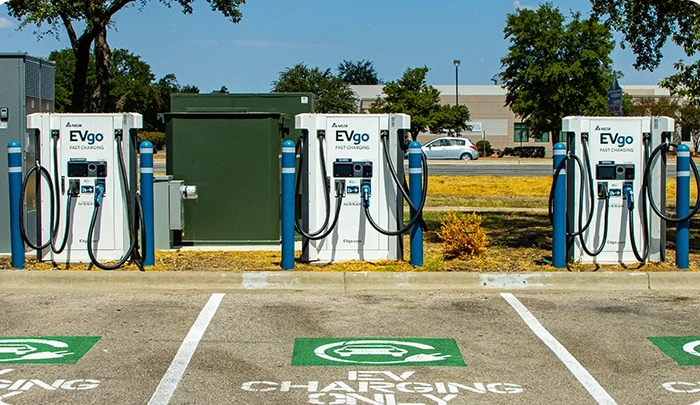


Whether you own a Tesla or another EV model, to access as many public chargers as possible and to get the maximum charging rates at home, there are various adapters and accessories that you might want to consider getting.
Please keep in mind that using adapters or charging equipment may result in damage to outlets, your vehicle, or other property. Use these products at your own risk. EV Help Hub assumes no responsibility for any loss that may occur.
Non-Tesla EV Charge Port Types
Most non-Tesla EV models sold prior to 2026 came equipped with the SAE J1772 port for slower AC charging and the Combined Charging Standard (CCS) port for DC fast charging. The exception was the previous-generation Nissan Leaf, which uses the CHAdeMO port for fast charging instead.

The Ford Mustang Mach-E’s SAE J1772 and CCS charge port.
Without adapters, non-Tesla EV models can’t access Tesla charging equipment of any kind.
Adapters for Non-Tesla EV Owners
There are two adapters that non-Tesla EV owners are going to want, and both are related to Tesla charging equipment.
Tesla to J1772 Adapters
The only adapter type that you can buy today which will work for all J1772-based EVs, is a Tesla type to J1772. These let EV owners charge using both Tesla home and destination chargers.
These adapters come in handy if you take your EV on long drives or road trips, as many hotels and POIs have Tesla destination chargers which are often completely free for customers to use. Doing so will save you a lot of time and money compared to relying on public fast charging stations.
I personally use an adapter from Lectron.
Each adapter has a different maximum power rating, measured in amps. For future proofing, I recommend buying the versions rated for the highest amount of amps. If your EV can’t accept this rate of power, it will automatically request less electricity.

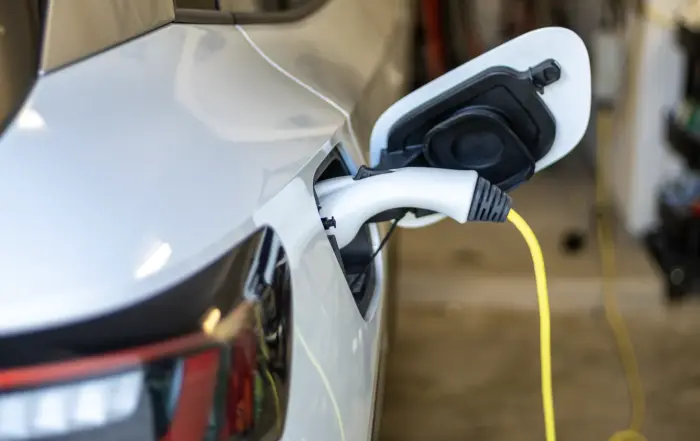
My VW ID.4 charging at a hotel using the TeslaTap adapter and a Tesla destination charger.
Tesla to CCS Adapter
Now that most electric vehicle models have access to the Tesla Supercharger network, you’ll need to pick up a NACS to CCS adapter like Lectron’s Vortex Plus. Using a product like this will give non-Tesla EV owners access to thousands of additional charging stations that are the most reliable among all of the networks.
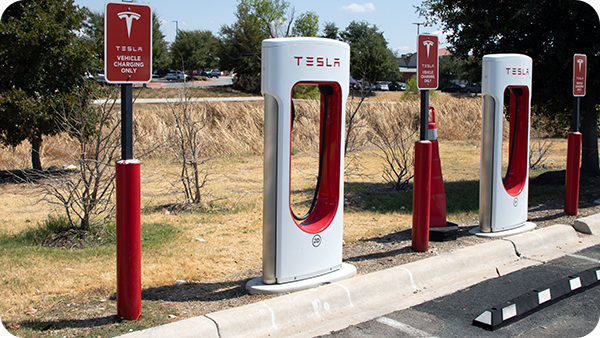
Access to Tesla’s market-leading Supercharger network is now open to most EV owners.
Tesla EVs
In the United States, Tesla vehicles use a proprietary port that’s now called the North American Charging Standard (NACS – soon to be nearly ubiquitous for all new EV models). This equipment provides owners with access to Tesla-related charging infrastructure like the Supercharger network.

Tesla’s proprietary charge port has become the standard for new EVs in the US.
All new Tesla models also come with a J1772 adapter, so they can utilize chargers with this plug type as well.
Tesla CCS Adapter
There’s only one adapter that Tesla owners in North America might want and it’s used to gain access to CCS-based fast charging stations operated by companies like Electrify America and EVgo. You must buy this equipment directly from Tesla’s website, as many networks are shutting down the ability to use third-party adapters.

With the CCS adapter, Tesla owners can access nearly all fast charging stations in North America.
Before buying the adapter, however, you need to make sure your Tesla has CCS charging support enabled. If it doesn’t, you’ll need to pay to have additional hardware retrofitted to your vehicle.
To see if your Tesla needs a retrofit, open the following in-vehicle menu:
Controls > Software > Additional Vehicle Information
Look for “CCS adapter support.” If it says “enabled” you are good to go. If not, you’ll need to make an appointment at your local service center to have the needed hardware equipped first.

CCS adapter support must be enabled or you can’t charge using the equipment.
Level 2 Home Charging Equipment
Every new EV comes with charging equipment that allows you to plug your car into a standard 120V wall outlet (except Tesla, which sells their mobile charging kit separately). This hardware only adds 2-4 miles of range per hour (referred to as “Level 1” charging).
Level 2 charging on the other hand, can improve this to 15-40 miles of range added per hour.

While Level 1 charging might be enough for some EV owners, it won’t cut it for all.
This level of charging requires access to a 240V outlet or paying to have one installed. You can also have an electrician directly hardwire a station. The charging output is based on the following:
- Your specific vehicle’s charging capabilities.
- Whether the station is hardwired or using a 240V outlet.
- The maximum amp rating of the outlet you are using (e.g. NEMA 10-30, 30 amps vs NEMA 14-50, 50 amps).
- The charging equipment’s maximum amp rating.
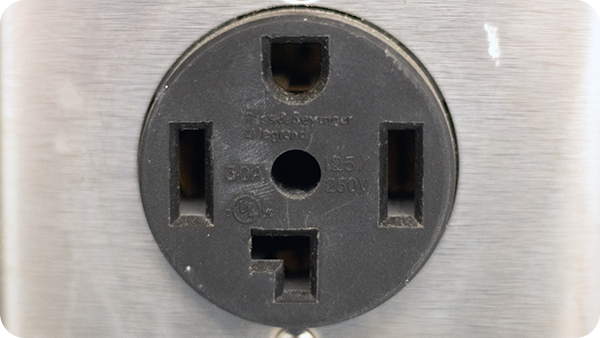
To save myself some money, I used the outlet near my dryer and an extension cord.
If you need Level 2 charging speeds at home, you have some options to choose from:
- Tesla owners can buy 240V outlet adapters that work with the Tesla mobile charger.
- Otherwise, you might need to purchase a portable Level 2 charger, a wall-mounted Level 2 charger, or have a home charging station hardwired into your electrical system.
*Some EVs, like the Mustang Mach-E, come with Level 2 adapters, but most don’t.
Portable Level 2 Chargers
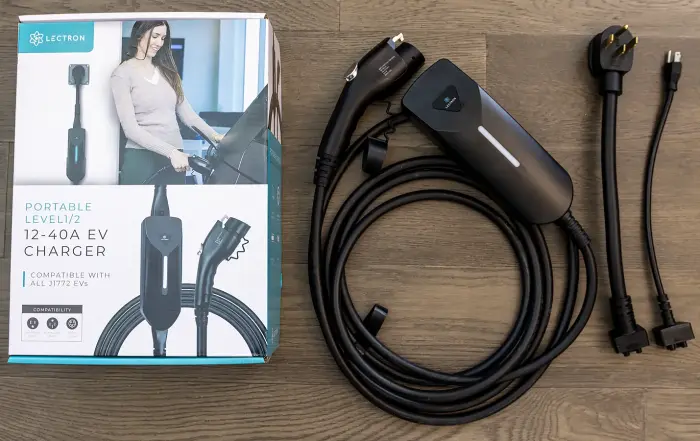
Portable Level 2 chargers are very similar to the Level 1 charging equipment that comes with most EVs. The only difference is that they will have a 240V outlet plug type and thicker wiring to handle the extra power output.

I use Lectron’s combo level 1/2 charging cable, which is one of the fastest on the market at 40 amps.
I prefer portable Level 2 chargers because they can be moved around your garage more easily and can be taken with you. This equipment comes in different plug configurations like NEMA 14-30 and NEMA 14-50, so be sure to doublecheck what outlet you’ll be using.
Outside of the Lectron charging cable I use, some top rated portable chargers include:
Outlet-Based Wall Mounted Level 2 Chargers
If you would rather have a Level 2 charger that plugs into an outlet but is stationary, then there are plenty of wall mounted options available including:
Nearly all popular outlet-based Level 2 home chargers are compatible only with NEMA 14-50 outlets.
Hardwired Level 2 Chargers
If you want the fastest home charging speeds possible, then you’ll want to hardwire equipment directly into your home’s electrical system. This isn’t cheap, but will cut time spent charging down by 90% compared to Level 1 equipment. Here are some well-reviewed options to explore:
- ChargePoint Level 2 Charger (Hardwired Version)
- Rivian Wall Charger (NACS)
- Tesla’s Universal Home Charger

Tesla’s Universal Charger is compatible with all EVs.
I highly recommend going with one of the three trusted models above. If you are spending the kind of money it takes to install a charging station, you’ll want the best equipment possible.
Tesla Mobile Charger Adapters
If you purchase the mobile charging kit from Tesla you will be provided with two adapters: one for a standard 120V wall outlet and a NEMA 14-50 plug for Level 2 charging. If you need a different adapter, Tesla sells 7 additional types on their website.

Tesla makes it easy to switch between plug types using their mobile charger.
None of This Is Required
Level 1 charging might be able to meet your home charging needs. You may not need or want access to other charging networks, especially if you don’t drive long distances in your EV. If this is the case, then there’s no need to spend extra money on additional equipment. But many will find that they want to be able to stop at as many public charging locations on the road as they can, or require faster charging at home. That’s when it’s worth exploring the products above.