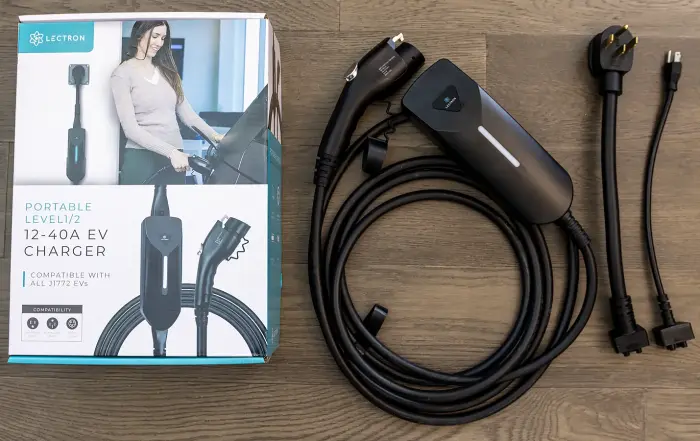


Electric cars are becoming more popular and, eventually, they will dominate the car market. Since you have to charge an electric car, which is best done at home, you might be curious if you can still own one if you live in an apartment or condo building. The short answer is that yes, it is possible, but your ownership experience may be impacted. Here’s why.
Best Case Apartment EV Ownership Scenarios
There are four scenarios in which owning an electric vehicle wouldn’t differ much from those who live in a single-family home or townhouse. It all comes down to your ability to be able to consistently charge your car.
Charging at the Complex
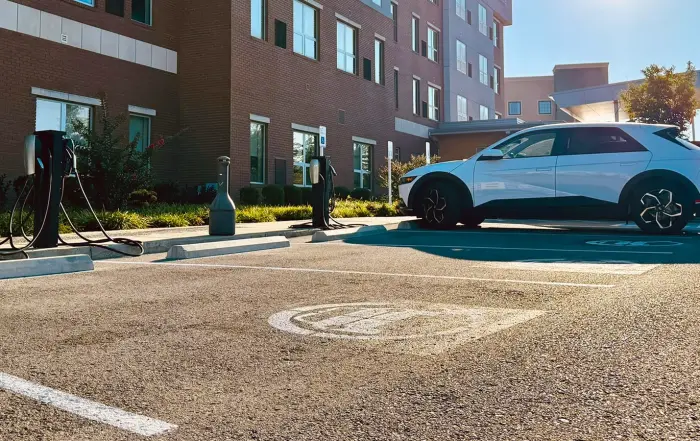
Many new apartment buildings are installing Level 2 chargers in their parking lots or garages for residents to use. These can sometimes be free or more often, at a relatively low cost. In this case, you’d be able to plug in a couple of times a week and the only real annoyance would be moving your car after it’s done charging. You can expect to add 10-40 miles of range per hour, depending on your vehicle and the equipment.
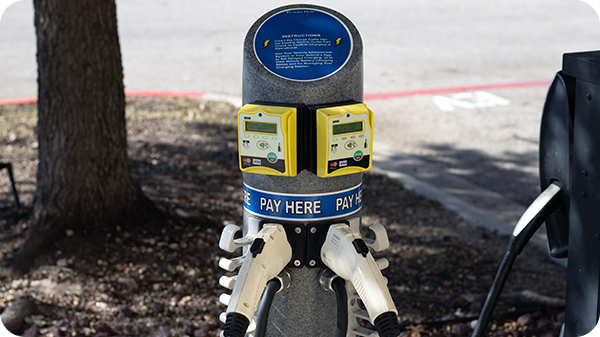
Apartment complexes are starting to offer charging equipment like this for their residents.
Renting a Garage Spot
Some complexes have individual garages that residents can opt to rent. It’s possible that these garages could have outlets in them. You don’t need any special equipment to charge an EV, so even if you only have access to a typical wall outlet (Level 1), you’d still be able to use your mobile charger which will add 2-4 miles of range per hour, just like any homeowner. This is also the primary way I charge my EVs despite living in a house.
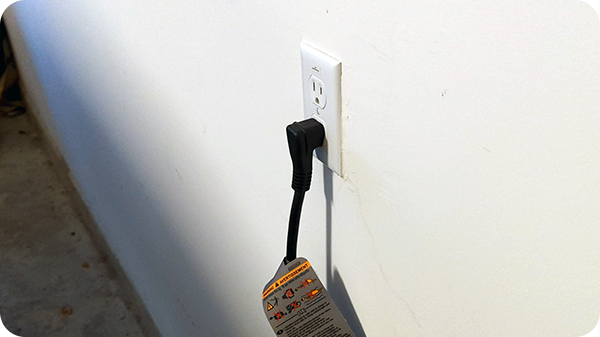
Many potential EV owners don’t realize that you can just plug and charge your car using a basic wall outlet. It’s slow, but it works well in a lot of cases, including mine.
External Building Outlets
The least likely option is that your apartment building might have external outlets that you can use to plug your mobile charging equipment into. I’ve seen it done before, so it doesn’t hurt to ask your property manager.
Charging at Work
Office building parking lots, garages, or places like shopping malls are frequently installing Level 2 chargers to attract business. The downside is that they can often be taken and you’ll need to move your vehicle to avoid idle fees when it’s done charging in some cases.
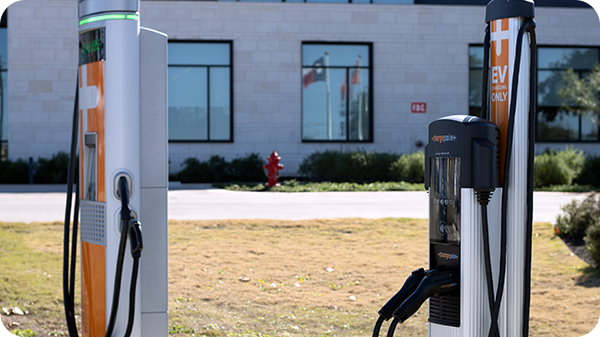
This office parking lot has fast chargers, which means you could fill up your battery before leaving work.
Why an EV Might Not Make Sense
If you can’t charge your electric vehicle with any of the scenarios above, it means you’re going to have to rely on public DC fast charging stations. While even then it is still possible, you may not find it very desirable.
DC Fast Charging Is More Expensive
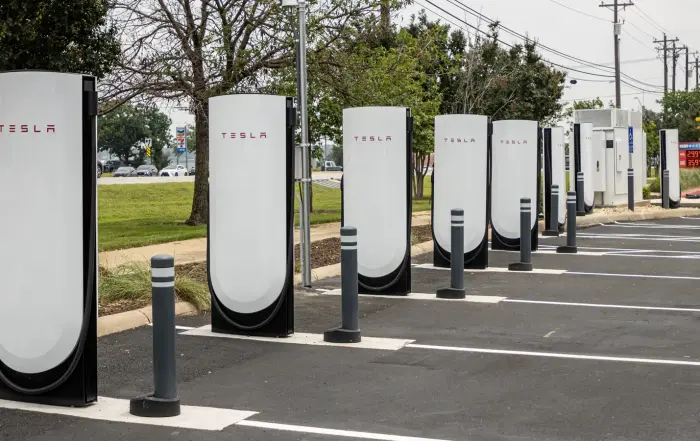
On average you can expect a fast charging station to cost somewhere between two and three times what you would pay for your home’s electricity rates. By charging almost exclusively using fast chargers, you might end up paying to fill your EV’s battery as much as you would to fuel up your gas tank. Fast charger prices can range anywhere between $0.25 to $0.60 per kilowatt-hour (kWh) of energy used.
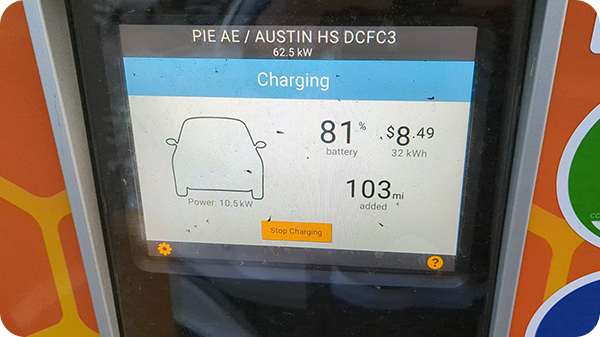
This fast charger is one of the cheapest I’ve used, but still cost $0.26 per kWh of energy. That’s about double the cost of my home’s electricity rates.
Some new EVs come with two or three years of free charging at certain public charging stations like Electrify America. Once your free charging promotion ends, or if your EV doesn’t qualify for one, then you’ll want to sign up for a paid membership for the network you’re planning on using the most, if they have one. These memberships consist of a small monthly fee, but drastically reduce charging rates.
You’ll Spend a Lot of Time at the Chargers
The fastest charging EVs on the market, like the Kia EV6 or Hyundai Ioniq 5, can fill up from 10-80% battery capacity in around 20 minutes. Keep in mind, for the health of your battery pack, you shouldn’t constantly discharge your EV below 10% or keep it charged above 90%, so at best you’ll be able to use 70% or so of its rated range for daily commutes and errands before needing to plug in again.
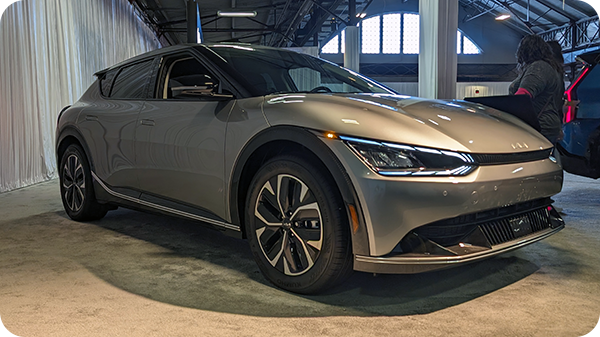
The Kia EV6, on display here at the Texas Auto Show, can charge faster than almost any other electric car on the market.
Using the Kia EV6 example above, 70% of its battery pack is roughly ~217 miles (for the long range option). If you drive the average commute of 41 miles a day, you’ll have to stop at a fast charger every 5 days or so. But, it gets a little worse if you live somewhere with cold weather. EVs can lose around 30-40% of their efficiency in the cold, so that 217 miles of usable range becomes 130-150 miles. In this case, you’ll be stopping at the charger every 3 or 4 days.
Lastly, some charging stations can be heavily utilized, have downtime, or reduced speeds due to a maintenance issue. You might have to wait in line to charge, your charge might take much longer than you expect, or you might need to drive completely out of the way to another station. Some of this can be mitigated if you avoid charging on the weekends.
My Recommendation
If you can charge at your complex or at work, then certainly an electric car can be a good fit for you and no different than if you lived in a house. If you can’t charge at your complex or your workplace, owning an EV might prove time-consuming and not as fun or economical as you might have hoped.
I recommend getting a model with at least 300 miles of range that’s also equipped with a heat pump if you live somewhere with cold weather and that can accept charging speeds of at least 125 kW. EV models in the United States that offer these things include Tesla models, General Motors’ Ultium platform vehicles like the Blazer EV, Equinox EV, and the Nissan Ariya, for example.
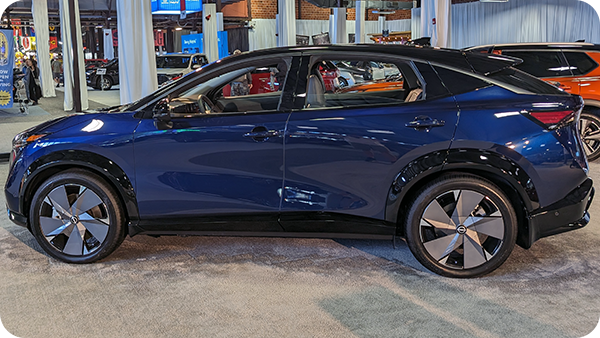
The Nissan Ariya, also displayed at the Texas Auto Show, is a good EV choice if you live in an apartment. It can be optioned with 300 miles of range and a heat pump.
At the end of the day, anyone, whether you live in a house, condo, or apartment, can own an electric car and make it work. It’s just that in some scenarios, you have to be willing to spend the extra time and deal with inconveniences to charge. There are other benefits, like lower maintenance costs, but they may not outweigh the cons.
Sources
Related Articles