

You might have heard, but electric vehicles don’t require a whole lot of maintenance to keep them going. Here’s what is and isn’t required, plus some real-world service schedules for a few different models.
Do Electric Cars Need Oil Changes?
It may surprise you that, yes, EVs do use a small amount of oil to keep their motors lubricated, but no, it doesn’t ever need to be changed. That’s because the amount of oil used in electric cars is just a fraction of what internal combustion engines need.

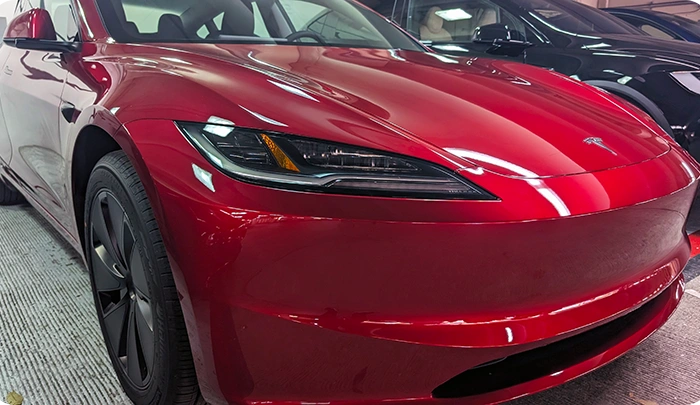
Electric motors, like the one seen in this Tesla Model Y display, use a tiny amount of oil.
Depending on how much you drive, this could save you a couple thousand dollars over the lifetime of your EV. Additionally, some electric motor manufacturers are working on technology that could remove oil from the equation altogether.
Do EVs Need Other Fluid Changes?
The answer to this question is less straightforward, as it really depends on the specific model. For example, Tesla only recommends checking the brake fluid every four years and replacing it if necessary.
But thanks to technology like one-pedal driving, it’s likely you’ll use the hydraulic brakes far less frequently than you otherwise would. Therefore, unless the fluid gets contaminated, you may not ever have to replace it.

My VW ID.4 has several fluids that can be replaced including brake and windshield washer fluid, accessible under the hood.
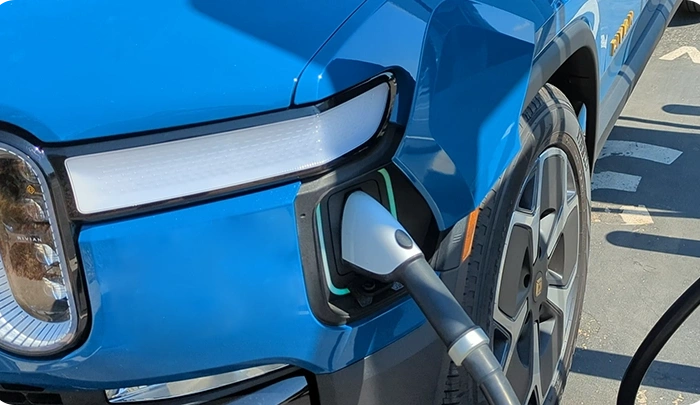
On the other hand, Rivian requires a battery coolant and motor fluid flush (only on quad motor vehicles) every 112,500 miles. They also recommend a brake fluid flush every 36 months.
For the EV6, Kia recommends replacing the brake fluid every 48,000 miles or 28 months, replacing the battery coolant at 120,000 miles or 120 months, and again every 24,000 miles or 24 months after that.

Service schedules can vary by model, but you still won’t be visiting the dealership much.
All in all, outside of a potential brake fluid flush, most EVs are going to be 10+ years old prior to needing any significant fluid changes and even then, some still won’t need it.
What Maintenance Will EVs Need?
You should always check your owner’s manual to make sure you are following the guidelines provided by the manufacturer. Generally speaking, electric cars only need these basic services:
- Tire rotation
- Tire replacement
- Wiper blade replacement
- Cabin air filter replacement
- Brake pad lubrication or replacement
- Battery or electric motor fluid replacement (usually only once)

Over the life of your EV, you’ll probably pay more for your wiper blades than anything else.
Yes, that’s truly it. For example, I’ve owned my Volkswagen ID.4 for over 80,000 miles and the only major expense has been replacing all four tires, because the tread on the OEM tires wasn’t quite thick enough.
What About the Battery Pack?
Electric vehicle battery packs are operated by very sophisticated software called battery management systems (or “BMS” for short). This software performs functions like keeping your battery properly conditioned and controlling charging speeds.
Basically, BMS keep your pack as happy and healthy for as long as possible.

Tesla Model Y’s battery pack, as seen here in this display, is liquid cooled but doesn’t require a fluid change.
As part of this, battery pack designs are managed and cooled by a variety of different methods often using a type of liquid. In some models, like the Rivian R1S or R1T, this liquid will need to be replaced after 112,500 miles. In others, you don’t need to worry about it.
In general, concerns about electric car battery packs are overstated. They are not high maintenance, and the United States has a mandatory 8-year, 100,000-mile warranty which every new EV is covered by. So, if you are worried about expensive battery maintenance, don’t be.
EV Maintenance Downsides
There’s only one area of maintenance where an internal combustion engine-powered car will beat an EV and that’s how often you might have to replace your tires.
One of the downsides of an electric car is that they are usually very heavy, thanks to the weight of the battery pack. For example, a 2024 Toyota Corolla weighs around 3,100 lbs, while a Tesla Model 3 Long Range AWD weighs around 4,000 lbs.
Add this to the large amounts of torque produced by electric motors, and it’s no surprise that tires may not last as long on an EV.

Some of the heaviest EVs, like the Rivian R1T which weighs over 6,000 lbs, might need their tires replaced more frequently.
However, this can be mitigated by buying tires with more tread life and longer warranties. That’s what I did in my VW ID.4.
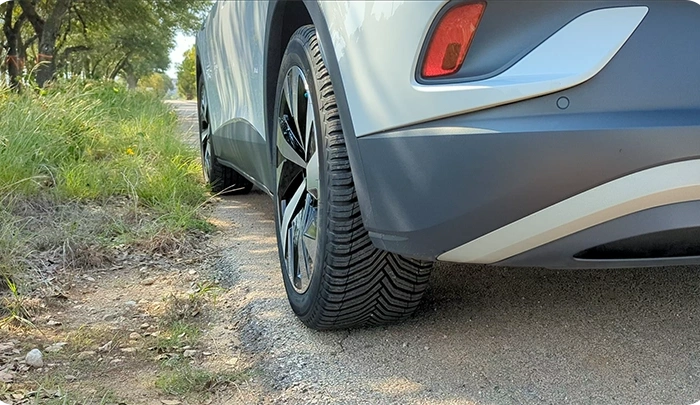
The rear OEM tires on my ID.4 were bald by 24,500 miles. I replaced these with a thicker, more durable set of Michelin CrossClimate2s and, 55,000 miles later, they still have thousands of miles of tread left. They also cost the same price as the OEM tires.

I highly recommend the Michelin CrossClimate2 tires for your EV for extended tread life.
Of course, there are cons to thicker tires. They may reduce range and cause more tire noise to enter the cabin.
In my experience so far, both have been non-issues. Tire makers are constantly innovating to reduce these problems.
Example EV Service Schedules
Let’s look at some of the highest selling EV models and what their out-of-pocket service needs are, excluding windshield wipers and tires, which will depend on several factors.
2024 Tesla Model 3
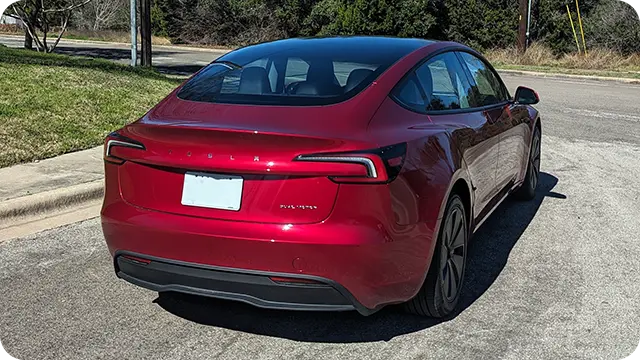
The Tesla Model 3’s owner manual states that the following should be checked or changed over the life of the vehicle:
- Tire rotation: Every 6,250 miles or if tread depth differential is 2/32nds, whichever comes first.
- Clean and lubricate brake pads: Every year or 12,500 miles if vehicle is driven where roads are salted.
- Cabin air filter replacement: Every 2 years.
- HEPA filter replacement*: Every 3 years.
- Brake fluid health check (or change if necessary): Every 4 years.
- A/C desiccant bag replacement: Every 4 years.
*The new Model 3 includes a HEPA filter. As of writing, the owner’s manual has not officially been updated to include it. The service interval was derived from the Model Y owner’s manual.
2024 Ford Mustang Mach-E

The Mustang Mach-E’s service schedule includes a battery pack fluid replacement, but well into the life of the vehicle.
- Tire rotation: Every year or 10,000 miles.
- Cabin air filter replacement: Every 2 years or 20,000 miles.
- Brake fluid replacement: Every 3 years or 30,000 miles.
- Electric motor fluid replacement: Every 100,000 miles.
- High-voltage battery pack fluid replacement: Every 200,000 miles.
2023 Chevrolet Bolt EV/EUV

The Chevy Bolt EV and EUV share the same service schedule, which contains nothing significant until 100,000 miles.
- Tire rotation: Every 7,500 miles.
- Passenger air filter replacement: Every 22,500 miles or 24 months, whichever comes first.
- Brake fluid replacement: Every 5 years.
- Hood or body gas strut replacement: Every 100,000 miles or 10 years, whichever comes first.
- Drain and fill vehicle coolant circuits: Every 5 years or 150,000 miles, whichever comes first.
- A/C desiccant bag replacement: Every 7 years.
Most EV Maintenance Is Simple
If you know how to change your car’s cabin air filter (and if not, you should learn, it’s almost always an easy process), then outside of getting your tires rotated, you could go 2, 3, or even 4 years without ever needing to visit a service center or dealership for maintenance.
In the long run, an electric car will likely save you a lot of time and money.
Sources