

You may have heard of electric cars. They are all over the news, you see them at your local grocery store, and your neighbors probably have one. But, what exactly is an electric vehicle and how do they work?
What Is an Electric Vehicle?
Any vehicle that uses electricity stored in a battery pack for propulsion via an electric motor is an electric vehicle. This includes hybrids like the Toyota Prius. But when people say “EV” or “electric vehicle” they are usually referring to a battery electric vehicle (BEV). A BEV is propelled only by energy from a battery pack which is used to spin an electric motor (or multiple motors) without an internal combustion engine (shortened as “ICE”) of any kind.
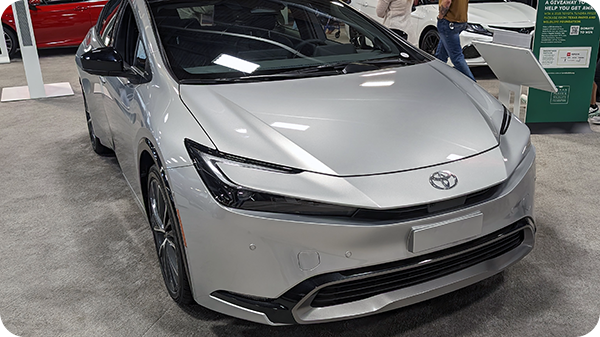
Hybrids, like the 2024 Prius, and plug-in hybrid vehicles are technically EVs.
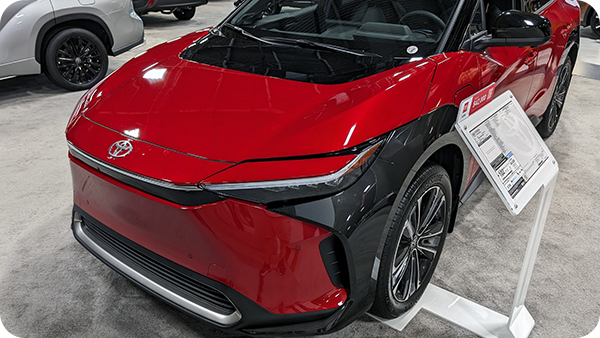
However, the Toyota bZ4X is a fully electric vehicle or BEV because it runs solely off of electricity.
For this article, we are going to be discussing battery electric vehicles only and, as the industry and car shoppers do, I’ll be referring to them simply as “electric vehicles,” “electric cars,” or “EVs.”
What Are the Primary Components of an EV?
Electric cars are pretty simple machines which are far less complex than an ICE-based vehicle. This is why maintenance and service needs are much lower for an EV than your typical car. Here are the major components of an electric car drivetrain and their purpose (at a high level).
Battery Pack: The battery pack is the heart of every EV. Made up of thousands of individual cells, its purpose is to store energy in a safe and stable manner that can then be used to propel the vehicle forward via the electric motor(s). You’ll hear many different terms such as “LFP,” “NMC,” or numbers like “4680.” Those are details for a different article, but just know these terms are describing the type of battery cell used in a specific pack, what materials it is made up of, and its size.

An electric car battery pack has thousands of lithium-ion cells.
Almost all electric car battery cells are lithium-ion, which is the same kind used in your laptop or cell phone. They offer a good power-to-weight ratio, long lifespans, energy efficiency, among many other benefits. Electric vehicle battery packs store electricity as direct current (DC) for stability purposes.
Electric Motor: Instead of an intricate internal combustion engine which uses fuel that is ignited by pistons to create mini-explosions, EVs are propelled by much smaller, lighter, and much more efficient electric motors. There are a variety of designs, but each consists of two primary components. First, there’s a rotor, which spins, and a stationary part called a stator. Without getting too technical, a combination of electricity from the battery pack and magnets creates an electromagnetic field that spins the motor, moving the vehicle forward.

A Tesla Model Y rear drive unit, containing the electric motor, shown in a display.
Electric motors have so many benefits. A strong power-to-weight ratio, energy efficiency, and, an owner favorite, instant torque. One special operation that they can perform, but an internal combustion engine can’t, is the ability to spin in both directions, allowing for energy to be returned to the battery pack through a process called regenerative braking. This process also slows the vehicle down, which in turn reduces your need to apply the physical brakes.
Inverter: To put it simply, the inverter takes the DC energy from the battery pack and converts it into alternating current (AC) power which can be used by the electric motors to move the car. When you take your foot off of the accelerator, the inverter performs the opposite conversion, AC back to DC. It also manages the flow of current to ensure that the electric motor operates correctly.
Controller: Considered the “brain” of an EV, it uses a variety of sensors and inputs to oversee operations like the battery management system (BMS) software, which keeps your battery pack at an ideal temperature, among many other subsystems.
Onboard Charger: If you buy an electric vehicle, you’ll likely get a device made up of a cable that plugs into your wall and a female plug that connects to your charge port. This is called electric vehicle supply equipment (EVSE), but is often referred to as “a charger.” However, since your home’s electrical system supplies AC power, which can’t be stored in the battery pack, a component within your car has the job of converting this energy to DC. That’s the onboard charger which is the real “charger” in this process.
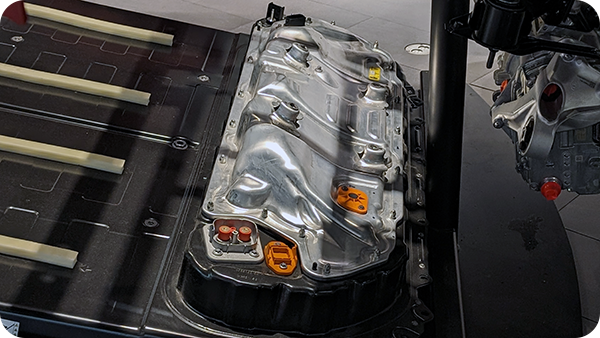
The onboard charger and its housing are connected to your vehicle’s battery, as seen here on a Tesla Model Y pack.
The only time your vehicle’s onboard charger isn’t doing an AC to DC conversion is when you use a Level 3 DC fast charger to fill up your battery. As the name implies, these chargers bypass the onboard equipment and add energy directly to the battery pack because it’s supplied in DC from the source.
12-Volt Battery: Yes, EVs still use 12-volt batteries, just like ICE cars. They perform the same duties, to power various vehicle electronics, but they get their energy from the battery pack as well. Notably, Tesla introduced a 48-volt battery design with the Cybertruck, which aims to increase the amount of power it can provide, while reducing cabling.

Tesla was the first to put a 48-volt system into a fully electric vehicle, the Cybertruck.
These six major components cover most of what makes an EV run. While there are many subcomponents within each, electric cars really are that much more simplistic than their ICE counterparts.
How Do Electric Cars Work?
Based on everything discussed above, here’s how it all fits together.
Charging
You plug your vehicle into your home’s electricity system using the provided EVSE from the car maker. Your home sends AC power through the device which is routed through your car’s onboard charger. The power is converted to DC and stored in the battery pack, across thousands of cells. Or, you charge at a public DC fast charger and this energy is directly routed to the pack itself. The controller monitors the energy flow and keeps tabs on the process.

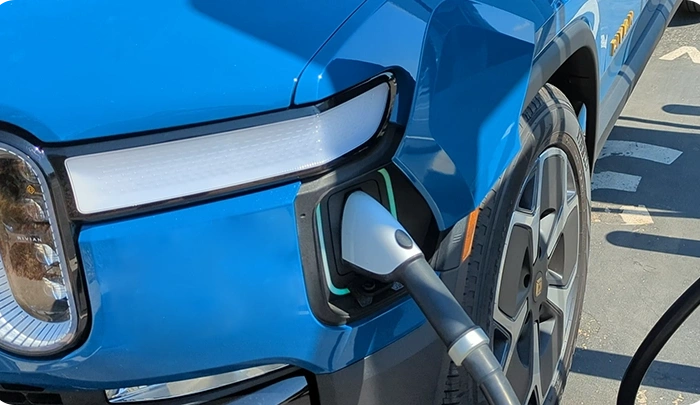
Public charging stations like this one provide DC power at rapid speeds.
Because it can bypass the AC to DC conversion process, DC chargers add energy to your battery pack at significantly faster speeds than home charging solutions.
Driving
When you unplug your EV and go on your way, the vehicle’s inverter takes the energy stored in your battery pack and converts it to AC power so that the electric motors can use it to spin by creating an electromagnetic field. While driving, the motors can spin in both directions, which allows for the unused energy to be returned to your pack. Essentially, the inverter will constantly be shifting between these two duties. The vehicle’s controller is monitoring your battery’s temperature and voltage. Of course, the 12-volt battery is being provided energy to perform its duties, such as powering the headlights, wipers, and other functions.
Eventually, you will plug in again once the battery pack has been depleted, and the process starts again.
There’s More to Learn
While the very basics of how electric cars work and what they are made of is pretty simple to understand, there is a lot of nuance, in particular when it comes to EV charging. Unlike ICE vehicles, electric vehicles don’t have the same capabilities in terms of how quickly you can add energy to the battery pack and what public charging stations you can use.
Therefore, here are some more resources I recommend that you read next:
Sources