

If you are thinking about buying an electric car and want to recharge the battery rapidly while on the go, then you’ll need to learn about DC fast charging. Here’s what it is and some additional tips to help save you time and money.
What Is DC Fast Charging?
Direct current (DC) fast charging, also commonly called Level 3 charging, can be done at high-powered public stations and offers the quickest way to refuel your EV. Unlike Level 1 and 2 chargers, which use the vehicle’s onboard equipment to convert alternating current (AC) to DC, DC fast chargers bypass this step and add energy directly to the battery pack. This, in part, is what allows for charging speeds that are 50-300 times faster than that of Level 1 chargers. Often likened to gas stations, they’re primarily used for on-the-road charging.

A typical public DC fast charging station has many stalls and power options.
Comparing EV Charging Levels
As mentioned above, there are two other EV charging tiers, usually referred to as “Level 1” and “Level 2,” along with Level 3 DC fast chargers. Depending upon which you use, the charging rate is drastically different.
Level 1 Charging
All new electric cars (except Teslas) come with Level 1 charging hardware, called electric vehicle supply equipment (EVSE) or what is often referred to as a “mobile charger.” These devices take energy from your home’s (or anywhere else, for that matter) electrical system and provide a small rate of AC electricity to your vehicle’s onboard charger, which then converts it to DC, allowing the power to be stored in the battery pack.
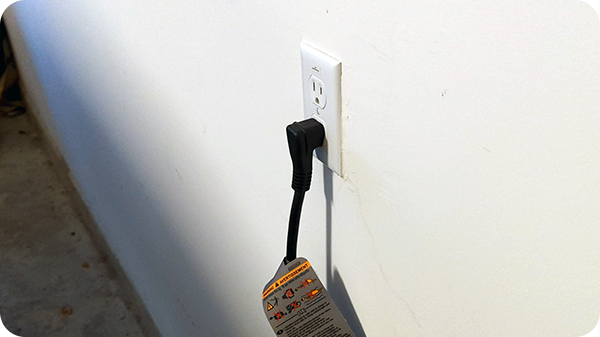
Though it’s slower, you can plug your mobile charger into a regular wall outlet without paying for any additional hardware.
Using this method, electric cars will typically add between 2-4 miles of range per hour, which is often good enough for the majority of those who have an average daily commute of around 40 miles. This level of charging is really meant to be done at home or somewhere you are planning on staying for an extended period of time. I primarily charge my electric vehicles on a daily basis using Level 1 charging equipment.
Level 2 Charging
Level 2 charging can be done using a 208V or greater outlet, both at home or on the road. A few EVs, like the Ford Mustang Mach-E, come with a Level 2 outlet adapter that works with your provided mobile charger. Others, such as Tesla, allow you to buy additional adapters for their home charging equipment. In many cases, you’ll need to purchase separate dedicated equipment. Some Level 2 chargers can also be hardwired for even faster charging speeds.

Level 2 (240V outlet) adapters that Tesla sells for their mobile charging equipment.
There’s a bit more variability in Level 2 power outputs, based upon your specific outlet type and whether or not you hardwire the equipment. In general you can expect anywhere from 10-45 or more miles of range added per hour using Level 2 charging equipment. I previously used a portable Level 2 charger made by Splitvolt, which I plugged into my dryer outlet at home when needed.
If you travel a lot, I always recommend buying a mobile Level 2 charger instead of hardwiring one. This equipment is compatible with standardized 240V outlet types commonly used for dryers and RVs. Not only will you save on the cost of paying an electrician to hardwire your equipment, but you can take it with you if you want.

I plugged my Level 2 charger into the dryer outlet at home when needed, which charged my ID.4 about 5 times faster than the included mobile Level 1 charger.
To attract EV owners, hotels, shopping centers, and other POIs are installing Level 2 chargers that you can use either for a small cost or sometimes, for free. You’ll hear the term “destination chargers” to describe these, although this was derived from “Tesla destination charger” which is a network of Level 2 Tesla home chargers that have been purchased by various businesses and organizations for Tesla owners to use.

EV destination chargers are starting to show up everywhere, including Walt Disney World.
If you have a CCS-based EV, you can use Tesla destination chargers by purchasing an adapter, like this one I have from TeslaTap.
DC Fast Charging Speed Factors
You just pull up to a DC fast charger, plug in and that’s all you need to worry about right? Well, unfortunately electric car technology and vehicle architectures aren’t standardized yet. There are three important factors that will determine how quickly your particular EV will recharge.
Your Vehicle’s Wiring and Components
Without making this too complicated, EV components, such as the battery pack, wiring, and related parts, can only accept a certain amount of energy at once, depending on what architecture is being used (and other variables). The two most common system voltages you might hear about are “400V” and “800V” architectures. A higher number means your electric car may (but not always) charge more quickly than other models, because it is wired to operate with a higher energy level.

The Kia EV6, seen here at last year’s Texas Auto Show, offers an 800V system architecture, allowing it to have one of the fastest charging speeds of any electric car on the market.
However, an electric car’s system voltage isn’t everything and there are other aspects that may make one 400V EV charge slower than another. Therefore, instead of auto manufacturers advertising system architectures, you’ll more often see the maximum charging rate an EV model has. This is listed in kilowatts (kW). For example, the 2024 Tesla Model 3 has a maximum charging speed of 250 kW, while a Chevrolet Bolt can only accept 50 kW, despite both being 400V architecture-based vehicles.

Not all EVs using the same system architecture charge at the same speed. The no longer produced Chevrolet Bolt is one of the slowest DC fast charging-capable EVs.
The Stall’s Energy Output
Just like the EVs themselves, charging stations and often individual stalls don’t all provide the same maximum energy output. DC fast chargers can vary anywhere from a rated 50 kW to 350 kW of power. Stalls that provide the most energy are expensive and are more rare, since the majority of electric cars can’t take full advantage of them at this point.

This fast charger labeled “hyperfast” has the highest power output on the market, 350 kW, but few EVs have the needed system voltages to accept this rate of energy.
As a courtesy to others, a best practice is to try and use a stall that allows your EV to charge at its top speed, while leaving the more powerful stations open for those owners who have faster charging vehicles. Keep in mind, if your electric car can only accept 125 kW of power, plugging into a 350 kW charger will not provide any benefit whatsoever, it’ll simply charge at 125 kW (at most).
Battery Pack Size and State of Charge
Electric cars have what is called a “charging curve.” The fuller your battery becomes, the slower the DC fast charging speed will be in order to protect your pack’s cells. This is why you’ll see car makers advertise 10-80% charging time estimates, because DC fast charging rates significantly slow down after your vehicle’s pack is 80% full. In some cases, the time it takes to charge from 10-80% is almost as long as it takes to charge from 80-100%.

This image, taken from my ID.4 highway range test video, shows that my ID.4 is receiving over 120 kW of energy at 4% state of charge.

Later, during the same charging session, my ID.4 is receiving less power (68 kW) at 79% state of charge.
Larger battery packs can often maintain a higher charging rate longer than smaller packs, for the same reason (battery longevity). Of course, a larger pack doesn’t necessarily mean a better charging curve is guaranteed. I recommend finding out the manufacturer’s stated 10-80% recharge time and using that as a rough ballpark for what to expect.

My Rivian R1T, which has one of the largest battery packs on the market (135 kWh) can maintain a higher charge speed than my ID.4. Here, it’s charging at 163 kW at 61% state of charge.
Can You Use Any EV Fast Charging Station?
Not yet, unfortunately. You will need to make sure your electric car has the right port type for the charger you are trying to use. Since late 2025, nearly all EVs can use most of Tesla’s Supercharger network with an adapter, and most automakers now ship native NACS ports. For now, there are three charging ports and connector types found on EVs in the United States.
CHAdeMO – This port type is used on some older Japanese EVs, like the previous-generation Nissan Leaf. Though they are are theoretically capable of much more, CHAdeMO fast chargers in the US only provide up to 50 kW of energy. This technology will not be included on EVs in the States much longer.

Only the previous-generation Nissan Leaf and some PHEVs use the CHAdeMO port in the US. It will likely be completely phased out in the near future.
Combined Charging Standard (CCS) – CCS ports can be found on almost all new non-Tesla EVs. The fastest public chargers using CCS technology provide up to a market-leading 350 kW of energy output.

CCS charging ports are widely used on EVs in both the US and Europe.
North American Charging Standard (NACS) or “Tesla” Port – As suggested, this is the port that can be found on all Teslas made in the United States and is now the standard used by the majority of new electric cars. Tesla’s renowned Supercharger network uses this connector, and CCS-based EVs can access it with an adapter.

The Tesla developed NACS charge port might be the future standard for all new EVs in the US, now that many car makers are adopting it.
Tesla’s V3 Supercharger stations provide 250 kW of maximum energy output, while the latest V4 Superchargers output up to 500 kW.
Adapters
Official adapters are provided by many car makers, and UL-certified third-party options, like the Lectron Vortex Plus I reviewed, are now available as well. Supercharger access covers CCS-based electric cars only.
If you own a Tesla, you can use CCS chargers by purchasing the official adapter available on Tesla’s website. Keep in mind that charging networks are starting to ban other third-party NACS to CCS adapters, so I highly recommend only using the one that can be bought directly from Tesla.

Tesla’s CCS adapter gives their owners access to most other charging networks.
Does DC Fast Charging Harm Your Battery?
Early on, constantly fast charging your EV was considered a potential source of early battery degradation. Lithium-ion batteries do not like the heat and excessive temperatures can damage or destroy cells. However, recent studies show that there is likely little-to-no damage caused by these charging sessions. Not only are thermal management systems more advanced, but the software that runs them (called battery management software “BMS”) is constantly monitoring your car’s battery temperatures and energy levels to ensure components are protected for the long-term.

DC fast charging is no longer considered a risk to damage your EV’s battery thanks to advancements in BMS software and pack designs.
Fast Charging as a Primary Method
Some potential electric car owners, like those who live in apartments, may not have access to a wall outlet to be able to plug their car in each night. This begs the question, can you still own an EV and should you use DC fast charging as your way of fueling up? Well, the answer is that you absolutely can, if you are willing to deal with some additional inconveniences and costs.

Being able to charge at home is one of the best features of an EV. If you are unable to do so, electric car ownership is still possible, but may be somewhat inconvenient.
First, most DC fast chargers are pretty expensive at this point. You should expect to pay anywhere from 2-3 times your home electricity rates using a public charger. Depending on how much you drive, you could be spending 30-45 minutes once or twice a week at a charger to get the energy you need, while those who can plug in at home don’t have to spend any time worrying about charging at all.

While more public fast chargers are built every day, they are expensive and might get busy.
If you’re willing to accept these two downsides, charging an electric vehicle at a public charger exclusively could work for you.
Fast Charging Tips
Here’s some advice I have when it comes to DC fast charging and ways you can save some time and money.
Sign Up for a Membership
If you are going to be doing more than two fast charging sessions a month using the same network, you can often save some money by signing up for a membership. They come with a monthly fee, but significantly reduce per-use charging costs.
Know the Rate Policy
Unlike paying for gasoline on a per-gallon basis, EV chargers can bill you using session fees, time of use (TOU) policies, energy provided (in kWh), session length, or a combination of these. You don’t want to show up at a charger that has TOU rates during the window where the cost is going to be the highest when you could have charged earlier at a much better rate, for example. Also, don’t assume that chargers in the same area will have similar rates. Sadly, a small minority of chargers will gouge customers.
Don’t Charge Above 80% Regularly
Though DC fast charging may not harm your battery to a significant extent, continually charging your EV above 80%, but especially above 90%, can. Plus, you’ll spend a long time sitting at the station to get that last 10-20% of energy capacity. If you really need the extra juice, I still highly recommend leaving some buffer, even if just 2-3%, to help protect the longevity of your cells.
Find Out if a Stall Shares Power
Due to the costs of DC fast charging equipment, networks will often split power between connected stalls. This means that when two vehicles are charging at the same time, both will get energy at a lower speed. New EV owners may not realize this and might park next to a vehicle that’s already plugged in even if other spots are open and unnecessarily charges their car (and their neighbor’s) at a slower rate.

This charger, labeled “3A” will share its power with the stall next to it, “3B.”
Shared power stations are commonly found among all charging networks. You’ll typically see labels such as “1A” and “1B” or similar when stalls are sharing power. I always recommend to park at a stall away from other charging EVs, if you can.
Use a Free Level 2 Charger Instead
If you’re on a road trip, fast charging doesn’t have to be your only option. Many hotels, businesses, and POIs, now offer Level 2 charging stations, such as Tesla destination chargers (which all EVs can use with an adapter) or those from another network, all for free. When I travel, I will look for hotels that offer this amenity and see if my stopping points along the way do as well.

Some hotels, like this one I stayed at last year, have free Level 2 chargers for guests to use.
Though Level 2 chargers will only provide somewhere between 10-45 miles of range per hour, if you’re at a hotel overnight or spending the day at a destination, they could save you a good amount of money that you would have otherwise spent on public chargers that weren’t needed.
Electric Car DC Fast Charging FAQ
Here are some commonly asked questions and answers regarding DC fast charging.
Can You Install Level 3 Fast Chargers at Home?
No, DC fast charging equipment is very expensive and requires a significant amount of energy to work. Plus, many people find that even Level 1 charging is good enough if they remember to plug in each day and it doesn’t cost anything extra, unless you own a Tesla, who no longer provides charging equipment with their vehicles (Tesla’s Level 1 charging kit is currently $250.00 on their website).
How Do You Pay at Public Charging Stations?
Most EV public charging stations accept major credit cards and sometimes other NFC-based payment methods like Apple Pay. In some instances, you might be required to sign up for a free account or download a mobile app. Here’s more about paying for public charging.
Is DC Fast Charging Cheaper Than Gas?
Broadly speaking, EV public charging prices are lower than those of gasoline, but this depends heavily on several factors including how efficient your electric car is, MPG of a comparable vehicle, and the current cost of fuel. Public chargers, like gas stations, have a spectrum of prices depending on your location, the network you are using, and the rate plan that has been implemented.
Most fast chargers cost between $0.25 and $0.50 per kilowatt-hour (kWh) of energy. Using the Ford Mustang Mach E California Route 1 as an example, which gets just over 300 miles of range with a full charge using a 91 kWh usable battery pack, you would pay between $22.75 – $45.50 to charge from 0% – 100%. The lower end of this estimate is probably competitive compared to a gas-powered vehicle, but the higher end might end up costing you more. That’s why home charging, where rates are much cheaper than public chargers in most cases, is the recommended way to “fill up” on a regular basis.
Are Any Public Fast Chargers Free?
You can always expect to pay for a DC fast charging session. The equipment and installation costs are just too high. However, you can save some money if you purchase an EV that has a promotional offer, such as a certain amount of free energy or number of cost-free years with a certain network. For example, my Volkswagen ID.4 came with three free years of fast charging at Electrify America stations. In total, I have saved over $1,000 in charging fees using this.
As of 2026, you can find several EVs that come with a free or discounted charging promotion, including the Volkswagen ID.4.
Sources