
So, you’re thinking about buying a Tesla and are wondering how much it will cost to keep it charged. I’ve owned four of them so I am happy to share my real-world data. However, as with all EVs, it will depend heavily on where you live and how you charge.
Basics You Need to Know
Before we talk about specific cost scenarios, we need to define common electric car-related terms and discuss some important factors when it comes to how much energy your Tesla will use.
EV Terminology
Kilowatt (kW) – describes the rate of electricity flow in terms of power, such as how quickly energy is being added to your battery pack. It also describes power output by the electric motors and other EV-related components as well.
Kilowatt-hour (kWh) – describes energy storage or usage. EV battery pack capacity is measured in kWh. For example, a new Tesla Model S can store roughly 95 kWh of energy.
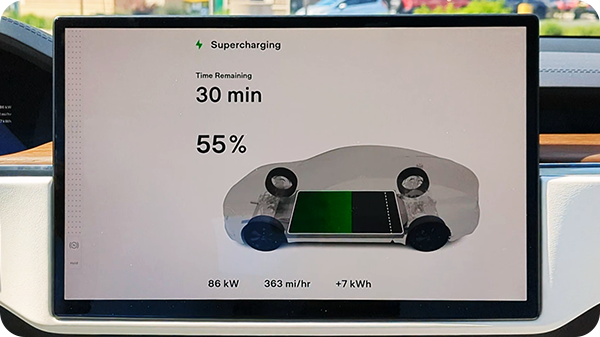
While charging, your Tesla’s screen will display both charging power rate (kW) and total energy stored (kWh).
Watt-hours per mile (Wh/mi) – is how Tesla reports driving efficiency within the user-facing software. For example, you might see “250 Wh/mi,” which means you are using 250 watt-hours of your battery pack’s stored energy to drive one mile. A lower number is better.
Miles per kilowatt-hour (mi/kWh) – is similar to Wh/mi, except it measures how many miles you can drive per kWh of energy used. This is a metric reported by the EPA and other electric cars to characterize efficiency. In this case, 250 Wh/mi would convert to 4 mi/kWh and a higher number is better.

Tesla provides owners an energy usage chart which displays efficiency in Wh/mi.
Battery Pack Capacity
Tesla no longer advertises the specific battery capacities of their vehicles; therefore, we must depend on data from the EPA and third-party sources. As of 2026, the long-range versions of the Model 3 and Model Y are reported to have 75 kWh of usable battery storage, the Model S and X are closer to 95 kWh, and the Cybertruck’s pack is reported to be 123 kWh. Keep in mind total capacity is slightly more, but automakers software-lock a small portion of EV batteries for health and longevity reasons.
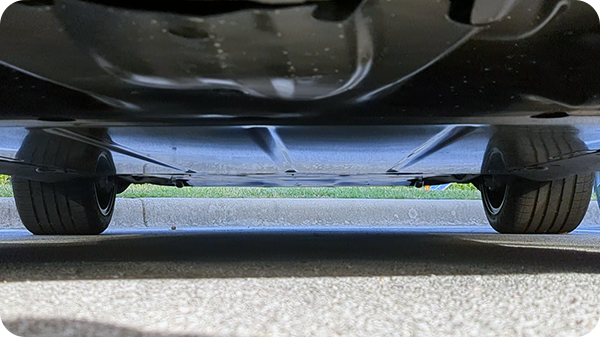
An EV’s battery pack is its gas tank.
Efficiency is Key
Just like gas mileage is a core component of operating costs for ICE vehicles, your Tesla’s energy efficiency will play a large part in charging fees over time. The EPA provides a miles per gallon of gasoline-equivalent (shortened as “MPGe”) metric which makes comparisons between cars with different fuel-types a lot easier.

With 130 MPGe, the Model 3 is the most efficient Tesla and ranks near the top of all electric cars.
Generally speaking, the smaller and more aerodynamic Model 3 is the most efficient Tesla and will cost the least amount in charging fees per mile, while the larger and much heavier Cybertruck will be the most expensive to operate. Of course, larger wheels or opting for the performance trims can make a significant difference to MPGe. For example, a Model 3 Performance is less efficient than a Model S Long Range with the base aero wheels, despite the Model S being wider, longer, and heavier.
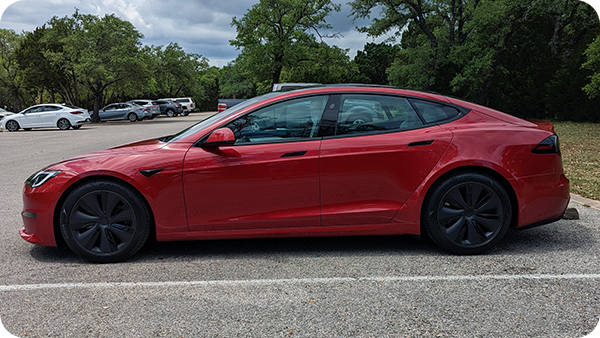
My Tesla Model S with 19″ aero wheels was rated to get 120 MPGe.
Impact of Weather and Driving Behavior
Driving with a lead foot or in adverse weather conditions, especially the winter months, are two of the biggest culprits for experiencing lower-than-expected efficiency ratings. While these factors affect ICE vehicles as well, EVs are especially susceptible to an imperfect environment. You can easily lose 20% of your range by driving at high speeds and 30-40% when temperatures fall below 40°F.
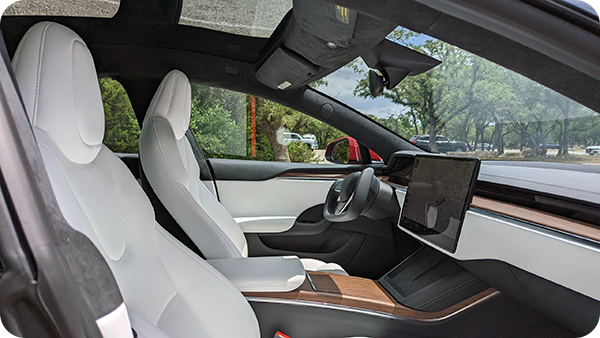
A Tesla’s acceleration will bring a smile to your face, but be careful with punching it too often if you are wanting to save on charging costs.
Home Charging Costs
Home charging is the most economical way to get the energy you need. On average, the national cost per kWh of energy is $0.19. However, states like Hawaii can have rates over $0.40 per kWh, while North Dakota residents pay closer to $0.10 per kWh. On top of this, some utility companies have time of use (TOU) plans which make charging during certain hours a lot more expensive than others. If this applies to you, be sure to use Tesla’s charge scheduling software.
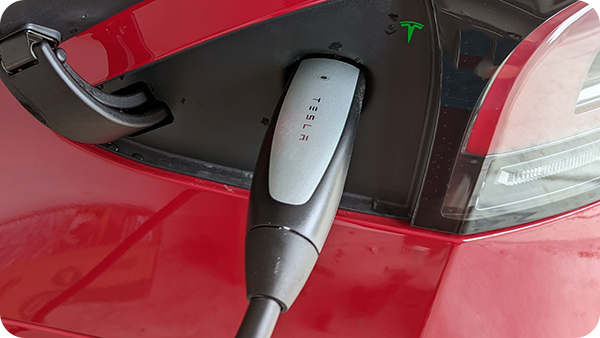
Charging your Tesla at home can save you a lot of time and money.
Assuming a 75 kWh usable battery for the Model 3 Long Range and 95 kWh pack for the Model X Long Range (both with base wheels), the average owner will pay $14.25 and $18.05 to travel approximately 330 miles in the vehicles, respectively. The Model Y and Model S will fall into the same range, while the Cybertruck will cost 20-25% more.
For me specifically, I live in Texas and have a Tesla Model Y Juniper. My home electricity rate is $0.13/kWh. Given that my car’s usable battery capacity is roughly 80 kWh and there’s around 20% energy lost due to heat transfer, I pay $13.00-$15.00 to travel 350 miles. That’s an equivalent of a 30 MPG crossover owner paying $1.00 per gallon of gas.
Tesla Supercharger Costs
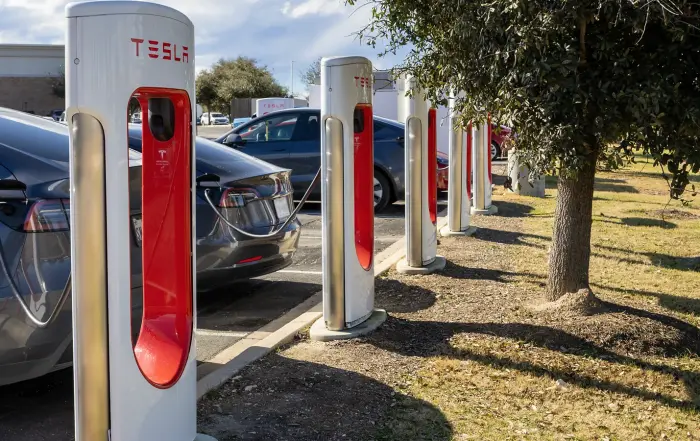
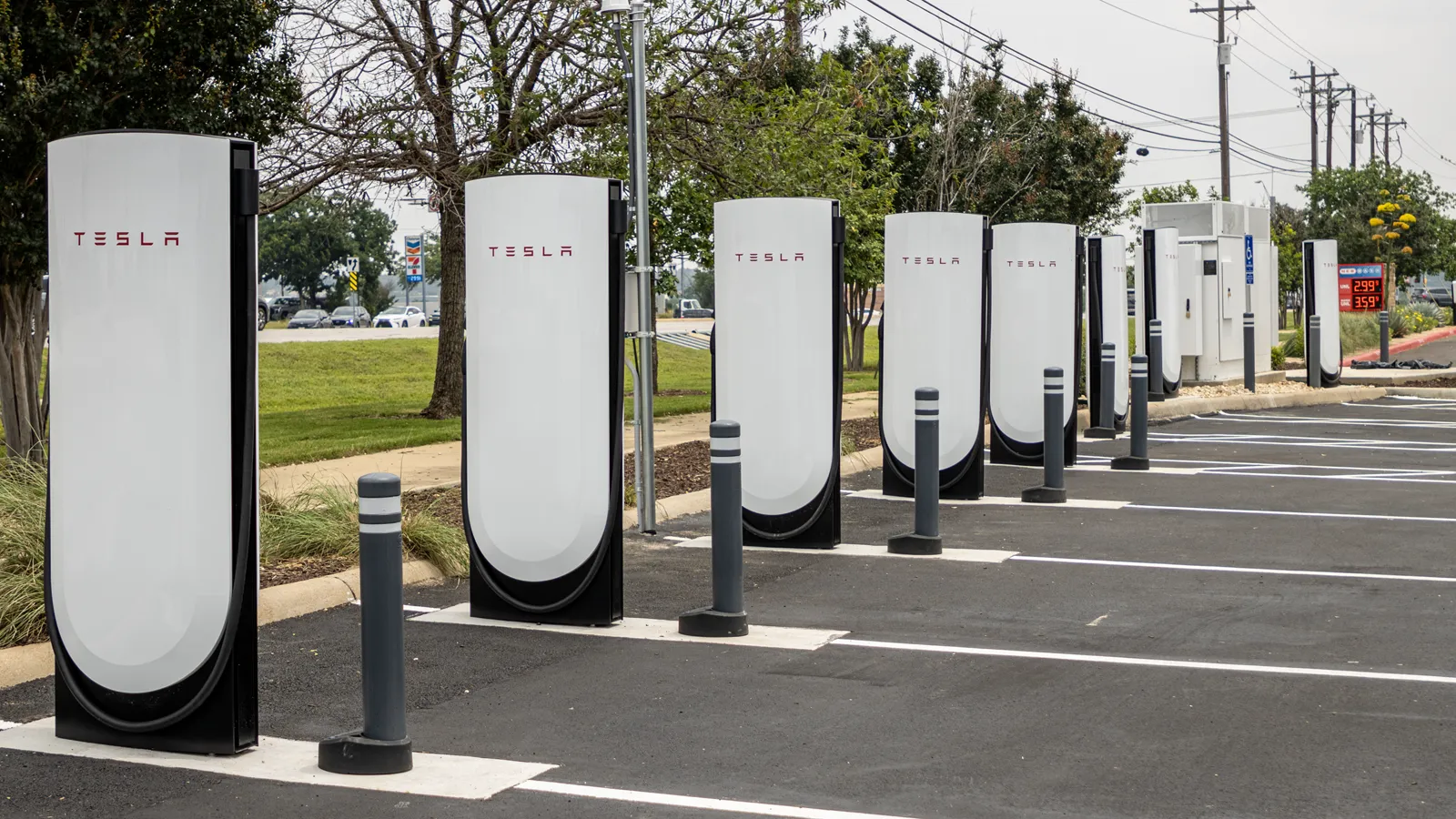
Tesla’s famous public fast charging stations, called Superchargers, are for when you need to rapidly add range. At their peak kW output, these stations are up to 25 times faster compared to the best home chargers. This means filling your battery from 10% to 80% state of charge only takes 20 minutes or so. However, this convenience comes with a higher price, as Supercharger fees are typically anywhere between $0.30 to $0.60 per kWh and vary by location and often include time of use policies.
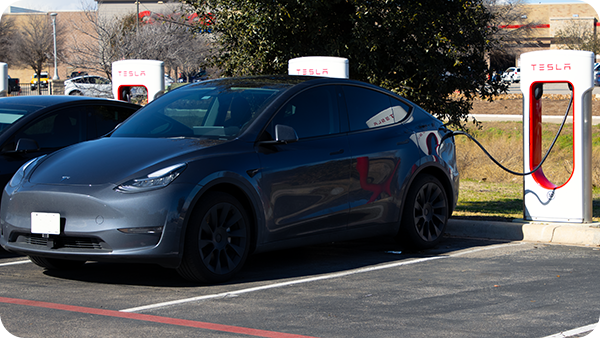
Tesla’s Supercharger network is the best in the industry, but can be expensive in many cases.
If you solely relied on Superchargers, you could expect to pay $22.50-$45.00 to travel 330 miles in the Model 3 or $28.50-$57.00 in the Model X. All of a sudden, a lot of the gas cost savings can start to disappear and it’s one of the reasons I don’t currently recommend electric cars for most people who can’t charge at home or work.
Is Charging a Tesla Cheaper Than Gas?
Charging a Tesla at home will almost universally be cheaper than fueling the most efficient equivalent ICE vehicle with gasoline. Instead, the key consideration is how often you plan to use a Supercharger station, as this will be the difference between saving money by driving your Tesla and potentially paying more to do so.
Fuel Cost Example
To get a better understanding of how fuel prices compare between a Tesla and its ICE competition, let’s compare a Tesla Model 3 Long Range AWD with the base 18″ aero wheels with the most efficient ICE compact sedan, the Hyundai Elantra Hybrid.
- As of mid-2026, the national average price per gallon of gas in the US is around $3.90.
- The average price per kWh of energy is $0.19.
- The 2024 Hyundai Elantra Hybrid gets 54 combined MPG, while the Model 3 is closer to 130 MPGe.
- To travel 100 miles in the Elantra Hybrid, you will need 1.9 gallons of gas.
- To travel 100 miles in the Model 3, you will need 23 kWh of electricity.
Charging at home, you’ll pay roughly $4.37 to travel 100 miles in the Model 3, and the Elantra Hybrid will cost you $7.41 in gas to do the same. Extrapolate that across 100,000 miles of ownership and you’re talking about a whopping $3,000 in savings. That’s compared to the best non-plug-in hybrid you can buy.
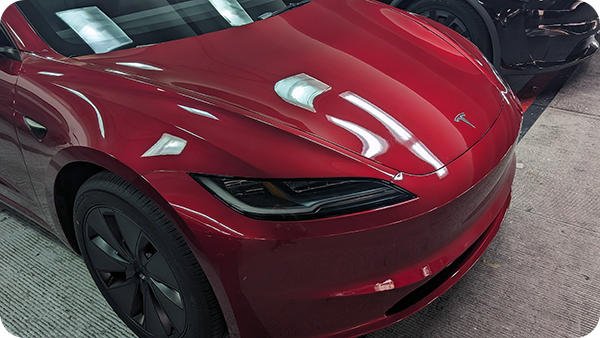
Of course, the Model 3 goes 0-60 mph in 4.5 seconds, is much more fun to drive, and doesn’t require oil changes.
On the flipside, if you only use Superchargers for your energy needs, the cost to travel 100 miles in your Model 3 becomes $6.90-$13.80. That can make it as expensive to fuel as the Hyundai Elantra Hybrid, or nearly double the cost at pricier stations. However, keep in mind that a Tesla requires far less maintenance than ICE vehicles and that should certainly play a part in your cost savings analysis as well.
Sources
Related Articles