
Buying a Tesla is going to be different than any other vehicle you’ve purchased before, in a lot of ways. One of which is maintenance or the lack thereof. Say goodbye to oil changes, fuel filter replacements, and spark plug swaps.
But unlike the common misconception that Teslas are completely maintenance free, there are some mostly minor things you will need to do throughout your ownership to keep the vehicle running as expected.
Maintenance Needs By Model
Here’s a breakdown of recommended maintenance items for all current Tesla models being produced.
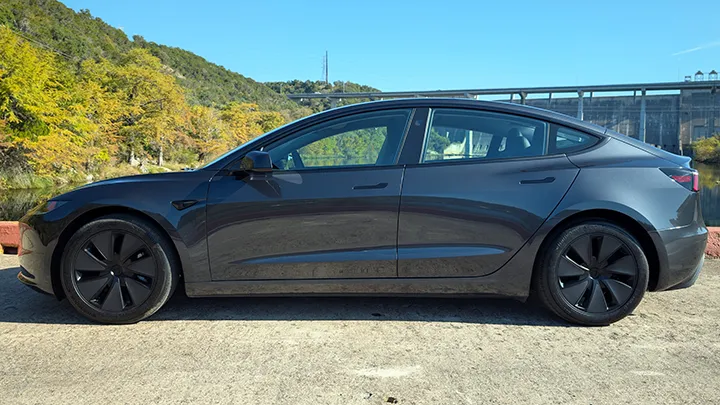
Tesla Model 3 Maintenance
For the Model 3, Tesla recommends the following:
- Perform a tire rotation every 6,250 miles or when the tread depth difference reaches 1.5 millimeters.
- Clean and lubricate brake calipers annually or every 12,500 miles, particularly if you live in an area where road salt is used during winter.
- Conduct a brake fluid check every 2 years.
- Change the cabin air filter every 2 years.
- Change the HEPA filter every 3 years (2024 models or newer only).
- Replace the air conditioning desiccant bag every six years.

Outside of tire rotations, my Model 3 had no maintenance needs addressed after 25,000 miles of use.
Tesla Model Y Maintenance
The maintenance recommendations for the Model Y are similar to the Model 3. Key differences include:
- Replacing, not just checking, the brake fluid at the 2-year mark if you use your vehicle for towing.
- Replacing the HEPA filter every 3 years.
- Replacing the AC desiccant bag every 4 years.
Tesla Model S Maintenance
Despite the Model S having a much higher price tag, the maintenance list is minimal and includes the following:
- Conduct a brake fluid check every 2 years.
- Replace the HEPA air filter every 3 years.
- Replace the battery coolant every 5 years.
- Perform a tire rotation, balance, and alignment every 10,000 to 12,000 miles or as needed.
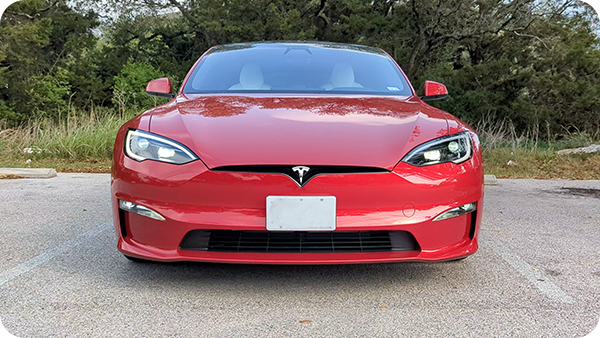
My 2022 Tesla Model S didn’t require much maintenance, despite its price tag.
Tesla Model X Maintenance
Since they share the same platform, the Model X has a similar service schedule as the Model S:
- Tire rotation, balance, and alignment every 10,000 to 12,000 miles or as required.
- Brake fluid check at 2-year intervals.
- Replace the HEPA air filter every 3 years.
- Battery coolant replacement is advised every 5 years.
Tires: The Exception
There is one downside for Tesla maintenance, and that comes in the form of tire replacement intervals. Tesla is famous for making its vehicles fun to drive with great handling and with lots of instant torque, even on the less expensive models. Combine that with a relatively heavy battery pack and you’ll get the potential for your tires to wear down rather quickly.

Tesla offers wide and durable OEM tires that contain a good amount of tread.
This of course is dependent on how often you drive, how sporty you drive, and what mode you drive in. For example, if you opt to go for “chill” acceleration mode, your Tesla dials back the low-end torque and horsepower a bit, allowing you to save your tires from streaking across the pavement. On the other hand, if you are driving a performance model in “sport” acceleration mode, you’re probably going to be getting new tires sooner.
Luckily, Tesla offers some pretty thick and wide tires standard on all of its models, including the base 18″ aero wheels on the Model 3. If you drive like a “normal” person, this should last you a solid 3 or 4 years, especially if you get them rotated on a regular basis to keep the tread even.
A Break on Brake Costs
If you haven’t heard, EVs can use regenerative braking, which turns the electric motors into generators when you take your foot off of the accelerator, reversing the flow of electricity. In turn, that energy is returned to the battery pack, all while slowing your Tesla down without the use of the hydraulic brakes.

The brake pedal didn’t get much use on any of my Teslas.
Tesla (and some others) take this to another level by combining regenerative braking with an auto-hold function. This allows your car to not only slow down, but to come to a complete stop without rolling forward. This is called one-pedal driving. Though this does require your physical brake to engage, the force is nowhere near what it is when slowing down by putting your foot on the brake pedal like in an ICE vehicle.
Thanks to these features, your brake pads will wear down far more slowly over time, saving you some cash on brake pad replacements.
Do Tesla Vehicles Use Oil?
Another misconception is that EVs like Tesla don’t use any oil. That’s not actually true, as Tesla currently uses a small amount of oil to help cool the electric drivetrain components. However, this oil and its related filter never need to be changed and over time, it is likely Tesla will engineer an oil-less design.
How Much Does Tesla Maintenance Cost Per Year?
Let’s look at a breakdown for maintenance costs for a 2024 Tesla Model Y AWD with 19″ wheels. Let’s assume you’ll need new tires every 3 years or 36,000 miles for a conservative estimate.
- Tires: Looking at options online, you can get quality Tesla tires for the Model Y around $200-$250 each or $800-$1,000.
- Cabin air filter: Currently $39.00 on Tesla’s website.
- HEPA Filter 2 Pack: Currently $90.00 on Tesla’s website.
- Tire Rotations: Can be done for free at shops like Discount Tire or $50.00-$100.00 through a Tesla service center.
- Tesla brake cleaning/lubricating: No official pricing online, but owners have posted $100.00-$150.00 with a tire rotation included.
All things considered, you will pay anywhere from $400-$500 a year to maintain your Tesla. However, the brake cleaning and lubricating may only be necessary once every couple of years if you don’t drive on salted roads and tire rotations are free if you live near a Discount Tire location. That could cut the cost as low as $300-$350, again, primarily due to the cost of tires.

There’s really no reason to visit a Tesla service center unless you have a warranty-related issue.
Tesla Charging Costs
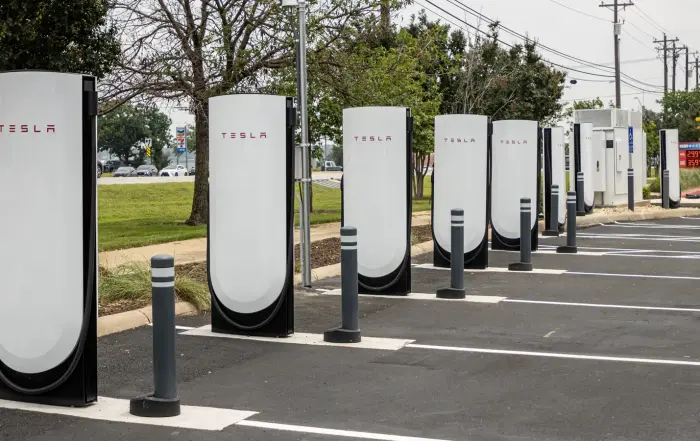
How you charge your Tesla is going to be another big determining factor in how expensive it is going to be over the life of your ownership. Charging at home is always going to be the cheapest option, unless you get free charging at work. Conversely, using a Tesla Supercharger is going to cost you quite a bit more money, usually to the tune of 2-3x what you pay at home.
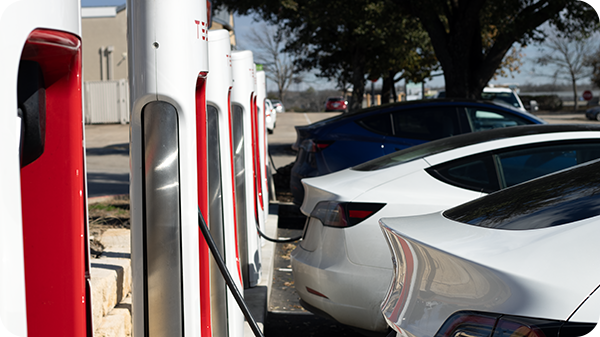
Tesla Superchargers have become more expensive as time has gone on.
I’ve already written a separate article on Tesla charging costs, so I recommend reading that content after you’ve finished this one. Long story short, if you charge at home, a Tesla will likely save you a lot of money over the course of your ownership.
Reliability & Warranty Issues
Though the headlines will tell you differently, Tesla has some of the most reliable EV drivetrains and charging technology on the market, including a top-notch battery management system (BMS) to improve the longevity and performance of the battery pack over time. Tesla doesn’t include any regular maintenance service in their basic or comprehensive warranty. Instead, these policies are focused on build quality, part reliability, and drivetrain or battery pack issues.

I have never had any drivetrain or charging issues with my Teslas, including my Model Y.
Basic New Vehicle Limited Warranty
Tesla’s basic vehicle limited warranty typically covers the vehicle for 4 years or 50,000 miles, whichever comes first. This is standard across the Model S, Model X, Model 3, and Model Y. It covers any defects in material and workmanship under normal use.
New Vehicle Battery and Drive Unit Warranty
The warranty coverage extends significantly when we look at the battery and drive unit, as federally mandated in the United States.
- Model S and Model X: These come with an 8-year or 150,000-mile warranty for the battery (70% retention guaranteed) and drive unit.
- Model 3 Rear-Wheel Drive: This trim specifically comes with an 8-year or 100,000-mile warranty for the battery (70% retention guaranteed) and for the drive unit.
- Model 3 and Model Y: Both offer an 8-year or 120,000-mile warranty (70% retention guaranteed) for the Long Range, AWD, and Performance variants.
Used Vehicles Warranty
Used vehicles purchased directly from Tesla will have the remainder of the 4 years and 50,000 mile warranty plus an additional 1 year and 10,000 miles of coverage for the comprehensive basic warranty. The original battery and drive unit warranty period remains the same.
Additional Coverage
Tesla also offers warranties for other parts and services, such as:
- Supplemental Restraint System: This is covered for 5 years or 60,000 miles, whichever comes first.
Transferable Warranties
Warranties do transfer between owners, so this might help your resale value if you decide to move on from your Tesla during the warranty period.
Exclusions and Caveats
While Tesla’s warranties are comprehensive, they do have exclusions. These can include damage from accidents, environmental damage, or modifications that are not approved by Tesla. Always read the fine print to understand what is and isn’t covered.
Wrap Up
Tesla is often thought of as an expensive car brand that only the rich can afford to buy and operate. But, when you break down the maintenance needs, charging costs, many people are surprised at just how competitive a Tesla can be priced versus another vehicle that they were looking at.
Related Articles