
Is the new Tesla Model 3 worth it? Or should you save some money and buy an older version? As someone who owned a pre-refreshed Model 3, here are my thoughts on all of the new features.
Exterior Changes
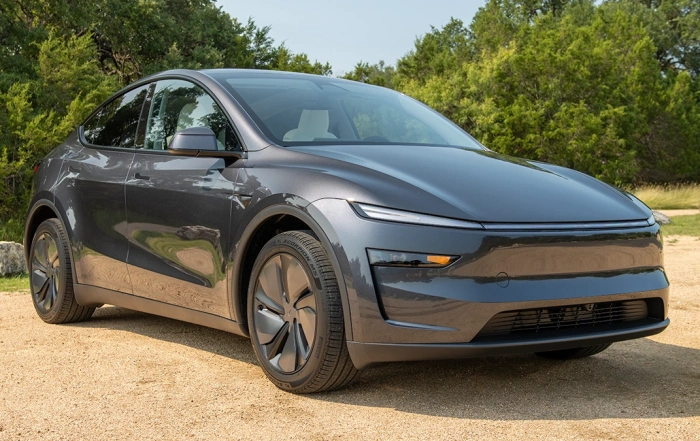
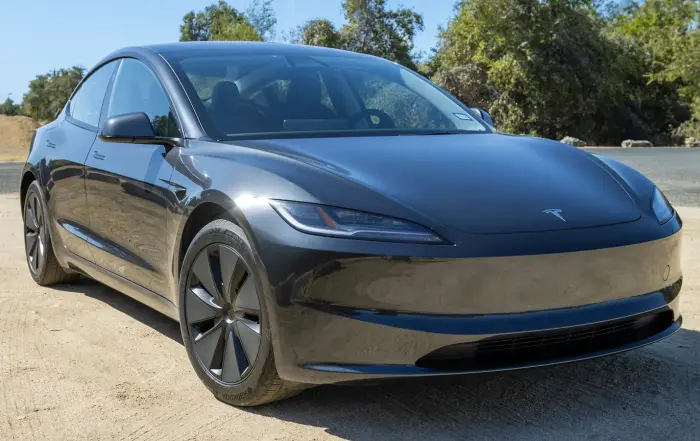
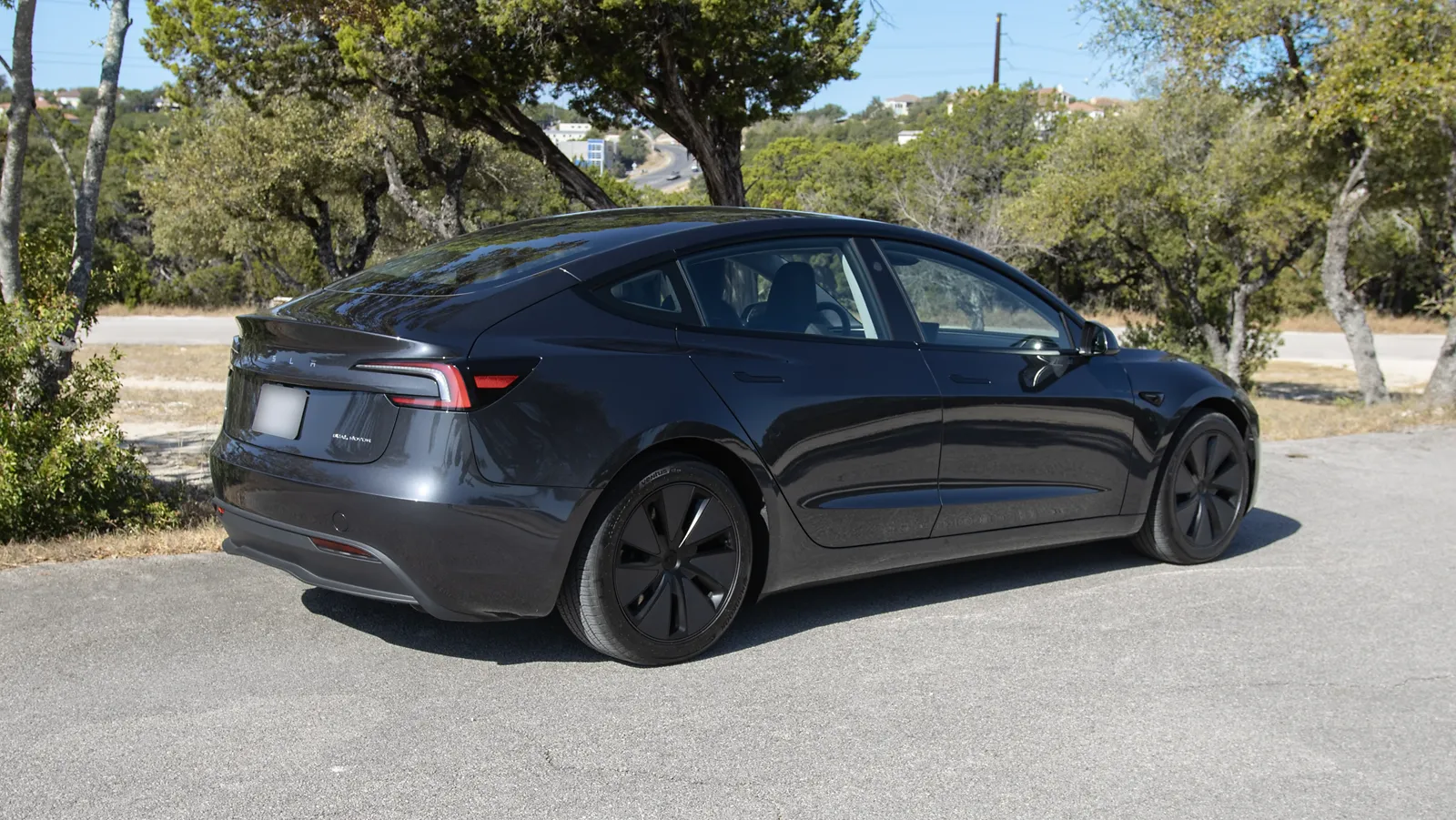
Design is always subjective, but in my opinion, the car is much sleeker and more modern-looking. The new front end is a welcome evolution over the aging styling of previous models.

With this redesign, Tesla made the Model 3’s exterior more aggressive looking.
The LED headlights and taillights are fittingly sharper. The 18-inch aero wheel covers have also been greatly improved visually, and now you don’t have to sacrifice form for function. My guess is that more owners will choose to keep them on and save the 3-5% range advantage that they offer.
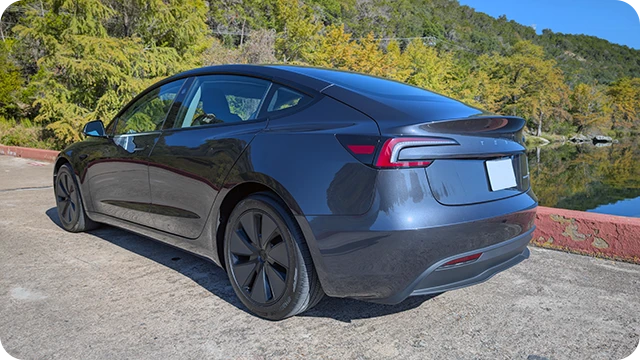
Everything else is essentially the same, except, of course, the ultrasonic sensors are now gone. I’ll get to that in the “Tesla Vision” section below.
Cargo Areas
The frunk is slightly smaller than that of the first-generation Model 3 so Tesla could implement a heat pump, a trade-off well worth it in my opinion. But sadly, the frunk still lacks a power open/close feature or an external button. That’s probably why so many Tesla owners, including myself, rarely use it.

The frunk is slightly smaller compared to the first versions of the Model 3 thanks to the new heat pump.
However, the rear cargo area did receive an upgrade. It is now power operated, and the trunk is lined with a carpet-like material, which both feels nice and likely helps with sound dampening.


The Interior Is a Big Step Up
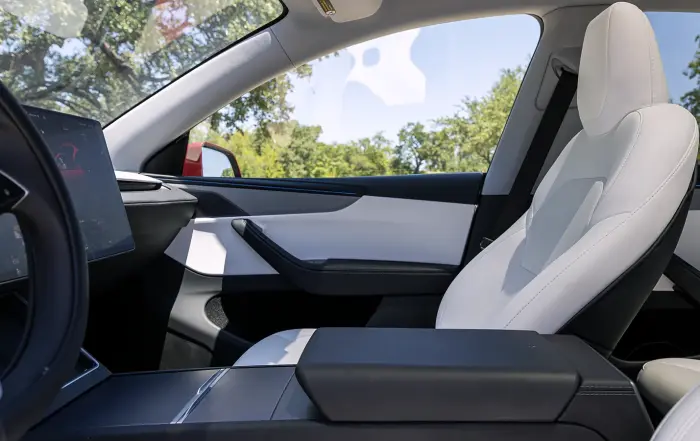
Let’s start with one of my favorite parts of the new interior, the center console, which rids us of those cheap-looking, highly reflective, and hard-to-clean gloss black parts from before.

Without the glossy black material, you don’t have to worry about reflections as much.
There is still plenty of storage, and I like the Model 3’s large armrest design, which is decently padded and big enough for two adults to share (as it should be).
Steering Wheel
The updated steering wheel is very sporty (almost BMW-esque), but it ditches the stalks (at least for now, we’ll see if the turn signal stalk returns like it did in the new Model Y) in favor of some nice haptic feedback buttons that are responsive. Tesla also added some nice stitching, though depending on how sensitive you are, you might find the placement a bit uncomfortable to be holding constantly. Otherwise, it feels great in your hands.
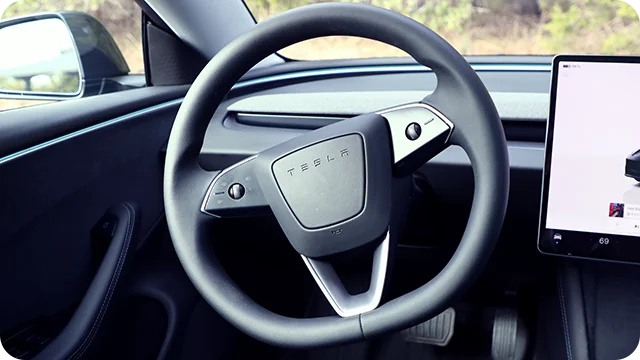
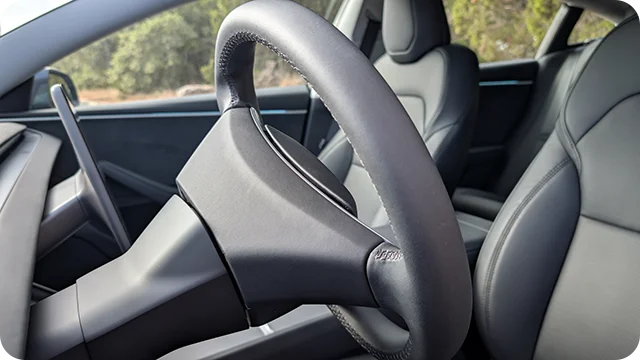
The stitching can irritate your hands thanks to it being on the back of the wheel vs around the bottom.
Dashboard
Moving up to the dashboard, it’s all new and definitely improved. The old white plastic and wood trim pieces are gone, along with that silver accent bar that constantly reflected sunlight into your eyes.

The new dashboard is simple, yes, but less susceptible to build issues and reflections.
Tesla made it clear they spent time trying to remove as many parts as possible, and it sure seems like it. There’s still a large opening for the HVAC vent, but now it showcases a new gray canvas-like cloth fabric bar, regardless if you go with the white or black interior.
An Underrated HVAC Improvement
Speaking of the HVAC system, one of the most underrated changes to the new Model 3 is that the passenger-side vent can now be independently turned off, even if someone’s sitting there.

The ability to turn off the front passenger’s vent might mean fewer arguments with your spouse.
The number of arguments this caused in my old Model 3 was ridiculous. Glad to see Tesla finally get with the program here.
Center Touchscreen – A Missed Opportunity
You might not notice it, but the 15.4-inch center touchscreen, where you control essentially everything in a Model 3, got upgraded ever-so-slightly. The bezels are smaller, though the resolution (2200×1300 pixels) is the same.

I was hoping for a bigger screen upgrade, but this still does the job perfectly fine.
Personally, I was hoping Tesla would give us the 17-inch screen from the Model S/X, but this one still does the job all the same.
The Ambient Lighting is Good and Bad
I guess now’s a good time to mention the ambient lighting Tesla integrated into the Model 3’s dash, which extends to the door panels. While I think it adds a nice futuristic touch to any vehicle, I do have an issue with how Tesla decided to implement it here.
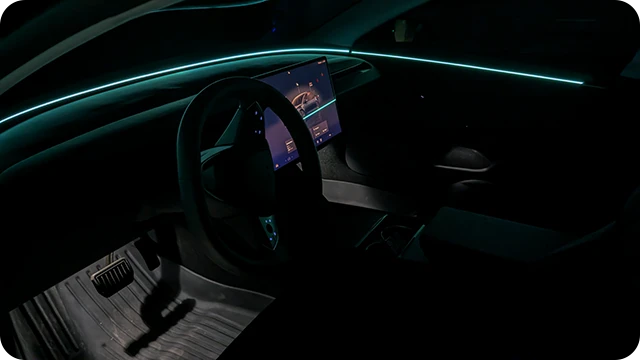
Tesla gives you access to the whole color wheel for the ambient lights.
That’s because it can be distracting at night (even though it dims down some), but the bigger problem is that the silver part of the trim reflects onto the windshield when it’s sunny, making it look like there’s a big crack across it.
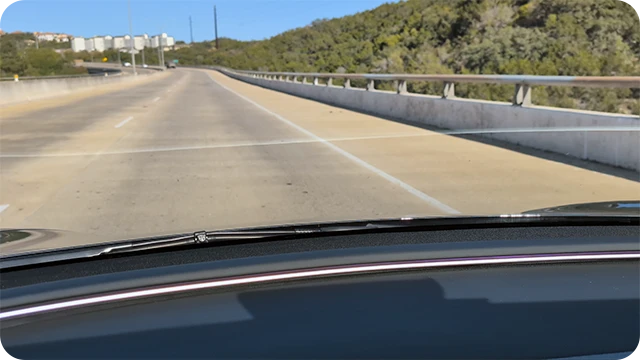
The reflection caused by the ambient lighting trim is highly distracting.
Notably, this is something Tesla addressed with the refreshed Model Y (the trim is black and the angle has been adjusted), so hopefully they’ll do the same here.
The Seats are Still Incredible
Returning to the positives though, the seats themselves are as cushy as ever, providing a good amount of thigh and back support to keep those of us with sciatica mostly pain-free, and the new cooling feature is decently strong and absolutely makes a difference in the heat.

Like all of Tesla’s cars, the Model 3’s seats are some of the most comfortable on the market.
Second Row
Heading to the back row, there are a couple of things to mention here.

The rear seats are comfortable, but taller passengers will struggle with the raised floorboard thanks to the battery pack.
First, Tesla has angled the seats so your passengers should have better thigh support, which might be helpful for longer road trips.

The adjusted second row seat angle provides additional thigh support vs the outgoing model.
There’s now an 8-inch second screen, similar to the Model S and Model X, which is nice for your passengers to have access to climate controls. They can also watch media like YouTube, though unless your passengers are small children, they’re probably going to have some pretty sore necks if they stare at it for too long.

Though the second screen is great for rear climate controls, the angle limits its functionality.
A New Door Design
Just like the rest of the interior, the doors are completely redesigned with nicer-looking and feeling soft-touch material, even at the bottom.
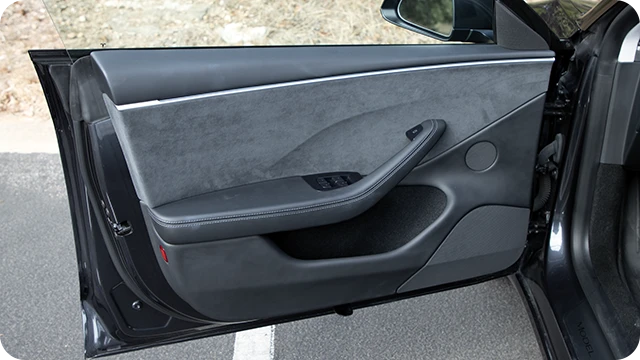
The redesigned doors are much more upscale than before with soft-touch materials running from the top to the bottom.
But the best part? The carpet-lined door pockets, which completely eliminate the rattling you used to get when you put stuff down there.
All in all, I have to say, I definitely appreciate what Tesla’s done with the interior. It feels like a car in a completely different price bracket altogether.
Software & Infotainment
Everyone knows Tesla has market-leading software, and that’s no less true with the Model 3. My 2020 version offered an iPad-like experience, but the newer models with the AMD Ryzen chip are even better.

The Model 3 is like a computer on wheels. A fast and responsive one.
Now, it and almost every other native app run more smoothly and are more stable. I know many still want Android Auto or Apple CarPlay, but I personally love Tesla OS. Voice commands, road trip navigation, and playing your favorite song are so effortless and reliable in the Model 3.
A Sound System That Pops
I can’t forget to mention the 17-speaker sound system. It features dual subwoofers and amplifiers. There’s plenty of bass, but the clarity and distinction between sounds are what stood out for me. It makes listening to music or watching one of the available streaming apps, like Netflix, a fantastic audio experience.

You’ll be hard pressed to find an OEM-made sound system as good as the Model 3’s.
Trying FSD for the First Time
For better or worse, many know Tesla for its autonomy software called Full Self-Driving, or “FSD.” I had my first experience with it in this car. For reference, I was using version 12.5.4.1 and had it in “assertive” mode. This Model 3, of course, features Hardware 4.
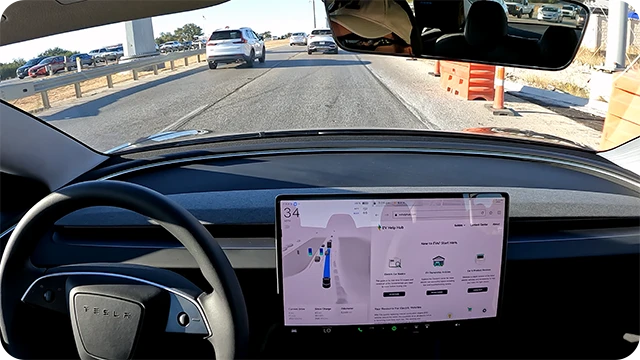
I had previously used Tesla’s Enhanced Autopilot, but FSD is a completely different experience.
I took it on a 30-mile trip. It included highway and city driving, plus on- and off-ramps. I didn’t need to disengage at all. That’s incredible on its own. I encountered a few issues, though.
Changing lanes took longer than I wanted. FSD often waited until the last minute to merge, which seemed to annoy other drivers. On a curved section of road with a small hill, I experienced a small amount of phantom braking. It was better than my previous Enhanced Autopilot experience, but still a bit unsettling.
Finally, the car would often drive 5-10 miles per hour under the speed limit. This happened even when there was ample space to go faster, and the speed threshold was set to the max. I believe this issue has since been fixed.
Overall, FSD was more reliable and smoother on highways than Enhanced Autopilot. I always felt safe, but never took my eyes off the road.
When it comes to city driving, I’d be too skittish to use it. There’s just too much going on around you and I don’t trust other drivers. The “comfort” of having the vehicle drive you around is not worth the anxiety of constantly wondering if something could go wrong.
Autopark Performance
Tesla Autopark comes with the FSD software and I ended up using it more than I thought I would.
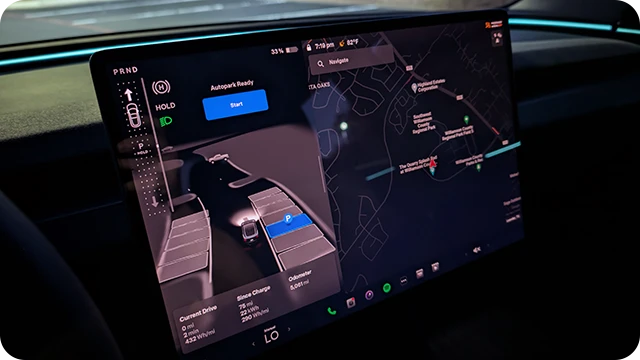
Autopark was a real bright spot in the FSD feature set.
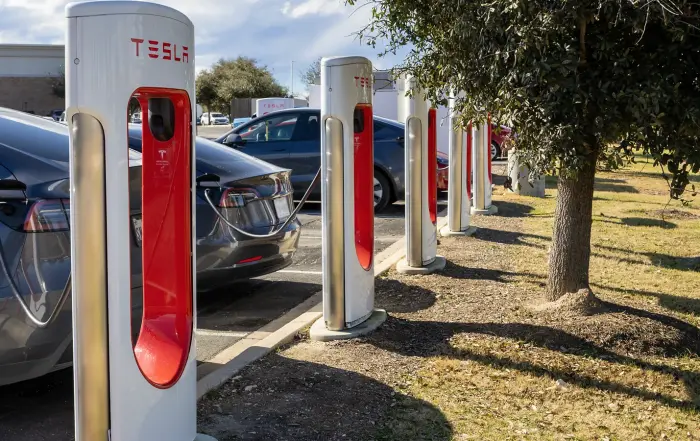
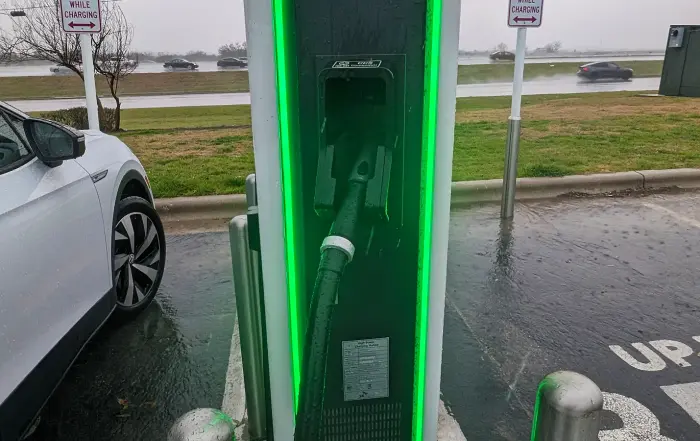
Autopark operates in a very controlled manner at a predictable pace, which certainly helps create confidence in the system. It’s especially good at backing into Tesla’s Supercharger stalls. For that reason, Tesla should make it a standard feature. This would probably help reduce congestion caused by anxious drivers.
Is Tesla FSD Worth it?
Given that it’s very expensive ($8,000), still in beta with plenty of bugs to work out and it can’t be transferred to another Tesla if you buy one in the future, I would say no. However, at $99.99 a month, the subscription could be well worth it to reduce driving fatigue on long road trips.
Hardware 4 Cameras
Perhaps as an indirect benefit of the focus on autonomy, the Model 3, like all of Tesla’s cars, has some of the highest quality cameras a regular consumer can buy. But why should you care?
Well, for starters, these cameras are used to record events, like vandalism, when Sentry Mode is activated. Higher resolution means it’s more likely usable information like license plates will be captured.
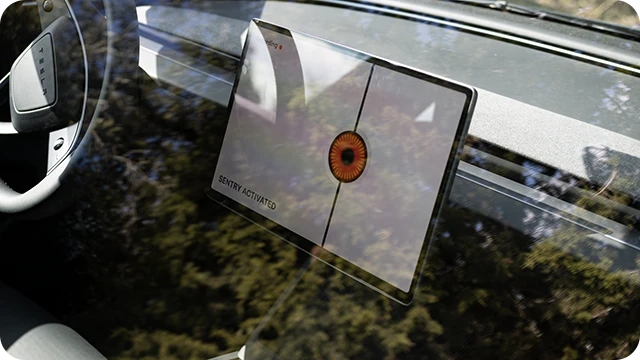
Sadly, Sentry Mode is becoming more of a necessity these days.
Just as important, Tesla shows both side repeater views, along with the backup camera feed which makes reversing, parallel parking, and generally watching out for pedestrians so much easier and safer.

Not just for FSD, the cameras on the Model 3 are useful for a variety of reasons, including safety.
There’s even a feature where the side cameras are displayed when you activate the turn signals, which is far superior to the traditional blind spot monitoring light (though that’s been added to the A pillars as well).
Let’s Talk About Tesla Vision
As you might have heard, Tesla removed ultrasonic sensors from all of their vehicles and replaced them with what they call “Tesla Vision.” Similar to FSD, Tesla Vision uses the 9 exterior cameras to create a map of the environment around the car and alerts drivers of objects or when they are getting close to barriers.

The high-resolution cameras found on all Tesla models are used for FSD and other features like Tesla Vision.
Is it an improvement over the old system? In some ways, yes, and in some ways, no. The visualization shown is far more detailed, but it no longer shows how far away objects are and instead relies on loose visual cues like a red-colored line to tell you when you are close to something.

Tesla Vision creates an object cloud and uses colors to denote when you are getting close to something.
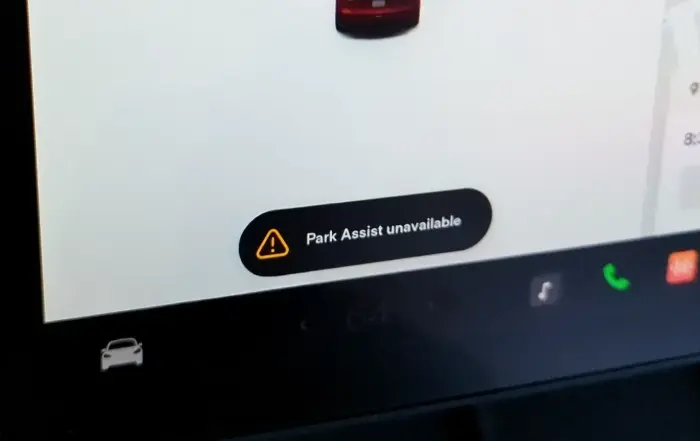
The cameras can get blocked by the sun or other debris quite easily. This means you might experience “park assist not available”-like errors more often than before. With that said, it’s already much better than I expected it would be and Tesla is committed to improving it. Plus, the old software had plenty of issues of its own.
Driving Experience
Let’s be real: Thanks to instant torque, there’s not a Tesla on the market that doesn’t put a big smile on your face when you push the accelerator. The Long-Range Model 3, with its compact design, low center of gravity, and 0-60 time in just over 4 seconds has to be one of the most fun-to-drive cars of any kind and, dare I say, at any price point.

If you’ve never had the chance to test drive a Model 3, do yourself a favor and schedule it right now.
But two areas the Tesla Model 3 struggled with in the past are its cabin noise and a suspension tuned for sportiness, which many found a bit too stiff for daily driving. Thankfully, both have been corrected.
Cabin Noise
As soon as I got into the car, I immediately took it out on a drive going roughly 70 mph. That’s when I knew Tesla had heard the feedback from owners. It was about as silent of a ride as I have ever been in, registering 67 dB with a little bit (8-10 mph) of a headwind coming towards me.
The reduction of noise can be attributed to a new tire design, insulation materials, and also the dual-paned windows now found on all four doors. In fact, all of the glass has been treated to help reduce wind noise, which Tesla calls “Tesla Acoustic Glass.” It definitely seems to have made a notable difference for the Model 3.

The dual-paned windows greatly reduce wind noise in the Model 3.
Combine the whisper quiet cabin with the impressive sound system and you’ll hear very little else driving on the freeway.
A Refined Suspension
Whenever a car maker sets out to reduce stiffness in a suspension, there’s always a trade-off that comes with handling and possibly making the components too cushy to the point where the ride is too bouncy. However, Tesla did a great job of finding the middle ground of a far more forgiving and compliant feel for passenger comfort, while keeping body roll and jostling to a minimum.
Where are the Stalks?
Tesla started removing both the drive and turn signals stalks with the refreshed Model S/X. Having owned a 2022 Model S, I wasn’t a fan then, and I can’t say I am now. While I don’t mind the physical turn signal controls being removed (it was always finicky anyway), shifting gears using the screen comes with some…quirks.

Looking at and using a stalk-less steering column is odd at first, but you do get used to it.
There were times when I didn’t press hard enough on the screen. I’d shift into reverse, move the slider forward, then press the accelerator only to find I was still in reverse. This almost caused me to back into something once. Maybe user error, but shouldn’t one of the most important controls of the vehicle be as easy to use as possible?

Having the drive selector on the touchscreen creates unnecessary issues at times.
Other Gear Selector Options
You can also use Tesla’s Auto Shift (in beta, of course) where the vehicle will predict whether you want to go forward or backward based on what’s around you and previous driving patterns. It can be useful at times, but it’s certainly not always accurate.
There are also touch-sensitive buttons in the overhead console, but they aren’t the most responsive (you also have to hold them for a couple of seconds) and not something most owners are going to deal with every day.

You could just use the backup gear selector, but the experience isn’t great.
Steering Wheel Controls Done Right
If you are going to put a lot of the vehicle controls on the steering wheel, it needs to be executed at a high level. In this case, I found the haptic feedback-based buttons on the steering wheel are very responsive, but not overly so. They also provide a satisfying “click” when pressed.

The Model 3’s touch controls have been optimized to reduce unwanted activation.
Throughout my entire time with the Model 3, not once did I turn something on I didn’t mean to or did the car fail to register a tap made purposely. Well done, Tesla.
Tesla Model 3 Real-World Range
A common criticism of both Tesla and other automakers’ EVs is the gap between real-world range and what’s advertised on Monroney stickers. Based on a lifetime of 5,000 miles driven, this specific car has been using roughly 265 Wh/mi (roughly 3.8 mi/kWh).

This means that this Model 3 has been 8-10% less efficient compared to what’s advertised with mixed city and highway driving. That is still a whopping 50-60 mile real-world range improvement compared to my 2020 Model 3. While unfortunately I didn’t get to test it out myself, I do know that the heat pump can make a pretty big difference in the winter time as well.
Charging Speeds have Stagnated
Outside of the Cybertruck and Semi, DC fast charging speeds for the rest of Tesla’s products have stagnated at a top-end of 250 kW. Don’t get me wrong, adding up to 195 miles of range in 15 minutes in the RWD variant (closer to 175 miles for the AWD) is more than adequate to satisfy the majority of owners.
But with other competitors moving to 800V architectures, which could in theory allow the Model 3 to recharge its battery from 0%-80% for 300 miles of range in the same amount of time, just imagine how quickly the “but it takes forever to charge” argument would disappear.

It has been a few years since Tesla improved the charging speeds of the Model 3.
Another important note is that all Tesla models have native access to what is universally known as the more reliable large DC fast charging network, Tesla Superchargers. While other EV models are slowly gaining access to many locations (most via an adapter by the end of 2025), a significant number of Supercharger stations, often the most crowded, remain exclusive to Tesla owners.
How Much is the Model 3?
As of writing, the Tesla Model 3 costs (before any incentives):
- Long Range Rear-Wheel Drive: $42,490
- Long Range All-Wheel Drive: $47,490
- Performance All-Wheel Drive: $54,990
Should You Buy a Tesla Model 3?
With ample range, a more upscale and quieter cabin, market-leading software, and one of the most fun driving experiences you can buy, the Tesla Model 3 should be at the top of the list for all looking in the compact car segment, electric or not.
I enjoyed my time with the Model 3 and it’s on my shortlist of cars I would personally consider buying next. Overall, I’d give it a 9.5 out of 10. There really aren’t any other compact sedans that offer this kind of performance, software, and range for the price.
Sources
Related Articles