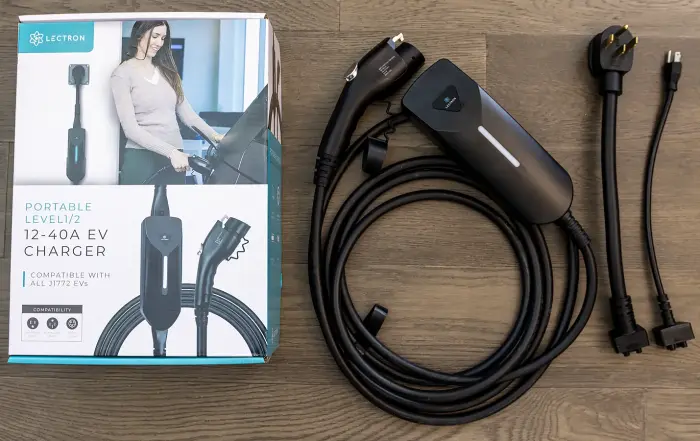


If you’re getting ready to buy your first electric vehicle, you’re in for a treat. You can bid gas stations goodbye, while you save time and money by charging your EV at home. You’ll also enjoy the buttery smooth acceleration and instant power electric motors provide.
But, before making your purchase, there are some things you should consider to make sure your ownership experience isn’t dampened by unexpected needs or changes.
Charging Speeds Are Complicated
Unlike internal combustion engine (ICE) vehicles that intake gas at the speed a particular pump is operating at, electric cars are quite a bit different. In fact, there are many factors that will impact your charging speed:
- The charging level you are using
- How much power a particular charger can provide
- What voltage your battery and drivetrain components can handle
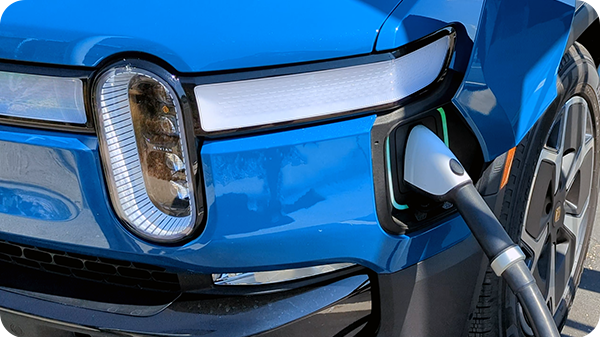
Right now, EV charging isn’t very standardized but hopefully it will be in the future.
Charging Levels
First let’s start with the three different levels of charging simply called “Level 1,” “Level 2,” and “Level 3” (or DC fast charging).
- Level 1: This type of charging is the slowest and adds between 2 and 4 miles of range per hour. However, it’s usually enough to cover the average American daily commute. Level 1 charging simply requires you to plug your EV into a typical wall outlet with the charging equipment that came with it, no additional costs required.
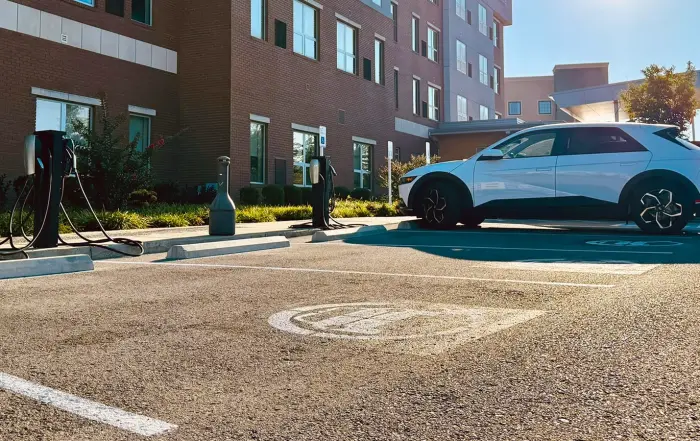
- Level 2: Using a 240-volt outlet or a hardwired home charging station, you can step up the range added per hour to anywhere from 10-40 miles or so. If you already have a capable outlet, the additional cost is only what you pay for Level 2 charging equipment or adapters, if your car doesn’t come with them. If you go the hardwiring route, you’ll get the fastest speeds, but will potentially pay thousands of dollars for an electrician.
- Level 3: Also known as DC fast chargers or Tesla’s Superchargers, these are public stations which offer the most rapid charging speeds available. Each fast charger is rated for a different amount of output, so speeds can vary. Of course, your EV needs to be able to accept the power output as well. In general, you can expect a 10% to 80% charge to take somewhere between 30 and 45 minutes for most electric car models.
Charging Power Rates
Without getting too technical, electric cars can have different levels of charging power that they can handle, based on the components used for the battery, drivetrain, and other related systems. You might hear terms like “400V” or “800V” architecture. As an owner, the more important number to pay attention to is how much power, in kilowatts (kW), your car can accept. If it’s 350 kW, then that particular vehicle is using an 800V system (or greater). If it’s 250 kW or less, it’s likely a 400V system.
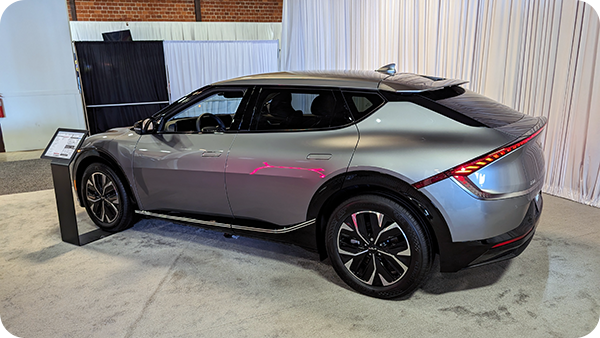
The Kia EV6 has an 800V-based platform that accepts 350 kW of power, making it one of the fastest charging EVs you can buy.
To put it in simple terms, the higher the accepted charging rate, the quicker it will recharge at a public fast charging station. Just know that if you plug your 250 kW capable EV into a 350 kW stall, it isn’t going to charge any more quickly than if you plugged it into a 250 kW stall. Conversely, if you plug a 250 kW capable electric car into a 150 kW stall, it will charge slower than it otherwise would.
Charging Curves
A quick but important note should be made on charging curves. As your EV’s battery gets full, the amount of power it will take gets lower and lower in order to protect the health and longevity of the cells. This is only relevant to DC fast charging. Charging curves also vary by EV, but you should expect full power that your vehicle will accept until about 40-50% state of charge. From there, it will slowly taper down. This is why you’ll hear car companies quote charging times for the “10% to 80%” range. It can often take just as long to charge from 80-100% as it does 10-80% at a public fast charging station.

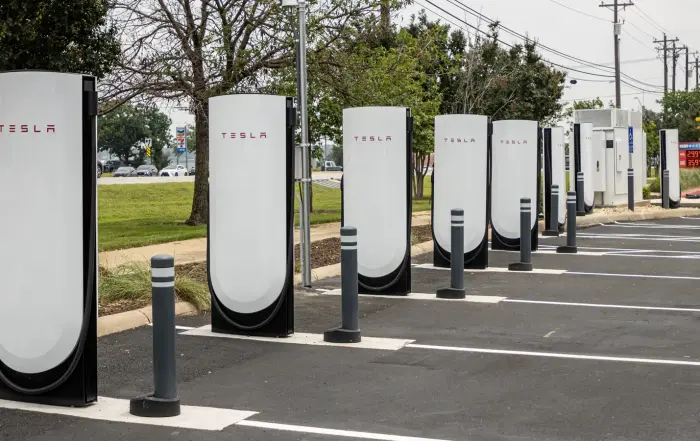
Public fast chargers like these will show their charging speeds on a label, on the screen, or their respective mobile apps.
Can You Charge at Home or Work?
Charging your electric car is going to be fundamentally different than pumping gas into your old gas-powered vehicle. In many ways, “fueling” your EV is a much better experience, assuming you can charge at home or at least your work. You see, most EV owners plug their vehicles in every day when they are at home. Though by no means do you have to charge each day, by doing so, you’ll consistently have a full battery.

I charge my Volkswagen ID.4 at home almost every day.
If you can’t charge at home or at work, it is still possible to own an EV, but it will be much less of an enjoyable experience. In this case, you would need to rely on public fast charging stations. Therefore, I personally don’t recommend EVs to those who have to rely solely on fast chargers to fuel up. It’s probably not worth it and because public fast chargers are quite a bit more expensive than your home electricity costs, you might end up paying as much as you would have for gas anyway.
How Much Range Do You Really Need?
Range is usually the biggest concern for those new to EVs. This is because you need to fundamentally shift how you think about refueling a vehicle. Most ICE cars get somewhere in the realm of 300-400 miles per tank of gas when they are full, whereas you’ll typically see electric cars closer to 250-325 miles of range on a full charge.
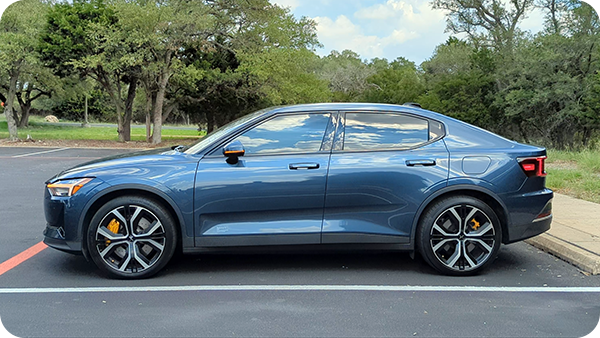
Most new EVs offer range estimates of 250-300 miles or more.
You have to keep in mind what we discussed above. If you are plugging your vehicle in every day, even using the typically included slow Level 1 charging equipment that adds 2-4 miles of range per hour, you’re going to wake up each morning with a full tank. This is completely different than fueling up at a gas station once a week.
There are certainly fair criticisms for the range of EVs currently on the market. In cold weather, your electric vehicle could see a 30-40% drop in efficiency and therefore, the same amount of range lost. When towing, depending on the size and shape of your payload, you’ll likely see a similar loss or slightly more.
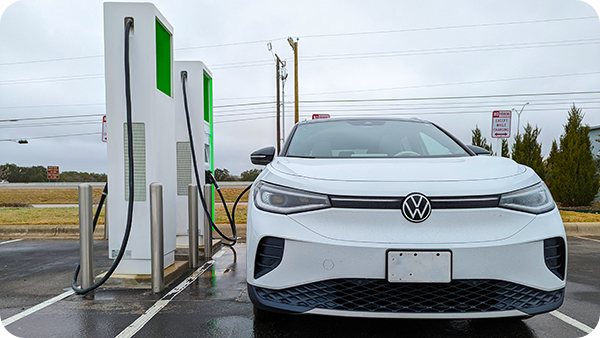
Despite having only 250 miles of range, I have no problems driving my ID.4 in the winter time.
I break down electric car range in another article, but the overall takeaway is, most people overestimate how much they’ll truly need.
DC Fast Charger Locations & Road Trips
Another electric vehicle concern you hear a lot about in the news is charging infrastructure or the lack of public fast chargers access. In some areas, there are very limited options for fast charging, especially in parts of the rural Midwest and South away from interstates. Along with this, your car’s range and the limited locations of fast chargers may mean that you’ll need to stop more frequently on your road trips.

(Click to enlarge) Looking at this map of 125 kW+ capable fast chargers, you can see that more rural areas lack charging infrastructure. Source: plugshare.com
The good news is, billions of dollars are being invested by charging networks and automakers to grow both the amount of charging locations and number of stalls. Additionally, all major car makers signed a deal with Tesla, and since late 2025, nearly all EVs can use most of Tesla’s Supercharger network with an adapter. It’s both the most reliable and largest network of fast chargers in the United States.

Nearly all new EVs can now use the Tesla Supercharging network, thanks to a partnership between car makers.
With these investments, charging infrastructure will drastically improve over the next couple of years.
Getting Used to New Technology
Depending on which EV model you buy, you may have a steeper learning curve than with other cars. Some companies, like Tesla and Rivian, have screen-focused interior designs instead of the physical buttons you may be used to in your current vehicle.
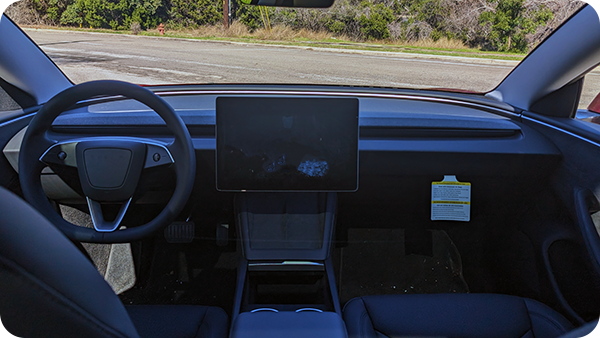
Tesla is known for its minimalist interiors and they keep removing parts with every update.
That can be confusing at first when you’re trying to adjust the air conditioning or audio volume on a screen instead of the buttons or dials you have used in the past. While some people express frustration with overly complicated controls, others like a screen’s modern, sleek look.
Other companies, like Ford, are trending toward incorporating screens, but if you’re a fan of old-school dials and buttons instead, you still have some options at this point.
On the flipside, the more software controlled a car is, the more it can be updated and improved over time. Most EVs offer over-the-air (OTA) updates. They are delivered remotely to your electric car, allowing for improvements to its features and overall performance. Still, software does carry the potential for bugs and data being shared or stolen, which are definite downsides.
Understanding MPGe
When you buy a gas-powered vehicle, you might care about MPG, right? Well electric cars have an MPG, too, sort of. With an EV, the EPA provides a number called miles per gallon of gasoline-equivalent, abbreviated as MPGe. Using this, the EPA tries to help car shoppers understand fuel, or in this case, fuel-equivalent costs. You can find this figure on the Monroney (window) sticker or on the EPA’s website.

MPGe ratings for EVs are found on the window stickers, just like MPG for gas-powered vehicles.
If your goal is to save as much money as possible with your electric car purchase, then finding a low priced electric car with a high MPGe is going to be your best bet, just like with any ICE vehicle.
Wrap Up
Electric cars have lots to offer from often being incredibly fun to drive, lower maintenance and operating costs, and passenger safety. It’s no wonder the number of them being sold in the United States and around the world is growing rapidly. But, they aren’t for everyone and there are still some challenges some might face by making the switch. Once you learn the basics of the 5 key points above, you’ll find that EVs aren’t all that mysterious and you can better determine if one is right for you.
Sources
Related Articles