
A common question I get from potential ID.4 owners is, “what is the range?” Because EV range can be influenced by many factors, I want to help others by trying to answer a better question: “what is the real world range?”
How Does the EPA Determine EV Range?
The EPA conducts standardized tests that simulate highway and city driving speeds within a controlled environment. While the results are helpful, they don’t account for poor weather conditions, consistently driving above highway speeds in excess of 70 mph, and other factors like road conditions. Therefore, it’s best to treat the MPGe and range numbers that you see on the window sticker as a ballpark estimate.
2026 Volkswagen ID.4 EPA Estimated Range
The 2026 VW ID.4 is estimated to have a range of up to 291 miles for RWD models and 263 miles with AWD. Every trim now comes with the larger 82 kWh battery (77 kWh usable), as Volkswagen dropped the smaller 62 kWh pack for 2026. Keep in mind that if you opt for larger wheels or AWD configurations your efficiency will drop some.

VW ID.4 Pro with gray cloth and brown leatherette seats.
My VW ID.4’s Configuration
I own a 2021 VW ID.4 First Edition, which comes with an EPA estimated range of 250 miles. The First Edition configuration is very similar to a 2024 RWD ID.4 Pro S, except 2024 and newer ID.4s have updated motor and battery pack designs, making them much more efficient than mine.

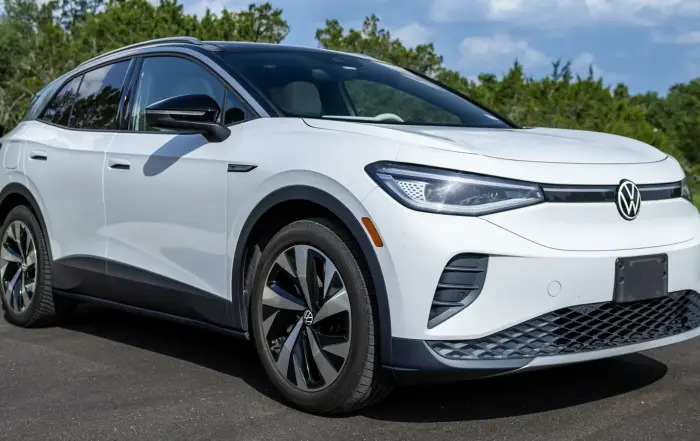
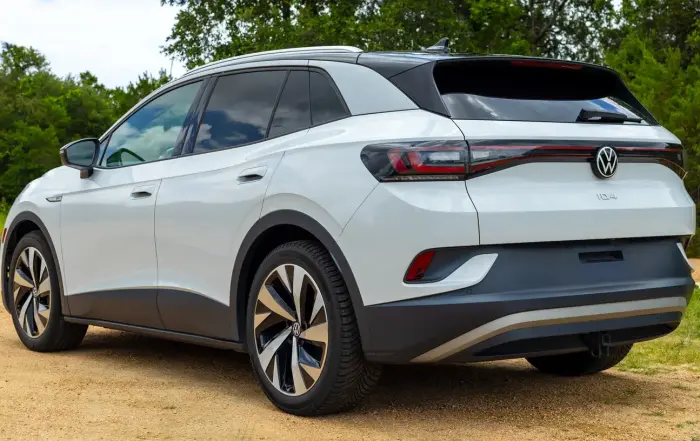
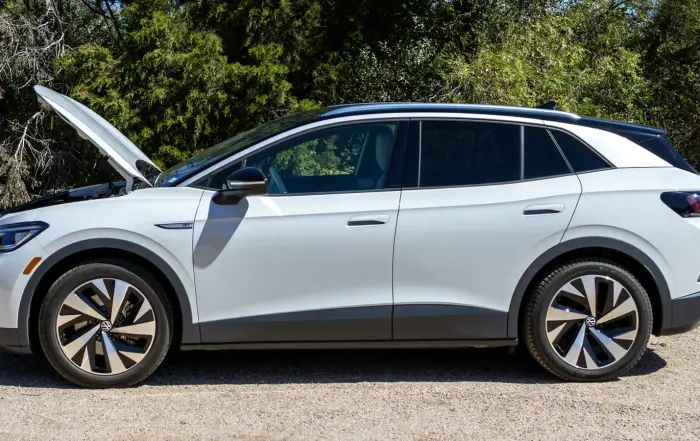
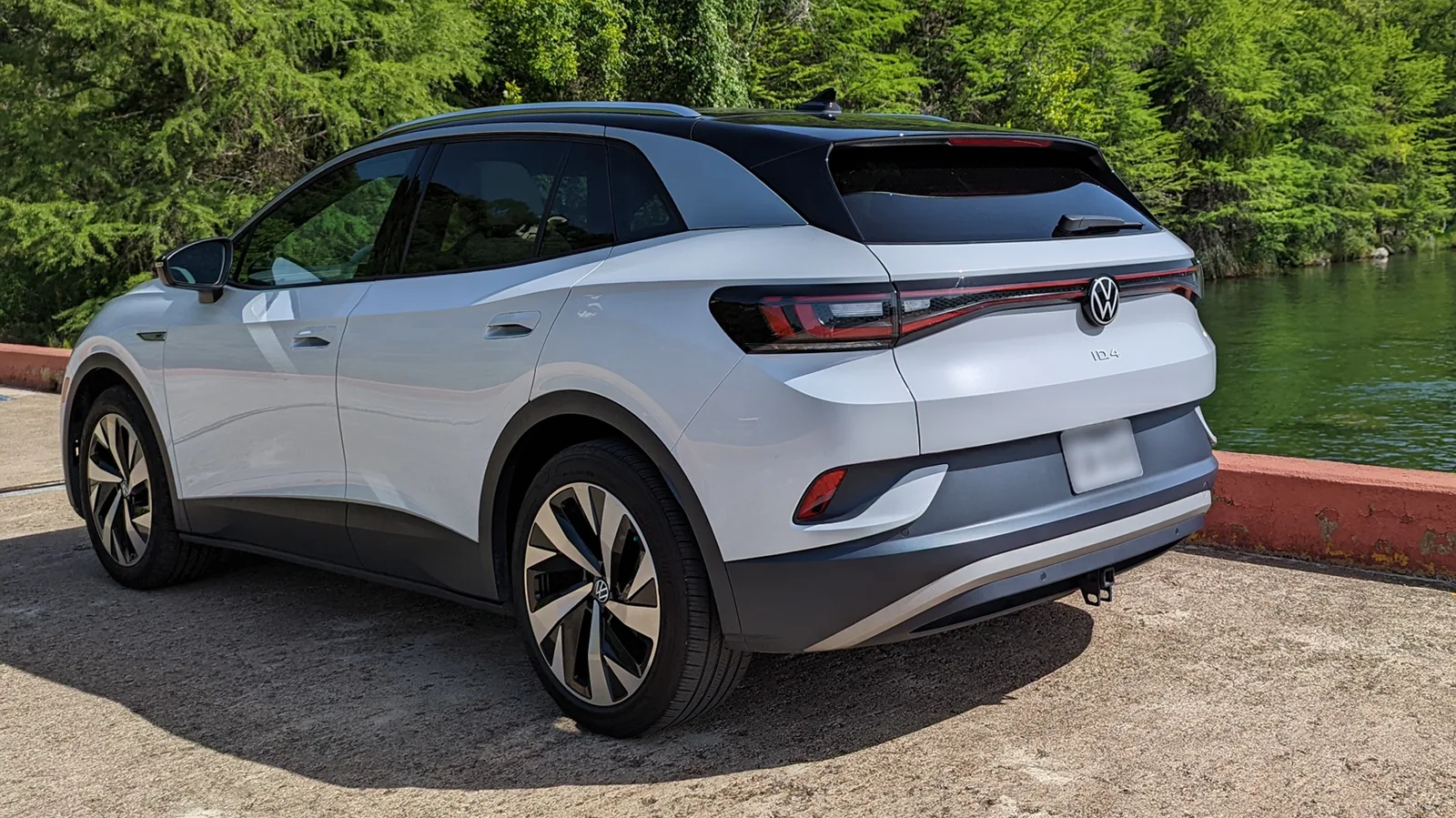
My First Edition ID.4 with the Glacier White Metallic paint.
My First Edition RWD ID.4 has 20-inch wheels, an 82 kWh battery pack (77 kWh usable), and is rated for 3.2 mi/kWh. MPGe is 104 for city driving and 89 for highway driving. Compare this to a 2024 RWD ID.4 Pro S, which has an MPGe of 115 and 98 for city and highway driving, respectively.
My VW ID.4 Highway Range Test
To find out what a real world highway range estimate should be, I decided to take my ID.4 on a mini-road trip to see how long the battery could last.
Here’s the video I made about it:

Conditions
The weather was a pleasant 70°F (21°C) on this December morning. There was a slight headwind of around 10 mph (16 km/h) to start, which turned into a tailwind on the return trip. I didn’t use the HVAC system during the test. The goal was to travel between 70-75 mph (110-120 km/h) the entire time, which ended up being the case, as there wasn’t much traffic on this weekday after the rush hour.
Highway Range Test Results
When I left, the vehicle’s battery was sitting at 100% state of charge, and I returned to the Electrify America station with 4% left on the battery. The trip ended with the ID.4 covering approximately 220 miles (354 km). The range estimator showed 8 miles (13 km) left, which theoretically means 230 miles (370 km) was possible.

ID.4 highway range test results with 4% battery remaining.
The efficiency rating for this trip was 3.1 mi/kWh (5 km/kWh), slightly below the EPA’s combined driving estimate. All in all, a very satisfactory result to say the least.
VW ID.4 Cold Weather Highway Test
Cold weather can significantly impact the range of EVs. In North America, the VW ID.4 doesn’t come with a heat pump, which helps to conserve energy when using the HVAC system to warm the cabin.
Here’s the video of my cold weather highway range test:

During my cold weather test at 30°F (-1.1°C), with calm winds, I primarily used the heated seats and steering wheel to stay warm as they have a marginal impact on battery life, with the heater being used minimally. I purposely did not precondition the battery.
Conditions
Conducted a couple of months after my original range test, this one involved freezing temperatures of around 30°F (-1.1°C), though winds were very calm. Just like last time, I charged the ID.4 to 100% and drove the car until the pack was depleted to 3% of the battery remaining.
The goal was to be comfortable in the cabin while driving, so the HVAC system, along with heated seats and steering wheel were used at points, though the heater was turned off for most of the test. I took the ID.4 on the exact same road while doing my best to duplicate the consistent 70-75 mph (110-120 km/h) speeds throughout.
Cold Weather Highway Range Test Results
Under these conditions, my ID.4 managed to cover only 165 miles (265 km) with 3% battery remaining. The range estimator stated there were 7 more miles (11 km) left before completely running out of energy. This gives us a theoretical total of 175 miles (282 km) of range or so.

My ID.4 cold weather highway range test results with 3% battery remaining.
Efficiency dropped a massive 35% to 2.3 mi/kWh (3.7 km/kWh), which wasn’t surprising at all. This goes to show just how much weather conditions can impact electric cars.
My Daily Driving Lifetime Average
Unfortunately, the ID.4 software doesn’t offer a way to see lifetime real world range. It has a view called “long-term,” but that only contains the last several thousand miles or so.

Long term, my ID.4 has been more efficient than its EPA rating.
Anecdotally, I can state that I am very happy with the ID.4’s average range and efficiency. Excluding cold weather, it’s fair to say the EPA estimates are spot on.
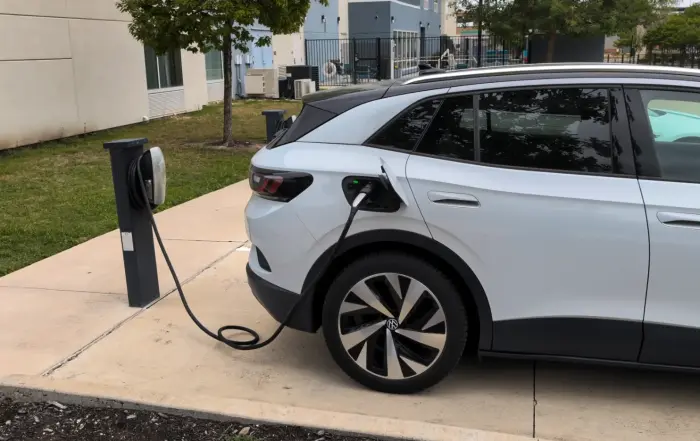
However, my Level 2 charger from Lectron, which is one of the fastest portables you can buy, has removed any range anxiety from day-to-day and weekend driving anyway. You can grab one from Lectron’s website or from Amazon.
ID.4 Range Tips
If you own or are about to buy a Volkswagen ID.4, here are some tips I can give you to help improve efficiency and range. A lot of this applies to EVs in general.
- Drive at the speed limit: Speed makes a big impact on range, because drag increases exponentially the faster you drive.
- If you are in a bind, driving 5-10 mph slower can make a very large impact on range.
- If this happens to you, you can also drive behind a semi-truck to help push the air around your vehicle. Just don’t drive too close as it annoys the drivers and can be unsafe.
- Minimize heater use: Nothing will eat away your ID.4’s battery like using the heater, especially at full blast. Instead, use the heated seats and steering wheel which hardly draw any energy from the battery pack.
- Preheat the cabin while still plugged in: You can get the ID.4’s cabin nice and toasty using energy from your home or charger by preconditioning the vehicle before unplugging. This will also warm up the battery pack.
- Utilize the “B mode”: The “B mode” in the ID.4 activates regenerative braking. This will use the electric motors to slow the vehicle down and return some of the unused energy back to the battery pack.
- This also helps reduce wear on your physical brakes.
- Disengage regen braking on highways: If there’s no traffic, turn off “B mode” so that your ID.4 can coast instead.
- Choose smaller wheels: Generally speaking, smaller wheels and tires have less rolling resistance, which will improve efficiency.
- Choose RWD over AWD: I’ve driven both and unless you truly need AWD functionality, I recommend sticking with RWD configurations instead.
- Keep in mind that the ID.4’s center of gravity is at the bottom of the vehicle, and it’s not front heavy.
- This means a RWD ID.4 will be better in snowy and icy conditions compared to a gas-powered vehicle.
- Keep windows rolled up: Rolling the windows down, even a little bit, can increase drag significantly.
- Use the HVAC fan or air conditioning instead.
- Towing cargo: The shape of a vehicle plays a large part in drag. If you can put your bikes on a rear tow hitch rack instead of on the roof, range will be notably better.
Other ID.4 Content You May Like:
Sources
Related Articles